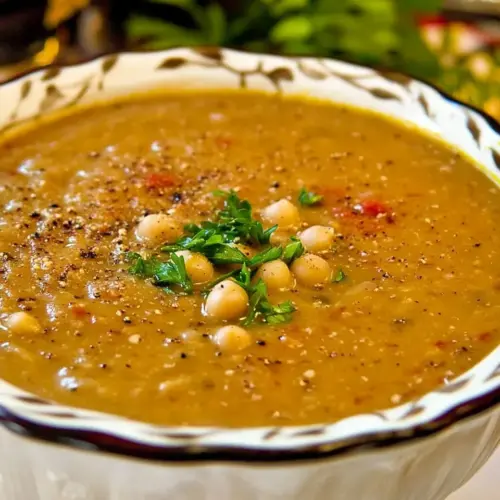
Garbanzo Bean Soup
Garbanzo Bean Soup is a creamy, comforting slow cooked soup made with tender garbanzo beans, aromatic onion and garlic, and warm cumin. This easy weeknight dinner is hands off, full of savory depth, and perfect for chilly evenings. Serve with a drizzle of olive oil and a squeeze of lemon for bright balance, a simple reason to make it tonight.
Equipment
- Crockpot
- Immersion Blender
- Blender
Ingredients
- 2 cups dried Garbanzo Beans Soak and rehydrate dried to provide the hearty legume base for the soup; soak overnight or quick-boil and simmer until tender, developing creamy texture and nutty flavor. Store cooked beans in their cooking liquid to preserve starches and help thicken the soup during simmering. Use reserved cooking liquid as needed to adjust consistency and incorporate flavor back into the pot.
- 4 cups chicken broth (or vegetable broth) Add savory concentrated liquid to build the soup’s broth layer and deepen umami; choose chicken broth for richness or vegetable broth for a vegetarian option. Heat gently with aromatics to meld flavors and deglaze any browned bits from sautéing. Adjust salt level after adding to avoid over-seasoning from a concentrated broth.
- 2 cups + 1 cup water Combine measured water amounts to provide cooking liquid volume and adjust final soup consistency; use the larger amount for initial simmering and the extra cup to thin if the soup reduces too much. Add gradually while simmering to control thickness and ensure beans cook through evenly. Keep warm extra water on hand to adjust texture before serving.
- 1 onion, finely chopped Sauté and soften to create a sweet aromatic foundation that enhances overall soup flavor; finely chopped onion releases sugars and melds seamlessly with spices. Cook until translucent to avoid raw sharpness and help build body when pureeing or mashing beans. Caramelize lightly for added depth if a richer base is desired.
- 1 T minced garlic Mince and release pungent aromatic oils to impart savory, aromatic depth; add early in the sauté process and cook briefly to tame raw harshness while preserving flavor. Adjust quantity for desired garlic presence and be careful not to burn, as burned garlic turns bitter. Combine with cumin and bay leaves to build a layered spice profile.
- 2 large bay leaves Simmer whole to impart subtle herbal and slightly floral notes while lending complexity to the cooking liquid; remove before serving to avoid overpowering bitterness. Add at the start of the long simmer so the bay leaves have time to infuse their aroma into the broth and beans. Use fresh whole leaves rather than powdered for controlled, gentle flavor release.
- 2 tsp . ground cumin Sprinkle and warm to introduce earthy, smoky undertones that complement the beans and aromatics; ground cumin binds savory flavors and pairs particularly well with garlic and lemon. Add during sautéing or early simmer to bloom the spice in hot oil or broth for full flavor release. Taste and adjust carefully because cumin can dominate if overused.
- 1/4 tsp . salt Season lightly to enhance and balance the soup’s flavors without overpowering; add early in the cooking process but reserve final adjustments until after reduction and tasting. Use measured amounts as a baseline and increase sparingly, keeping in mind that broth may already contribute sodium. Consider dietary needs and offer low-sodium alternatives if required.
- fresh ground black pepper to taste Grind to taste to introduce bright piquant heat and aromatic complexity; fresh-ground black pepper lifts flavors and adds subtle warmth in the background. Add during cooking and finish with a final grind before serving to preserve volatile aromatics. Balance pepper levels so it complements cumin and lemon rather than overshadowing them.
- olive oil, for drizzling on finished soup Drizzle at the end to add fruitiness and a silky mouthfeel that contrasts the soup’s creaminess; use a high-quality extra-virgin olive oil for best flavor. Add sparingly as a finishing touch to create glossy surface and aromatic richness, and consider flavored oils for variation. Serve oil on the side if guests prefer to control the amount.
- powdered Sumac (optional, for sprinkling on finished soup, or use paprika) Sprinkle optionally to introduce bright, tangy, and slightly astringent citrus notes; powdered sumac adds color and a lemony lift without extra liquid. Offer as a garnish so diners can adjust tartness, or substitute mild paprika for color and gentle sweetness if sumac is unavailable. Use sparingly to preserve the soup’s balanced flavor profile.
- 1 lemon (optional, for squeezing on finished soup) Squeeze optionally to add fresh acidic brightness that cuts through the soup’s richness and enhances other flavors; lemon juice brightens cumin and brings a lifted finish to each bowl. Provide wedges for diners to adjust acidity to taste and avoid adding too early to prevent curdling in dairy-containing recipes. Use zest sparingly if more concentrated citrus aroma is desired.
Instructions
- Put beans, chicken broth or stock, 2 cups water, finely chopped onion, minced garlic, bay leaves, cumin, salt, and pepper in crockpot.: As the pot comes together you will notice layers of aroma, first the sharpness of the onion and garlic , then the warm perfume of ground cumin . The sound is gentle, a low simmer if you check later on the stove, but mostly it’s quiet work for the crockpot. This step matters because evenly distributing the liquid and aromatics ensures every bean absorbs flavor as it rehydrates. A common mistake is adding too little liquid, which can lead to dry or unevenly cooked beans; check that all the ingredients are submerged and give them a gentle stir to combine.
- Cook on low for 7-8 hours, or until beans are very soft. (If you start with soaked beans, they will get softer more quickly, but it won’t hurt if you cook them all day if you’re not home to check.): Over the long slow heat you will smell the savory hum of the chicken broth and the toasty edge of cumin as it melds with the beans. Visually you will see the liquid darken slightly, and the beans will plump and lose their rigid shape. This low slow cook allows connective starches in the Garbanzo Beans to break down, producing a creamy body. Avoid the mistake of rushing with high heat, because that can split skins and leave interiors chalky; patience yields a uniformly tender bean.
- After 7-8 hours, check the amount of liquid in the crockpot and see if you want to add more. (I cooked for 7 hours, added 1 cup hot water, and cooked 1 hour more.): The second directive emphasizes patience; during this period open the lid sparingly to retain heat and moisture. Use this time to prep garnishes like the lemon and measure out a drizzle of olive oil . A sign that things are going well is a gentle, steady vapor and a barely audible burble if your crockpot allows that sound. A frequent misstep is lifting the lid repeatedly, which lengthens cooking time and can cool the pot.
- When beans are very soft, remove bay leaves, then puree the soup either using an immersion blender, or in batches using a food process or blender. (If you use a food processor or blender, be careful not to overfill so the hot liquid doesn’t spill out.) You can puree completely like I did, or leave the soup a bit chunky.: When I lift the lid the soup often looks thicker than I expect, because the beans absorb liquid as they soften. Smell and texture guide my decision, and I will add a cup of hot water if the mixture seems pasty or if I prefer a brothy finish. This step matters because proper liquid adjustment prevents an overly dense mash and creates the consistency you prefer. A common error is adding cold water, which can shock the pot and slightly lengthen cook time; use hot water to maintain temperature.
- Serve the Garbanzo Bean Soup hot. I drizzled each bowl of soup with olive oil, sprinkled on Ground Sumac (affiliate link), and squeezed on fresh lemon juice.: The moment you begin pureeing the aromas intensify, with the Garbanzo Beans releasing starchy richness into a glossy broth. If using an immersion blender you will see the soup transform right in the pot, turning from chunky to velvety. Pureeing in batches requires careful handling of hot liquid to prevent splatters; remove the center cap on a blender lid slightly and cover with a towel to vent steam safely. This technique matters because blending controls mouthfeel and allows you to choose between a smooth and a slightly textured bowl. Avoid overfilling the blender, which can lead to hot spills and burns.
- You can puree completely like I did, or leave the soup a bit chunky: Choosing your texture shapes the eating experience. Smooth puree delivers a silky, spoonable soup that feels luxurious, while leaving chunks creates contrast and chew. As you stir you will notice how the surface catches light differently depending on texture, and you can taste to adjust seasoning after blending. A typical mistake is seasoning before pureeing, because flavors concentrate differently; always taste and adjust after you achieve the desired texture.
- Serve the Garbanzo Bean Soup hot: The finishing stage is sensory rich, with steam carrying citrus or spice depending on your garnish. I like to ladle the soup into warmed bowls so it stays hot longer, then drizzle with olive oil , sprinkle powdered Sumac or paprika , and squeeze a touch of lemon . This final assembly elevates the soup visually and aromatically. A common misstep is serving too cool, which dulls aromatics; ensure bowls are warm and serve immediately for best impact.
- I drizzled each bowl of soup with olive oil, sprinkled on Ground Sumac, and squeezed on fresh lemon juice: These finishing touches lift the palate; the olive oil adds silk, Sumac brings tang, and lemon injects brightness. The contrast of warm soup and cool lemon is pleasing, and the oil creates a glossy finish that highlights the color. Avoid overdoing citrus, which can flatten the delicate savory notes; add sparingly and taste as you go.
Notes
- Soaking guidance If you choose to soak the Garbanzo Beans, do so in plenty of water for at least 8 hours to rehydrate them fully; this shortens the crockpot time and can produce a slightly more even texture.
- Temperature consistency Avoid opening the lid frequently during the long cook; every time you lift the lid you release heat, and that can extend the time needed for beans to reach the perfect tenderness.
- Liquid adjustment Add hot water if the soup appears too thick toward the end of cooking; I usually add one cup and let it finish for an hour to integrate the consistency without diluting flavor.
- Blending safety If you blend in a countertop blender, work in small batches and vent the lid carefully to avoid pressure build up; covering the top with a towel helps prevent spills.
- Finishing touches Finish bowls with a drizzle of olive oil and a touch of lemon to brighten the flavor, and add powdered Sumac or paprika for color and lift.