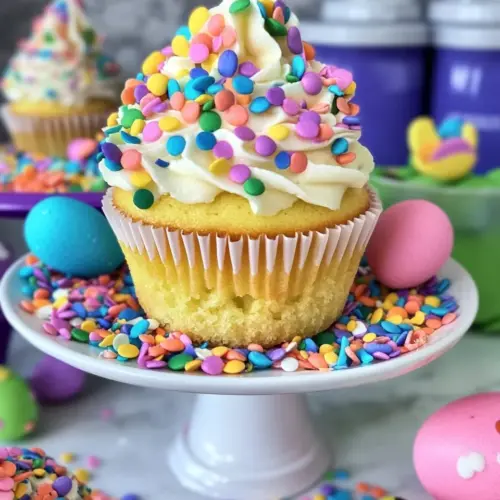
Funfetti Easter Cupcakes
Funfetti Easter Cupcakes are a playful spring dessert with colorful confetti cake and creamy buttercream frosting. These easy to assemble cupcakes mix a dependable boxed cake base with a silky butter and powdered sugar frosting, finished with cheerful candy toppers. Perfect for brunch and gatherings, they bring a festive touch to any table and are simple enough for bakers of all levels to make and enjoy.
Equipment
- KitchenAid Stand Mixer (Premium 5 Quart Tilt-Head)
- Glass Bowl (KitchenAid)
- Muffin Tin
- Ziploc bags
- Piping bags
Ingredients
- 1 box Easter Funfetti cupcake mix Provides a pre-mixed base blend of flour, sugar, leavening, and sprinkles to simplify cupcake preparation; follow box instructions for added wet ingredients and baking times. Enhances texture and provides the classic confetti appearance associated with funfetti cupcakes. Ensures consistent results and convenient flavoring when preparing a themed batch for Easter.
- 1/2 cup buttersalted, softened (leave at room temperature prior to making) Contributes richness, tenderness, and flavor while helping create a smooth, creamy frosting; keep softened at room temperature so it incorporates easily. Adds moisture and a slight buttery salt balance that complements the sweetness of the cake and frosting. Helps achieve a spreadable consistency for decorating and piping.
- 2.5 cups powdered sugarsifted to remove any lumps Adds concentrated sweetness and structure to frostings and icings while helping to stabilize and thicken the mixture after sifting. Removes lumps for a silky smooth texture and ensures even sweetness and ease of blending with butter and liquids. Allows precise control over frosting consistency for spreading or piping onto cupcakes.
- 3 tbsp milkwhole preferred Provides liquid to loosen and smooth the frosting base, creating a spreadable consistency; whole milk adds richness and a fuller mouthfeel. Helps dissolve powdered sugar more easily and balances sweetness with a touch of creaminess. Use sparingly to avoid thinning the frosting too much.
- 1.5 tsp vanilla extract Imparts aromatic flavor depth and rounds out the sweetness of the frosting with warm, familiar vanilla notes. Enhances the overall flavor profile without overpowering other components or decorations. Adds a subtle complexity that complements the buttery and sugary elements.
- 5 drops food coloring Adds small amounts of vibrant color to frostings or batters to enhance visual appeal for Easter; choose shades that complement the theme. Allows precise control over hue with just a few drops for pastel tones typically used in holiday treats. Be cautious when mixing to achieve an even, consistent color.
- Peeps Provides a playful, marshmallow-based decorative topper that adds sweetness, chewiness, and a festive Easter look. Offers a soft texture contrast to cake and frosting and can be used whole or trimmed for different designs. Enhances visual impact with iconic Peeps shapes and colors.
- Carrot candies Contributes crunchy, sugary accents shaped like small carrots to reinforce the Easter theme and add contrasting texture. Offers bursts of fruity or sweet flavor and bright color that decorate the cupcake surface attractively. Works well to create focal points or garnish clusters alongside other candies.
- Grass candy Creates a grassy visual effect and adds a chewy or shredded candy texture to simulate Easter grass under decorations. Enhances presentation by providing a textured base for placing Peeps or other candies and can introduce additional sweetness. Helps tie the overall holiday aesthetic together on each cupcake.
- Easter gummies Delivers assorted shapes and flavors that add playful color, chewiness, and variety to cupcake decorations; ideal for filling or topping. Provides bite-sized sweetness and whimsical appeal that children and adults enjoy when decorating for seasonal events. Can be arranged for visual interest or scattered for a festive finish.
- Easter jelly beans Offers small, colorful sugar-coated confections to add crunchy pops of flavor and vibrant visual contrast atop the frosting. Introduces a range of fruity tastes that complement the sweet base and other candies used for decoration. Easy to sprinkle for immediate decorative impact and textural variety.
Instructions
- Preheat the oven as directed on the baking mix box for cupcakes. Line a muffin tin with Easter cupcake papers and spray with cooking spray if desired.: The kitchen will fill with a warm, welcoming scent as the oven comes to temperature, signaling the start of baking. Use an oven thermometer if you have one to confirm accuracy, because ovens can run slightly hot or cool, which affects rise and texture. A common mistake is rushing this step, leading to uneven baking, so wait until the oven fully reaches the instructed temperature and arrange your oven racks in the center for even heat circulation.
- Make the Easter Funfetti cupcake mix according to the package. (As you’ll notice in the Sip Bite Go Easter cupcake recipe video tutorial, I substituted applesauce in place of oil).: The colorful liners set the tone and make serving simple, and a light spray helps prevent sticking while keeping the liners intact when removed. Press each liner so it sits snugly, then spoon batter into the center to encourage even domes. Avoid overfilling the cups, as this causes spill over and uneven tops, which complicates decorating.
- Bake Funfetti cupcakes according to the package.: Mixing by the package directions usually yields a tender crumb with evenly distributed confetti pieces. The batter should be smooth and with visible specks of the funfetti. If you choose swaps like applesauce for oil, you'll notice a slightly different sheen and density, which is fine, but aim for a batter consistency that drops slowly from a spoon to ensure proper rise.
- Make frosting. While cupcakes are resting, make the frosting from scratch or prep store bought cupcake frosting. See below for directions to make homemade frosting.: As the cupcakes bake, watch for visual cues, like edges pulling away from the liners and a gentle golden hue on top, rather than relying solely on the timer. Gently press the center to test spring back or insert a toothpick to check for moist crumbs. Avoid overbaking, which dries the crumb; remove them promptly when the tests show they are done and let them sit in the pan briefly before transferring to a cooling rack.
- Decorate cupcakes with Easter candies like bunny Peeps, gummy carrots, and jelly beans. Enjoy.: While the cupcakes are resting, the aroma of the cooling cakes blends beautifully with the sweet buttercream you will whip up. This time is perfect for setting out tools and measuring powdered sugar and milk . A common misstep is starting to frost warm cupcakes, which causes the buttercream to melt, so be patient and allow full cooling before you decorate.
- To make Easter cupcake frosting from scratch, you’ll need a Kitchenaid Stand Mixer, or handheld mixer.: Decorating invites creativity and gives each cupcake personality. Press candies gently into the frosting so they adhere without compressing the buttercream. If you find the frosting sliding, chill the piped cupcakes briefly to set the buttercream before adding the toppers. Resist overloading each cupcake, or the presentation may look cluttered instead of charming.
- Cream butter. Add softened butter to a bowl and mix 1-2 minutes, scraping every so often, until fluffy.: The sound of the mixer at medium speed transforms butter into a pale, billowy mass, and it helps achieve that whipped texture faster than beating by hand. Using the right tool reduces mixing time and helps the frosting achieve glossy peaks. Avoid mixing too fast initially, which can splatter sugar everywhere, and scrape the bowl occasionally to ensure uniform texture.
- Add powdered sugar, slowly, and continue mixing until combined for about 1-2 minutes.: As the butter becomes fluffy, you will notice it lighten in color and take on a cloud like texture, which is exactly what you want for smooth buttercream. Scrape the bowl periodically so every bit of butter is aerated. A frequent error here is using butter that is too cold or too soft; it should yield slightly to a finger yet hold shape, ensuring optimal whipping and structure.
- Add milk and vanilla extract to frosting, and beat until combined, about 1 minute.: Adding sifted powdered sugar gradually prevents a powdered puff cloud and allows it to integrate smoothly into the butter, creating a velvety texture. The mixture will thicken as you add sugar, and patience here prevents graininess. If you rush and dump the sugar in all at once, you risk a lumpy, hard to smooth frosting.
- Frosting color note: At this point, I removed half the frosting from the bowl, to make two different cupcake frosting colors: yellow and green.: The milk and vanilla extract bring silkiness and flavor lift, combining into a glossy finish. Pay attention to the sound as it whips; the mixer will move more freely, and the frosting will fall in soft ribbons. If the frosting seems too thin, add a bit more sifted sugar in small increments, while if it is too stiff, add a teaspoon of milk at a time.
- Add food coloring to buttercream frosting. You can start with a couple drops, then mix until integrated and use more as desired to intensify the frosting color.: At this point, I removed half the frosting from the bowl, to make two different cupcake frosting colors, yellow and green : Dividing the batch allows for playful two toned presentation and makes the cupcakes feel custom. Use separate bowls and mix each gently to avoid over working the buttercream, which can make it greasy. A common oversight is adding too much coloring too quickly, producing overly intense shades, so always add a drop or two and evaluate.
- Transfer frosting to piping bags, or use ziploc bags as seen in the Sip Bite Go cupcake video. Add frosting and decorate only when cupcakes are completely cool.: As you stir in food coloring , the hue deepens gradually, and the visual transformation is satisfying. Use gel based color if you want vibrant pastels without watering down the frosting, and remember a little goes a long way. Avoid adding too much liquid color, which can make the buttercream runny and affect piping control.
- Transfer frosting to piping bags, or use ziploc bags as seen in the Sip Bite Go cupcake video: The act of piping is tactile and soothing, and you can feel the pressure needed for consistent swirls. If using a ziploc bag, snip a small corner for a simple round tip. Practice on a plate to get comfortable with pressure and speed, and if the frosting oozes, chill briefly to firm it up before decorating.
- Add frosting and decorate only when cupcakes are completely cool: Frosting warm cupcakes causes melting and mis-shaped swirls, so make sure the cakes have no residual warmth. When I wait, the frosting holds crisp ridges and candies stay put. A common mistake is impatience, which leads to glossy, flattened tops instead of pretty, structured swirls.
Notes
- Use a high quality boxed mix, it gives the most reliable crumb and evenly distributed confetti pieces that bake up bright and cheerful, which is especially helpful when you are making multiple batches for a party.
- Substitute applesauce for oil to reduce fat slightly and add moisture, note that the texture will be a touch denser but still delicious, and it is a good option if you want a lighter cake without changing flavors drastically.
- Split the frosting for pastel colors, remove half the buttercream and tint each portion separately so you can pipe two complementary colors for an eye catching display that looks professionally styled.
- Transporting cupcakes is easiest in a single layer container with a fitted lid, place a sheet of parchment under the cupcakes to prevent sliding, and if the weather is warm, keep them chilled until ready to serve.
- Decorate with restraint, a few well placed candies look more polished than piling every candy on top, let each cupcake have a focal point like a small Peeps or a cluster of jelly beans for best presentation.