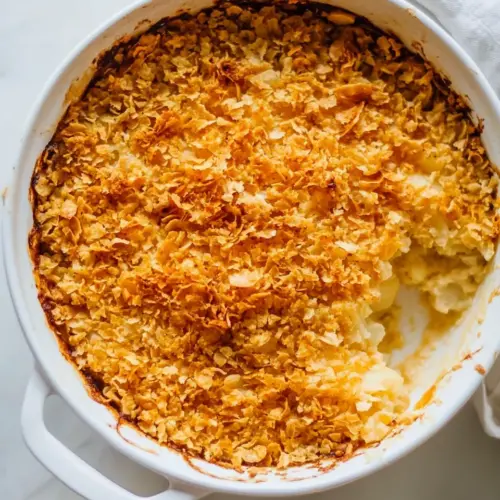
Funeral Potatoes
Funeral Potatoes are a creamy, cheesy casserole with a crispy potato chip topping that delivers comforting texture and savory depth. This easy crowd pleaser blends shredded potatoes with a rich milk and cheese sauce for an ideal easy weeknight dinner or holiday side. Make it when you want a warming, satisfying dish that will disappear quickly from the table.
Equipment
- 9 x 13-inch baking pan
- Large Pot
- Aluminum Foil
Ingredients
- 8 tablespoons unsalted butter, divided Melted and divided to provide both a rich cooking fat and a buttery topping, contributing moisture and savory flavor while browning the casserole surface for texture contrast.
- 1 (28–32 ounce) bag frozen shredded hash brown potatoes Frozen and shredded to supply the hearty, starchy base of the dish, offering convenience and a consistent potato texture that crisps when baked under a topping.
- 1 cup finely diced yellow onion, 1 small Finely diced to add sweet, aromatic depth and structure, softening during sauté to release savory flavors that balance the dish's richness.
- 2 teaspoons minced garlic Minced to introduce a pungent, aromatic note and subtle heat, amplifying overall savory complexity without overwhelming other flavors when gently cooked.
- 1/4 cup flour Used as a thickening agent to create a smooth, cohesive sauce, binding liquids and cheese to coat the potatoes evenly for a creamy interior.
- 1 -1/2 cups whole milk Added warm to build the sauce's creamy body and tenderize the mixture, supplying dairy richness and helping achieve a smooth, velvety consistency.
- 1 -1/2 cups chicken broth Poured in to enhance savory depth and thin the sauce to the desired consistency, contributing subtle poultry flavor and umami balance.
- 6 ounces freshly shredded sharp Cheddar cheese, 2 cups, see note 1 Freshly shredded to melt smoothly into the sauce, providing sharp, tangy cheese flavor and creamy texture that enriches the potato filling.
- 1 cup sour cream, see note 2 Stirred in for tangy creaminess and moisture, balancing richness with a slight acidity that brightens the casserole's overall flavor profile.
- 2 cups kettle-cooked potato chips, see note 3 Crumpled and layered to deliver a crunchy, salty topping contrast, offering both texture and intensified potato flavor that crisps during baking.
- 1/4 cup grated Parmesan cheese, see note 4 Grated to sprinkle over the top for a nutty, salty finishing touch that promotes browning and adds a delicate savory complexity.
- Salt and pepper Used sparingly to season the dish precisely, enhancing and balancing flavors while preventing blandness through careful salting and peppering.
Instructions
- Preheat oven to 350°F. Grease a 9×13-inch pan with cooking spray. Microwave the hash browns in the bag for 30 seconds, then place them in a strainer to thaw while preparing the rest of the dish.: You should notice the oven warming and the air filling with a neutral, warm scent, which primes the kitchen for baking. The brief microwave blast loosens ice crystals so the hash brown potatoes separate easily, and straining allows excess moisture to drip away; this prevents a watery casserole. A good visual cue is that the shredded potatoes look loose rather than clumped. If they feel icy or soggy, let them sit a little longer in the strainer to shed water. Common mistakes include skipping the straining step, which can lead to a runny final texture, or over microwaving, which partially cooks them and alters the desired bake timing.
- Melt 6 tablespoons butter in a large pot over medium-high heat. Add onions, garlic, and seasonings (start with 1-1/4 teaspoons salt and 1/2 teaspoon pepper, adjusting to taste). Cook, stirring occasionally, until onions soften (about 3–5 minutes). Sprinkle flour over the mixture, stirring constantly, for 1 minute to prevent browning. Gradually whisk in milk, followed by chicken broth, to form a smooth sauce.: As the butter melts, it creates a glossy pool that carries the heat evenly, releasing a nutty aroma when the onion softens. Stirring the flour in removes the raw taste and forms the base for a velvety sauce. When you add milk and chicken broth gradually, whisking prevents lumps and results in a homogenous mixture that will coat a spoon. You want to see a smooth, slightly thickening sauce at this stage. A frequent slip is adding the liquids too quickly, which can create lumps, so whisk steadily and keep the heat moderate to avoid scorching.
- Bring the mixture to a boil, stirring frequently. Continue stirring for 3 minutes at a boil, then reduce to a simmer and cook until thickened, about 3 more minutes (see note 5). Remove from heat and let cool slightly. Stir in Cheddar cheese, 1/4 cup at a time, until melted. Mix in sour cream until smooth.: At a boil, the sauce will become lively and glossy, and you should hear a light bubbling sound that indicates the starches are activating. Stirring for the full time ensures the sauce darkens to a rich hue and achieves body. Reducing to a simmer lets the sauce stabilize and thicken without breaking. When you add the Cheddar cheese in small increments, each addition melts evenly and you avoid clumps; the mixture should become silkier with each stir. Folding in sour cream at the end brings a gentle tang and velvety finish. A classic error here is adding cheese too quickly or on too high a heat, causing oil separation or grainy texture, so temper the sauce with gentle heat.
- Add the thawed hash browns to the sauce and stir to coat. Transfer the mixture to the prepared pan. Cover with foil and bake for 20 minutes.: When you fold the slightly cooled sauce into the hash brown potatoes , the sensory change is immediate, the mixture becoming cohesive and glossy. Transfer to the greased pan with purposeful, even spreading so the casserole bakes uniformly. Tenting with foil traps steam and warms the center gently, allowing flavors to meld. After 20 minutes you should sense a steaming, bubbling surface beneath the foil. Avoid packing the pan too tightly, which prevents even heat circulation and can cause a mushy texture in the center.
- While the potatoes bake, crush potato chips into coarse crumbs (you’ll need 2 cups). Combine with Parmesan cheese in a bowl. Melt the remaining 2 tablespoons butter, drizzle over the topping, and stir to coat.: Crushing the kettle cooked potato chips by hand gives you variable textures, some larger shards for crunch and finer crumbs for coverage. Mixing in Parmesan cheese adds savory depth to the topping, and the melted butter encourages browning and helps the crumbs adhere. The aroma will be buttery and slightly toasty once combined. A misstep is pulverizing the chips too finely, which removes contrast, or skipping the butter , which reduces browning and richness.
- Remove foil from the pan. Evenly sprinkle the topping over the potatoes. Bake uncovered for an additional 15–20 minutes, until golden brown and bubbling around the edges. For extra crunch, broil for 1 minute. Let stand 10 minutes before serving.: When you remove the foil you should see steam lift and the casserole surface beginning to firm. The topping will toast and release a fragrant, salty crunch, while the edges will bubble aesthetically, signaling doneness. Broiling for a brief minute intensifies the crisp without overcooking the interior, but keep a close watch as it can change from perfect to burnt in seconds. Letting the dish rest allows the sauce to settle and makes serving cleaner. A common oversight is slicing straight from the oven which causes the casserole to fall apart, so allow the recommended rest time.
Notes
- Freshly shred cheese: Shredding the Cheddar cheese right before mixing prevents the dry anti clumping agents in pre shredded cheese from giving a grainy texture, and it helps the cheese melt smoothly into the sauce.
- Use full fat sour cream: Full fat sour cream keeps the sauce stable and velvety; lower fat versions run a higher risk of breaking when heated, which changes the texture.
- Alternative toppings: While potato chips are traditional, you can switch to crushed corn flakes or panko if you prefer, but each will produce a slightly different crunch and toast color.
- Check sauce thickness: The sauce should coat the back of a spoon and leave a clear line when traced; if it is too thin, simmer a bit longer to avoid a watery casserole.
- Storage tip: Leftovers keep 5 to 7 days refrigerated, but the topping will soften; for best texture, store the topping separately and add it just before serving.