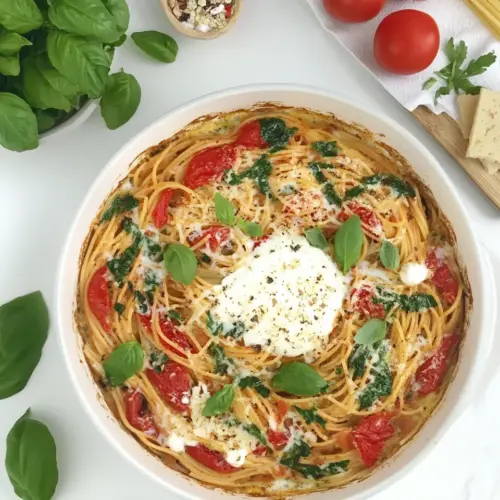
Frittata di Pasta
Frittata di Pasta is a creamy, crispy, and easy make ahead dish that turns leftover spaghetti into a satisfying meal. With pockets of melted mozzarella, bright cherry tomatoes, and fresh herbs, it’s an ideal easy weeknight dinner or relaxed brunch option. Try it for a quick crowd pleasing recipe that reduces waste and rewards you with bold, comforting flavors.
Equipment
- Oven-safe skillet
- Mixing Bowl
- Whisk
Ingredients
- 250 g cooked spaghetti, or other pasta shapes Provide already-cooked pasta as the hearty base that binds the frittata; toss with eggs so strands set into a cohesive, sliceable cake when cooked. Offer neutral flavor and satisfying texture while absorbing seasonings and moisture from other components.
- 150 g mozzarella or goat cheese, cubed Add creamy, melty cheese cubes to introduce pockets of rich, tangy moisture throughout the frittata; distribute evenly so every bite has gooey contrast. Contribute salt and dairy fat that deepen overall flavor and help the eggs set with a silkier mouthfeel.
- 5 large eggs, beaten Beat together eggs to form the protein-rich custard that holds the pasta, vegetables, and cheese together; season well before combining with other ingredients. Provide structure and lift when cooked, creating the classic firm yet tender frittata interior.
- 225 g fresh spinach leaves Wilt fresh spinach leaves to inject bright color, earthy flavor, and tender green texture into the dish; remove excess water to avoid a soggy frittata. Pack in nutrients and a mild vegetal sweetness that balances richer elements like cheese and eggs.
- 170 g cherry tomatoes, seeds and juice removed, sliced Halve and de-seed cherry tomatoes to deliver concentrated sweetness and acidity without adding excess liquid to the mixture; spread slices evenly for bursts of flavor. Brighten the frittata with fresh, juicy notes that cut through the richness of eggs and cheese.
- a bunch of chopped fresh basil and mint Chop fresh basil and mint to contribute fragrant herbal lift and aromatic complexity; fold gently into the mixture near the end to preserve volatile oils. Complement tomato and spinach flavors while adding a refreshing, slightly sweet finish to each slice.
- 150 g peas, cooked Cook peas to tender-sweet perfection to add poppable texture and subtle vegetal flavor; drain well before mixing into the frittata. Offer vibrant color and small bursts of natural sweetness that contrast the creamy cheese and eggs.
- 3 spring onions, finely chopped Finely chop spring onions to introduce mild allium sharpness and delicate crunch when folded into the frittata; both white and green parts add layered flavor. Provide savory aromatic notes that enhance overall seasoning without overpowering other ingredients.
- 2 tablespoons extra-virgin olive oil Heat extra-virgin olive oil to coat the pan and promote even browning while adding fruity, peppery richness; use sparingly to prevent greasiness. Support a golden crust and help conduct heat so the frittata cooks through with a flavorful exterior.
Instructions
- Preheat oven to 190°C/390°F.: The warm oven ensures the frittata finishes through evenly, creating a lightly browned top while keeping the interior tender. You should feel the slight rise in the kitchen heat and hear the low hum of the oven as it stabilizes. If the oven is not fully heated before you transfer the skillet, the center can remain too soft and require additional baking time. A quick tip is to preheat for at least five to ten minutes so the temperature holds steady.
- In a large bowl add the cooked pasta and eggs and mix well. Add in the cubed mozzarella cheese, spinach leaves, tomatoes, peas and chopped fresh herbs. Season with salt and pepper to taste and mix all ingredients well.: As you toss the spaghetti with the beaten eggs , notice how the strands become glossy and coated. This is where the eggs begin to permeate the pasta, ensuring every bite holds together. If some strands stay dry, they may clump and leave uncooked pockets, so use a fork or tongs to separate and coat the pasta completely. The sound is minimal, but the visual cue is a uniform, slightly shiny mixture.
- Brush with the extra-virgin olive oil a medium-sized oven-friendly skillet and place it over medium heat.: Fold these elements gently so the mozzarella nests among strands and the spinach softens. You will see bright reds and greens against the pale pasta and eggs, promising vibrant flavor. Be mindful not to overmix; vigorous stirring can bruise the herbs and compress the pasta, reducing airiness. If the spinach is crowded, wilt it slightly first to prevent excess moisture in the final bake.
- Gently pour the spaghetti mixture into the skillet. Make sure the pasta is evenly distributed and almost entirely covered with the eggs and other ingredients.: Seasoning early lets the flavors marry, and you will sense the aroma of the herbs and the sea salt lifting the whole mixture. Taste a small portion of the uncooked mix by frying a pinch briefly to check seasoning if you are unsure. A common mistake is under-seasoning at this stage, which results in a dull finished frittata, so be bold but balanced.
- Cook on the stove for about 5 minutes, until the frittata edges are firm but the center is still runny.: The glint of the extra-virgin olive oil in the pan signals readiness; the oil should ripple gently without smoking. This oil forms a protective layer and helps achieve a subtly crisp edge. If the pan overheats the oil can burn, imparting bitterness, so keep the heat moderate. Listen for a soft sizzle when the mixture touches the pan as the next step begins.
- Finish the cooking process in the oven, until the center is no longer liquid and the frittata is nicely golden brown on top, about 10 minutes.: See the strands fall and nestle into the pan as you pour, creating an even layer. Arrange the pasta so the eggs envelope the ingredients uniformly, leaving no high piles. Uneven distribution leads to inconsistent setting, where some wedges may be overcooked while others remain underdone. Smooth the top with a spatula if needed to create a flat surface for even oven baking.
- Remove from the oven and serve warm or allow to cool and serve into slices at room temperature.: Visual inspection is key here, the surface should look cohesive and glossy, with only a few ingredients peeking through. This ensures the custard will bind the pasta into a stable frittata. If you notice dry clumps, press them down gently and add a touch more beaten egg if necessary. Leaving gaps can cause fragile slices that fall apart when plated.
- Store in the fridge in an airtight container for up to 2 days.: As the edges set you will hear a faint sizzle and see a golden rim form, a great indicator that the skillet portion is ready for the oven. The center should wobble slightly when you nudge the pan, signaling that it will finish gently without drying. If you overcook on the stove the top may brown unevenly in the oven, so remove once the edges hold.
- Finish the cooking process in the oven, until the center is no longer liquid and the frittata is nicely golden brown on top, about 10 minutes.: In the oven the scent becomes richer, with the mozzarella softening and the top taking on a warm golden hue. Check visually for a set center and a gentle spring when pressed. If you skip the oven finish the middle can remain underdone and too loose; conversely leaving it too long will dry the custard and toughen the texture. Use a toothpick near the center as a visual test for doneness.
- Remove from the oven and serve warm or allow to cool and serve into slices at room temperature.: When you lift the skillet you should see a cohesive golden cake that releases easily at the edges, offering neat wedges. Warm slices will have molten cheese, while room temperature servings allow flavors to settle and slice cleanly. Avoid cutting while piping hot, as the structure may be too soft; let it rest briefly for cleaner portions.
- Store in the fridge in an airtight container for up to 2 days.: Proper storage preserves texture and flavor, and chilled slices are great for quick lunches. Allow the frittata to cool fully before sealing to prevent condensation. A common error is refrigerating while still warm, which creates sogginess from trapped steam, so cool uncovered for a short time first.
Notes
- Use cooled pasta: Let the spaghetti cool slightly so it soaks the eggs evenly without making the mixture watery.
- Cheese choice matters: Choose mozzarella for a milder, stretchier melt, or goat cheese for tangy, creamy pockets that lift the whole dish.
- Herbs at the end: Add chopped basil and mint toward mixing to preserve their fragrance and avoid a cooked, muted flavor.
- Prevent sogginess: Remove seeds and juice from the cherry tomatoes and pat any wet ingredients to keep the frittata from becoming watery.
- Oven finish is key: A quick oven bake sets the center while creating a golden top, so don’t skip this step for best texture.
- Skillet readiness: Warm the skillet with extra-virgin olive oil so the mixture begins to set immediately on contact, ensuring crisp edges.