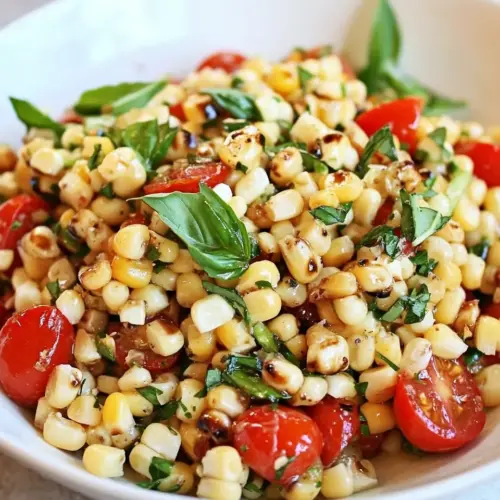
Fresh Corn and Tomato Salad with Balsamic Basil Dressing
Fresh Corn and Tomato Salad with Balsamic Basil Dressing is a bright summer salad bursting with sweet corn and juicy tomatoes, finished in a glossy, slightly thickened balsamic vinegar dressing. Easy to make and perfect for gatherings or quick weeknight dinners, it balances sweet and tangy notes with fresh basil for a refreshing side that everyone will request again.
Equipment
- Large Pot
- Paper towels
- Small Saucepan
- Medium Bowl
- Sharp Knife
Ingredients
- 1 teaspoons salt Bolster flavor and help season the salad by enhancing sweetness and balancing acidity; dissolve into dressings or sprinkle over corn to bring out natural flavors. Use measured amounts to avoid over-salting and adjust at the end to taste for best results.
- 6 medium ears fresh corn Provide sweet, crisp kernels when cooked or grilled, adding substantial texture and a fresh summery flavor; cook briefly to preserve sweetness and bite, then cut from the cob into the salad. Use fresh ears for peak flavor and color, and consider grilling for a smoky dimension.
- 1 1/2 cups halved pear or cherry tomatoes Offer juicy bursts of acidity and natural sweetness that contrast with the corn; halve to distribute evenly and allow their juices to mingle with the dressing. Choose ripe, firm tomatoes for best texture and wash gently before cutting.
- fresh basil, for garnish Add aromatic brightness and a fresh herbal finish when used as a garnish; tear or chiffonade leaves to release fragrance over the salad. Scatter right before serving to preserve vivid color and maximize aroma.
- 1/4 cup extra virgin olive oil Provide a fruity, smooth fat that emulsifies with the vinegar to form the dressing; whisk into balsamic vinegar to carry flavors and add mouthfeel. Use extra virgin for the best aroma and drizzle evenly over the salad for richness.
- 3 tablespoons balsamic vinegar Introduce tangy depth and sweet acidity that balances the oil and vegetables; combine with olive oil to create a glossy, flavorful dressing. Taste and adjust quantity to prevent overpowering the fresh produce.
- 1/2 teaspoon granulated white sugar Round out acidity and reduce sharpness by softening the vinegar’s bite while enhancing overall balance; dissolve into the dressing for subtle sweetness. Use sparingly and adjust to preference, especially with ripe tomatoes present.
- 1/2 teaspoon cornstarch Stabilize the dressing by thickening and preventing separation when dissolved in a small amount of liquid; mix with sugar or vinegar before whisking into oil to avoid lumps. Use minimal cornstarch so the dressing remains light while maintaining cohesion.
- 1 teaspoon dried oregano Lend dried, savory Mediterranean aroma and a hint of earthiness that complements fresh basil and tomatoes; sprinkle into the dressing or directly onto the vegetables for consistent seasoning. Crush lightly between fingers to release oils before adding for best flavor.
- 6 large leaves fresh basil, chopped Impart bright, sweet, herbaceous flavor and leafy texture when chopped; fold into the salad or dressing to infuse a fresh basil character. Use chopped leaves to distribute flavor evenly and add late in preparation to preserve freshness.
- salt and pepper, to taste Allow final seasoning refinement by adjusting salt and ground pepper to personal taste; season gradually and taste as flavors meld to avoid over-salting. Use small additions between mixing steps to achieve balanced seasoning.
Instructions
- Bring a large pot of water to boil. Add salt and corn. Cook for 5 minutes, then transfer cobs to a paper towel-lined plate to cool and dry.: The moment the water reaches a vigorous boil there is a bright aroma of heat and mineral notes, and you will hear a rapid rolling sound that tells you it is ready. Boiling water creates steam that helps the corn cook quickly and evenly, sealing in juices and preventing a mealy texture. One common mistake is underestimating the pot size, which can cause the water to cool when you add the corn , leading to uneven cooking. Keep the pot uncovered while boiling so the surface stays active, and add a measured amount of salt to season the water so the kernels begin developing flavor as they heat.
- When cool, cut the kernels off the cob and transfer the kernels to a medium bowl. Stir in tomatoes. Refrigerate while making the dressing.: When you add the corn to the boiling water you will hear a brief lull in the boil followed by a return to rapid motion, and the aroma becomes sweeter as the kernels release sugars. This step softens the kernels while maintaining a snap you want in the finished salad. The why here is simple, salted boiling water seasons the corn through and prevents blandness. A typical error is overcooking, which yields mushy kernels; set a timer and keep the cook time short to preserve texture.
- In a small saucepan, combine the olive oil, balsamic vinegar, sugar, cornstarch, oregano and basil. Bring to a boil, then reduce the heat and simmer until the dressing thickens slightly, 2 to 3 minutes.: After a short five minute cook the kernels will be tender yet still slightly firm, and cooling them on paper towels lets residual steam escape so they do not steam themselves into sogginess. The visual cue is bright, plump kernels that still hold shape. If the cobs sit in water they continue cooking, so promptly remove them and let them dry to maintain a crisp bite. A trap to avoid is leaving the cobs to cool in the pot, which creates overcooked kernels.
- Remove from heat, season with salt and pepper, and set aside to cool.: As you slice the kernels off you will notice a sound like tiny, satisfying pops and the board will catch little glints of juice. Cutting carefully close to the cob yields full kernels rather than ragged bites, and those whole kernels bring pleasing texture. The rationale is about mouthfeel, you want intact little bursts rather than mushy bits. Avoid sawing too forcefully which can grind the kernels; instead use a sharp knife in steady strokes.
- When ready to serve, drizzle dressing on top of the salad and toss gently. Garnish with additional basil, if desired.: Mixing in the halved tomatoes creates a contrast of juicy acidity and firm corn, and the bowl will soon glisten with juice. This combination balances sweet and bright flavors, ensuring every forkful is layered. A common oversight is tossing too aggressively and smashing the tomatoes , so fold gently to keep their shape. Allowing the mixture to rest briefly in the refrigerator helps the flavors settle.
- Refrigerate while making the dressing: Chilling the vegetable base lets flavors meld and keeps the salad crisp when the warm dressing is later added. Cold fragments of tomato and corn also provide a refreshing contrast to the slightly warm dressing. The key reason to refrigerate now is temperature balance, so the dressing does not wilt everything on contact. Do not leave it in the fridge too long uncovered, which can dry out the surface.
- In a small saucepan combine the olive oil balsamic vinegar sugar cornstarch oregano and basil: When these ingredients meet in a cold saucepan you can whisk them to integrate, and as heat begins to coax out aromas you will smell the sweet balsamic and herbaceous notes. Combining the extra virgin olive oil with balsamic vinegar and a bit of cornstarch produces a dressing that will thicken and coat, creating a near glossy finish. Stirring at this stage prevents lumps and ensures the cornstarch disperses. A frequent mistake is adding cornstarch without fully dissolving it, which can cause gritty pockets in the dressing.
- Bring to a boil then reduce the heat and simmer until the dressing thickens slightly 2 to 3 minutes: As the mixture heats you will see small bubbles forming at the edges and a faint steam rising, and the oil and vinegar will meld into a shiny emulsion. Simmering briefly concentrates flavor and allows the cornstarch to activate, producing a silky mouthfeel. This technique matters because a slightly thickened dressing clings to kernels instead of sliding off. Beware of over reducing which can make the dressing too sharp; remove it as soon as it gains a light viscosity.
- Remove from heat season with salt and pepper and set aside to cool: Pulling the saucepan off the flame preserves bright aromatics, and as it cools the dressing will mellow and the texture will become pleasantly syrupy. Seasoning at this stage lets you fine tune the balance because heat can mute salt and pepper, so add gently and taste when cooled. A common pitfall is under seasoning; let the dressing rest and reassess taste before final mixing.
- When ready to serve drizzle dressing on top of the salad and toss gently: The visual moment is beautiful as the glossy dressing catches light on kernels and tomato halves, and a gentle toss ensures each piece is lightly coated. Tasting after tossing is essential to confirm seasoning and texture. The reason for a light toss is to prevent bruising delicate tomatoes while still distributing flavor evenly. Avoid vigorous stirring which can break apart the salad.
- Garnish with additional basil if desired: Adding whole or torn fresh basil leaves right before serving releases an aromatic top layer and elevates the presentation. The fragrance and color of fresh basil create an immediate sensory lift that tells diners this salad is fresh and cared for. One mistake is adding chopped basil too early which can wilt and lose aroma; reserve the garnish until the final moment for the brightest impact.
Notes
- Swap tomato varieties Try heirloom wedges instead of cherry tomatoes for larger bites and varied colors while keeping the same balance of acidity to sweet.
- Adjust dressing thickness Reduce or omit the cornstarch for a looser vinaigrette if you prefer a lighter coating on the corn and tomatoes.
- Amplify herb presence Increase the chopped fresh basil inside the salad for a more herb forward profile, adding leaves sparingly so they do not overpower the produce.
- Make ahead notes Prepare the dressing a day ahead and store it in the refrigerator, then bring it to room temperature and whisk before using to refresh texture.
- Presentation tweak Serve the salad in hollowed tomato shells or small bowls for a visually appealing side at gatherings, keeping garnish whole for a fresh finish.