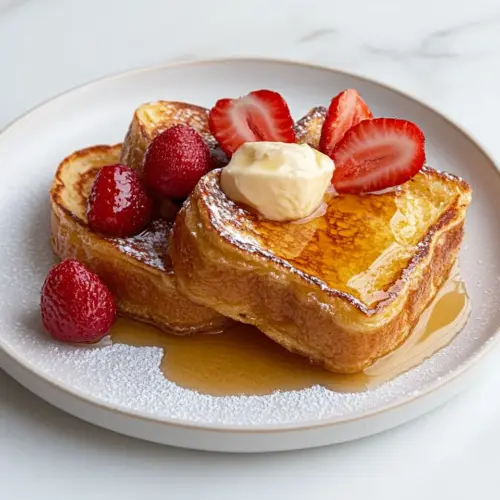
French Toast Recipe for One
French Toast Recipe for One is a creamy, easy single serving breakfast that yields a crispy exterior and tender interior, with warm notes of cinnamon and brown sugar. Perfect for a quick indulgent morning or a cozy weekend bite, this recipe is ideal for those who want something special without leftovers. Try it for an effortless, comforting start to your day.
Equipment
- Skillet
- Shallow Dish
- Whisk
Ingredients
- 1 large egg Whisk together thoroughly to create a rich custard base that binds and helps set the toast when cooked; provides structure and a silky texture once warmed.
- 1/4 cup whole milk Pour in to loosen the custard and add creaminess, contributing to a tender, moist interior of the soaked bread while helping distribute flavors evenly.
- 1 teaspoon brown sugar Sweeten gently to balance the egginess and enhance caramelization on the surface during cooking; helps create a lightly caramelized exterior and pleasant sweetness.
- 1/2 teaspoon vanilla extract Flavor subtly to add aromatic depth and warmth; enhances the overall sweetness profile and pairs especially well with maple syrup when serving.
- 1 pinch ground cinnamon Sprinkle sparingly to add warm, earthy spice and complexity; contributes a subtle background note that complements the sweetness and egg custard.
- 2 slices thick bread like brioche or challah Soak thoroughly in the custard mixture to absorb flavors and provide a sturdy, tender base for frying; thick slices like brioche or challah deliver a rich, airy interior and hold up well without falling apart.
- 1 tablespoon unsalted butter plus extra for serving (optional) Melt in the pan to prevent sticking and promote even browning, imparting a rich buttery flavor and creating a crisp golden crust while keeping the interior soft.
- Maple syrup for serving Drizzle generously when serving to add sweetness and acidity balance, enhancing the overall flavor and providing a classic finishing touch that complements the custardy bread.
Instructions
- In a shallow dish, whisk together the egg, milk, vanilla extract, brown sugar, and cinnamon until well combined.: The aroma of cinnamon and vanilla will bloom as you whisk, creating a fragrant custard base. You should notice the brown sugar begin to dissolve, leaving a slight sheen on the surface. Whisking thoroughly matters because it ensures an even color and texture when the mixture soaks into the bread , preventing streaks of egg white or clumps of spice. A common mistake is under whisking, which can leave uneven pockets of flavor or cause parts of the custard to set prematurely when cooked. Aim for a smooth, homogeneous mixture with small bubbles around the edges to signal readiness.
- Dip each slice of bread into the egg mixture, allowing each side to soak for a few seconds.: As the bread meets the custard, you will see it darken slightly and feel the custard saturate the crumb. Thicker slices should be given a moment longer to absorb, while dense or slightly stale loaves might need a careful press to encourage the soak. The tactile cue is important; the bread should feel saturated but not dripping. Avoid the trap of over soaking, which leads to a soggy interior that will take longer to cook through and may fall apart in the pan. If the slices are overly wet, briefly rest them on a rack so excess custard drains away before cooking.
- Heat a skillet over medium heat and melt the butter.: You want the skillet to be comfortably warm so the butter foams and gives off a nutty scent without turning brown immediately. The sound when you add the toast should be a gentle sizzle, not an aggressive crackle, which would indicate the pan is too hot. Moderate heat ensures the exterior browns while the interior becomes custardy, avoiding burnt edges and raw centers. A common error is starting with too high heat, which creates a browned exterior before the inside cooks, resulting in imbalance. Adjust the flame if the butter smokes or darkens too quickly.
- Add the soaked bread slices to the skillet and cook until golden brown on each side, about 2 to 4 minutes per side. Try not to disturb the French toast too much while it cooks.: You will see the edges turn golden and the surface develop small caramelized bubbles. The sizzling sound should be steady but gentle, and the odor will move from buttery to toasty with sweet notes from the brown sugar . Letting the slices sit undisturbed allows a crust to form, which locks in the custardy interior. Flipping too often prevents that crust from developing and can cause the toast to break apart. If the surface is browning too fast, lower the heat and give the slice more time to cook through, otherwise the center will remain underdone.
- Serve the French toast immediately with a drizzle of maple syrup and extra butter if desired.: When you plate the toast, the final sensory moment arrives as the warm slices release steam and the maple syrup glistens on the surface. The contrast between the crisp edges and the soft interior is most pronounced right away, so serving promptly preserves that balance. If you wait too long, the crust softens and the texture becomes uniformly tender rather than layered. A frequent oversight is stacking slices while they are still hot, which traps steam and softens the crust, so plate single slices side by side or on a wire rack briefly if you must hold them.
Notes
- Swap the bread wisely Try brioche or challah for a rich crumb, or a sturdy sourdough for tang and chew, both soak differently so adjust soak time slightly.
- Control sweetness with brown sugar Reduce the brown sugar for a less sweet profile or increase it for deeper caramelization on the crust.
- Opt for whole milk Whole milk gives a richer custard, while lower fat milks will yield a lighter texture but slightly less silkiness.
- Mind the butter temperature Melt the butter until foaming but not browned to avoid bitter flavors and to achieve even browning.
- Use a shallow dish for dipping A wide, shallow bowl allows even soaking and makes it easier to flip the slices without spills.