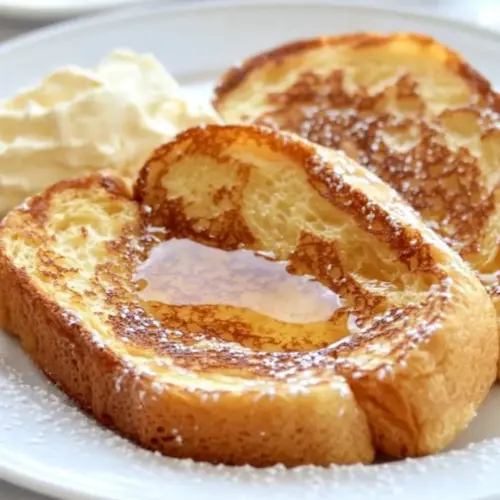
French Toast
French Toast is a creamy, easy breakfast that balances a tender custardy interior with a crisp golden exterior. This simple recipe uses everyday ingredients like eggs, milk, and bread to create a comforting, quick morning favorite perfect for weekend brunch or an easy weeknight treat, making it a smart pick when you want something warm and satisfying to share.
Equipment
- Non-stick pan
- Large Bowl
- Whisk
- Spatula
- Griddle
Ingredients
- 10 slices Bread (cut about 3/4-inch thick) Layered as the base, provides the structure and absorbs the custard; choose slices about 3/4-inch thick to maintain shape and achieve a tender interior with a slightly crisp exterior when cooked.
- 4 large eggs Beaten to create the custard, binds and enriches the mixture; use large eggs for consistent texture and a golden color in the finished toast.
- 2/3 cup whole milk (or 2% milk) Whisked into the eggs to thin the custard and add creaminess; whole milk yields a richer custard, while 2% makes a lighter but still tender result.
- 1 tablespoon pure maple syrup (or granulated sugar) Added for subtle sweetness and depth, enhances flavor in the custard; pure maple syrup offers complexity while granulated sugar is a fine substitute.
- 2 teaspoons vanilla Stirred in to add aromatic warmth and brightness to the custard; vanilla complements the eggs and milk for a well-rounded flavor profile.
- 1/4 teaspoons salt Sprinkled into the custard to enhance overall taste balance and season the mixture; a small amount prevents a bland final dish.
- Optional spices: 1/8 teaspoon nutmeg (go for 1/4 teaspoon if you really like nutmeg or 1/2 teaspoon cinnamon) Included optionally to introduce warm spice notes; nutmeg or cinnamon can be adjusted to personal preference for a fragrant boost.
- Powdered sugar Dusted over the finished toast for a delicate sweetness and visual appeal; powdered sugar adds a light, refined finish without altering texture.
- Butter Melted in the pan to prevent sticking and add a rich, savory note; butter also helps achieve golden-brown edges and a luscious mouthfeel.
- Pure maple syrup Drizzled atop as a classic sweetener and flavor accent; pure maple syrup deepens sweetness with natural, complex flavors.
- Fruit syrup Poured as an alternative topping to vary sweetness and flavor; fruit syrup offers bright, fruity notes and colorful presentation.
- Fresh fruit Arranged alongside or on top to provide freshness, acidity, and texture contrast; fresh fruit balances sweetness and adds visual appeal.
- Whipped cream Spoonfulled on the side or atop to introduce creamy lightness and airiness; whipped cream adds indulgence and contrasts the warm toast.
Instructions
- Slice your bread and, if it’s not already stale, let it sit out for awhile to harden up a bit.: When you begin, there will be a dry, faint yeasty aroma from the Bread if it is a day or two old, and that dryness is desirable because it helps the slice soak the custard without collapsing. Gently press a finger into a slice to feel the density; slightly firm slices will soak without going to mush. One common mistake is using very fresh, soft slices that disintegrate as you dip them, so if your Bread feels pillowy, give it 30 to 60 minutes at room temperature to firm up.
- In a large bowl, beat the eggs well. Add the milk, syrup or sugar, vanilla, salt, and nutmeg and/or cinnamon if using. Mix well.: As you whisk, the mixture should turn pale and slightly frothy, releasing the aroma of vanilla and sweet spice. The liquid should smell rounded, with the sharpness of raw eggs mellowing into a custard scent. Whisking ensures an even distribution of ingredients and prevents pockets of unmixed egg that can create uneven texture. Avoid under mixing, which causes streaks of yolk and inconsistent coating.
- Heat a large non-stick griddle to 350 degrees Fahrenheit or set a medium non-stick pan over medium heat. If necessary, add melt a little butter on the griddle or in the pan to help prevent sticking.: By the time the pan is ready, you will notice a faint sizzle when a drop of water hits the surface, and a warm, nutty smell from the Butter as it browns slightly. A properly heated pan gives that immediate sear that forms the golden crust. Too hot, and the exterior will char before the center cooks; too cool, and the toast will become greasy and pale. If your toast is browning too fast, lower the heat a touch.
- One by one, dip the bread into the egg mixture, using a fork to help dunk and maneuver. Dip for about 1 second on each side then transfer immediately to the cooking surface.: The brief dip keeps the exterior from over saturating while still coating the slice. You should see the surface glisten but not drip. When you move the slice from bowl to pan, a gentle pat on the side of the bowl removes excess custard and reduces dripping. A frequent error is leaving the slice submerged too long, which results in a soggy, collapsing center.
- Cook on the first side until golden brown, 1-2 minutes. Flip and cook on the other side until golden brown and the egg is cooked through, another 1-2 minutes.: As it cooks, you will hear a subtle sizzle and see the edges turn a warm gold, progressing to a deeper amber. The smell shifts to a toasty, buttery note that is unmistakable. When you tent the toast with a spatula, the center should feel set but still springy. If the center is still very soft and raw, it means the heat was too high or the slice was too thick; lower the heat and allow a bit more time so the custard finishes cooking without burning the exterior.
- Transfer to a platter and cover with a dishtowel to keep warm until serving.: The residual heat will continue to set the custard gently, and covering with a clean dish towel traps enough steam to keep the surface tender but not soggy. You will notice a subtle change in aroma as the toast rests and the flavors settle. A common slip is stacking pieces directly, which can steam the surfaces and erase the crispness, so arrange them in a single layer if keeping warm for longer than a few minutes.
- Serve with whichever toppings suit you!: When you plate, the first sensory cue is the sheen from melted Butter meeting hot toast, followed by the sweetness of syrup or powdered sugar and the brightness of Fresh fruit . Consider temperature contrasts, like cool Whipped cream on hot slices, for maximum sensory pleasure. Avoid adding heavy syrups that mask the custard; a drizzle is usually enough to complement the flavors without drowning them.
Notes
- Use day old bread for the ideal soak and structure, it absorbs the custard without collapsing and yields a custardy center with a crisp exterior.
- Choose whole milk for richness if you prefer creamier texture, 2 percent will be lighter and still tender but slightly less indulgent.
- Do a quick pat before cooking to remove excess custard that can lead to soggy texture and uneven browning on the pan.
- Watch pan temperature and aim for a steady medium heat so the toast browns slowly and cooks through without burning.
- Serve immediately with warm syrup to let it soak into crevices for the best flavor distribution and mouthfeel.