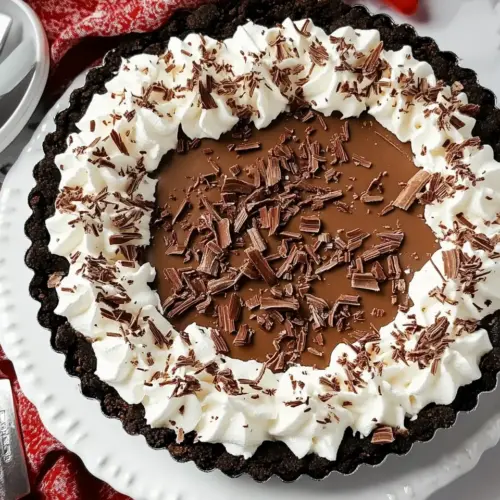
French Silk Tart
French Silk Tart offers a creamy, chocolate forward filling nestled in a crisp Oreo crust. Rich, silky, and easy to assemble, this dessert is ideal for make ahead entertaining and celebratory dinners. Serve chilled with whipped cream for a show stopping finish that still feels effortless, making it a perfect choice for an easy weeknight dessert or special occasion.
Equipment
- Stand mixer
- Paddle attachment
- 10 inch tart pan
- Food Processor
- Mixing Bowl
Ingredients
- 32 Regular Oreos, processed to crumbs Crushed finely to create the tart base, providing structure and a deep chocolate flavor that contrasts with the filling; binds with melted butter to form a cohesive, sliceable crust and contributes both texture and sweetness when pressed into the pan.
- 6 tablespoons butter, melted Melted and incorporated into the cookie crumbs to moisten and bind them into a compact crust; adds richness and helps the crust set firmly when chilled or baked, enhancing mouthfeel and flavor.
Instructions
- To make the crust, mix Oreo crumbs and melted butter until well combined.: The first sensory cue is the smell of chocolate as you stir, and you ll notice the crumbs turn uniformly glossy when the butter is distributed. Use a bowl with a flat bottom to press the mixture easily later on. The why: even distribution ensures the crust holds together when sliced. Troubleshooting tip: if pockets of dry crumbs remain, add a teaspoon of melted butter at a time until the mixture holds when pinched. Avoid overworking or pressing too firmly or you may end up with a rock hard crust.
- Pat into the bottom and up the sides of a 10-inch tart pan. Freeze for about 10 minutes.: You will feel the texture change as you press the crumbs into place, and the visual cue is an even layer across the base and sides. Chilling the pan firms the crust so it keeps its shape while you prepare the filling. The reason this matters is it prevents the crust from crumbling when filled. Common mistake to avoid: pressing unevenly which causes thin spots that can break; take time to smooth and build an even edge.
- In the bowl of a stand mixer with the paddle attachment, cream butter and sugar for about 2 minutes, till light and fluffy.: When creaming, watch for a pale color and a fluffier texture, and listen for the gentle, airy sound as the mixture changes. This process traps air, contributing to a lighter mouthfeel in the final filling. If you under-cream, the filling can be dense; over-creaming might warm the mixture too much. If your kitchen is warm, chill the bowl briefly before starting.
- With the mixer running, gradually add the melted chocolate and the vanilla.: As the melted chocolate folds in, the aroma deepens into a rich cocoa scent and the mixture takes on a glossy sheen. Adding the chocolate slowly prevents separation and encourages a uniform emulsion. The why: gradual incorporation keeps the texture silky. A common issue is adding hot chocolate too quickly, which can seize; ensure the chocolate is warm but not scalding, and add in a slow stream.
- Add eggs, one at a time, beating at medium speed for 5 minutes after each addition.: You ll notice the batter becomes progressively lighter and mousse like as each egg is fully integrated, and the sound of the mixer becomes steadier. This long, measured beating whips air into the filling, creating that classic silkiness. The reason this technique matters is it stabilizes the filling without curdling. Mistake to avoid: rushing the eggs, which can lead to a runny or unstable filling; always wait the full beating time for best texture.
- Pour the filling into the cooled crust. Loosely cover with plastic wrap, and cool in the refrigerator for at least 4 hours.: As you pour, you should see the glossy surface level itself, and the fill settles with a slight sheen. Chilling allows the structure to set, turning the mousse like batter into a sliceable tart. Why: patience yields clean slices and a firm mouthfeel. Don t skip chilling or the tart will be too soft; a common error is cutting it too soon, causing the filling to slump.
- Whip one cup of heavy cream, adding powdered sugar, Whip It (if using), and vanilla to taste. Pipe stars of whipped cream over the surface of the tart, or just spread the cream over the surface.: You ll hear the change in sound as the cream thickens and see soft peaks form, then firmer peaks depending on how long you beat. Sweetening balances the chocolate and adds a light, airy contrast. The why: the whipped topping brings freshness and textural contrast. Be careful not to overwhip into butter; if the cream starts to look grainy, stop immediately and gently fold in a tablespoon of fresh cream to smooth it.
- Garnish with chocolate shavings if desired.: The finishing touch elevates the presentation, and as you shave chocolate you ll catch that rich cocoa aroma. A visual of thin curls or rustic shards provides contrast against the smooth whipped cream. Why: garnish adds both texture and visual drama. Avoid large, heavy pieces that sink into the cream; aim for delicate shavings for the best effect.
Notes
- Make it nutty Add finely chopped toasted nuts to the crust mixture for extra crunch, folding them into the cookie crumbs before adding melted butter. The nuts lend a toasty counterpoint to the chocolate and create a more complex mouthfeel.
- Decorate for a crowd Pipe generous rosettes of whipped cream and top with uniform chocolate shavings so each slice looks like a slice from a bakery, which is perfect for celebrations.
- Turn it into individual portions Press crumbs into tartlet pans instead of a single 10 inch pan and portion the filling into those. Individual tarts chill faster and make serving effortless at parties.
- Adjust sweetness If you prefer slightly less sweetness, reduce the powdered sugar used in the whipped cream and rely on the chocolate s natural richness to carry the dessert.
- Finish with textures Scatter a few delicate sea salt flakes on top of the tart just before serving to heighten the chocolate flavor, creating a savory echo that balances the sweetness.