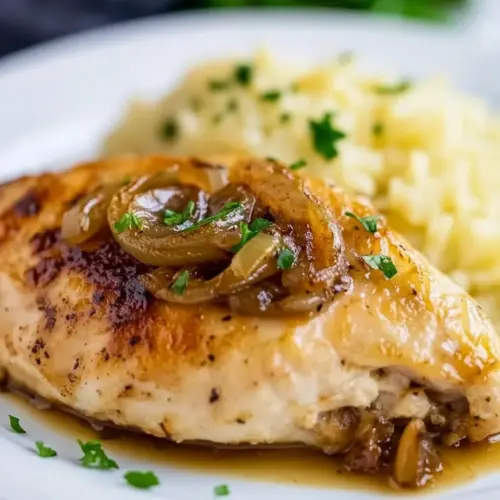
French Onion Stuffed Chicken
French Onion Stuffed Chicken is a creamy, savory, and easy weeknight dinner that pairs sweet caramelized onion with gooey cheese and perfectly seared chicken. The result is a comforting main that feels special enough for guests, yet quick enough for busy evenings. Make it for a cozy family meal and enjoy deep, layered flavor in every bite.
Equipment
- Oven proof skillet
- Knife
- Cutting Board
- Mixing Bowl
- Toothpicks
Ingredients
- 2 tablespoons olive oil, divided Use to sauté and finish the chicken; start by heating one tablespoon for cooking onions and reserve the remainder for searing the chicken breasts to develop a golden crust and deepen flavor.
- 1 tablespoon butter Melt to enrich the caramelization process and add a silky mouthfeel; incorporate with oil while cooking onions to boost savory depth and a subtle nutty note.
- 3 medium yellow onions, sliced Slice and cook slowly to create a sweet, deeply caramelized base; cook until translucent and browned to provide the classic French onion flavor and substantial stuffing for the chicken.
- 1 garlic clove, minced Mince and add near the end of onion cooking to provide a pungent, aromatic lift; stir briefly to avoid burning while enhancing savory complexity.
- salt and pepper Season generously to balance sweetness and richness; sprinkle throughout cooking and adjust to taste to enhance all other components without overpowering them.
- 1/4 teaspoon dried thyme Sprinkle to impart an earthy, slightly floral background; add during onion cooking to complement sweetness and tie together savory elements in the stuffing.
- 1/4 teaspoon crushed red pepper flakes Add sparingly to introduce a subtle heat and brightness; include while cooking onions to cut richness and add a gentle spicy contrast to the dish.
- 1/4 cup beef broth Pour in to deglaze the pan and capture browned bits from onions; use to concentrate savory flavor and create a moist filling while preventing dryness in the chicken.
- 4 boneless, skinless chicken breasts Pound or butterfly to create a pocket and hold filling; cook until just done to ensure juicy meat while accommodating the onion and cheese stuffing.
- 1 cup shredded mozzarella or gruyere cheese Layer into the filling to provide a melty, creamy texture and mild tang; choose mozzarella for stretch or gruyere for nutty depth when stuffing chicken breasts.
- 1/4 cup shredded Parmesan cheese Sprinkle over or into the filling to add salty, umami-rich savory notes and a fine-grained finish; melts lightly and enhances the overall cheesy profile.
Instructions
- Preheat oven to 375 degrees.: As you warm the oven you should feel the kitchen start to take on a gentle heat, which helps when the skillet goes in to finish the chicken . Preheating ensures consistent cooking and prevents the pan from cooling the oven when transferred. A common mistake is slipping this step, which can lengthen cooking time and yield unevenly cooked meat, so always confirm the temperature before you begin searing.
- Heat 1 tablespoon oil and the butter over medium heat in a large oven-proof skillet. Add onion and cook until golden, about 8 to 10 minutes, stirring frequently so they don't burn.: As the fat warms, you will hear a soft, steady sizzle when the sliced onion hits the pan. Stirring frequently encourages even contact with the surface so the sugars can slowly caramelize rather than blacken. Watch for the color to shift from pale to deep gold and for the aroma to turn from sharp to sweet and nutty. A frequent error is turning the heat too high to rush the process, which results in bitter, burnt edges instead of that jammy, rich texture we want.
- Add garlic, thyme, and red pepper flakes and cook 1 minute. Add beef broth and cook another minute. Season to taste with salt and pepper. Transfer onions to a medium bowl and set side.: When you add the minced garlic and spices, a fragrant pop should lift from the pan immediately. After deglazing with the beef broth, use a wooden spoon to scrape any browned bits from the skillet, they hold concentrated savory flavor. Let the mixture reduce briefly until it feels slightly syrupy. Remove the mixture to a bowl to stop the cooking process, which preserves the bright aromatics. Avoid leaving garlic in the hot pan too long as it can become bitter.
- Cut a pocket in each chicken breast. Season chicken with salt and pepper.: When creating pockets, insert the knife carefully to make a deep cavity without cutting all the way through; you want a secure chamber for the filling. Patting the chicken dry before cutting helps you control the incision. Season the interior and exterior lightly to ensure flavor throughout. A typical slip is cutting all the way through the breast, which causes the filling to spill during cooking, so keep a steady hand and work slowly.
- Add mozzarella and Parmesan cheese to bowl with onions and stir to combine.: As you mix the shredded cheese into the warm onion mixture, the residual heat will begin to soften the shreds slightly, helping them bind. The cheeses contribute both gooey texture and savory punch, so ensure they are evenly distributed. If the mixture seems too loose, a brief chill helps it hold together when stuffing. Avoid overmixing into a paste; you want distinct strands of melted cheese within the filling.
- Stuff the pockets in the chicken with onion/cheese mixture. Secure with toothpicks if necessary.: As you spoon filling into each pocket, press gently so the mixture sits snugly inside without bulging the breast too much. Use one or two toothpicks to close the incision if needed, which prevents loss of filling during searing. The tactile sense here is important, you want each breast to feel compact but not overstretched. A pitfall is overstuffing, which can prevent the chicken from cooking evenly or cause the filling to spill out in the pan.
- Heat remaining oil in the same skillet over medium-high heat. Add chicken and cook for 3 minutes per side.: When the reserved oil is hot and shimmering, place the stuffed breasts in the skillet to create a focused sear. You should hear a confident sizzle and see the edges begin to color within the first minute. Searing locks in juices and builds those golden brown, toasty flavors that contrast the melty interior. Keep an eye on the pan temperature, because too high will char the exterior before the interior reaches safe temperature, and too low will prevent proper browning.
- Transfer pan to oven and cook for 8 to 10 minutes or until cooked through.: Moving the skillet to the oven finishes the chicken gently so the interior cooks through while the exterior stays crisp. During this phase you should notice the aroma deepen and the cheese melt fully inside. Use a thermometer if you like, aiming for the chicken to reach 165 degrees Fahrenheit at the thickest part, avoiding overcooking to preserve juiciness. A common mistake is relying solely on time; ovens vary, so check temperature or slice one breast to verify doneness before serving.
Notes
- Swap the melting cheese: Use either mozzarella or gruyere for different profiles, mozzarella for milky stretch and gruyere for nutty depth, both will melt beautifully inside the chicken.
- Use low sodium broth: If you are watching salt, choose low sodium beef broth for deglazing and then adjust seasoning after stuffing to control final salt levels.
- Make ahead the onion filling: Caramelize a day ahead and refrigerate the filling, which saves time on the day you plan to cook, and the flavor often deepens overnight.
- Even out thick breasts: If one breast is particularly thick, gently pound it to even thickness to ensure the exterior does not overbrown before the interior cooks through.
- Secure with kitchen twine: For a neater presentation use a short piece of kitchen twine to hold the pocket closed instead of toothpicks, removing the twine after cooking.