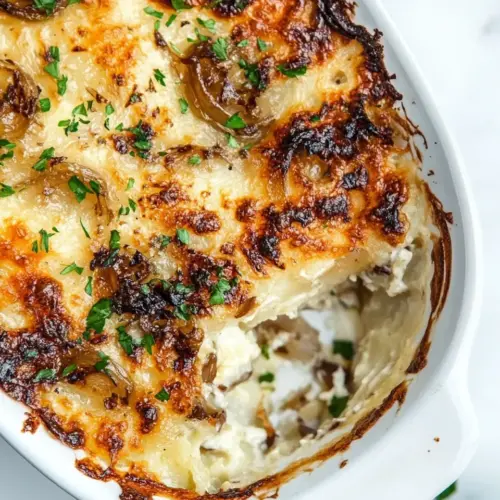
French Onion Scalloped Potatoes
French Onion Scalloped Potatoes deliver creamy, cheesy layers with sweet, caramelized onions and a golden breadcrumb top. This easy weeknight dinner or holiday side is rich, comforting, and full of savory depth. Thinly sliced potatoes and a velvety gruyere béchamel make every forkful lush and satisfying, giving you a reason to make it for guests or a cozy family meal.
Equipment
- Skillet
- Saucepan
- Mandoline
- Baking Dish
- Whisk
Ingredients
- 4 sweet onions, thinly sliced Caramelize sweet onion slices slowly until deeply browned to build a rich, savory-sweet base that defines the dish’s flavor; cook low and slow to concentrate sugars and develop umami without burning. Use even, thin slices to ensure uniform cooking and maximum surface area for caramelization.
- 4 tablespoons unsalted butter Melt unsalted butter to sauté the onions and form a flavorful fat component for the sauce; use clarified butter or cook until foam subsides to avoid browning too quickly. Measure precisely to balance richness without overwhelming the potatoes.
- kosher salt and pepper Season with kosher salt and pepper to enhance overall flavors and control sweetness from the onions; add salt gradually and taste as you go to avoid oversalting. Use fresh cracked pepper for aromatic heat and a pleasant bite.
- 1/2 teaspoon dried thyme Sprinkle dried thyme to add earthy, slightly minty and floral notes that complement the caramelized onion; rehydrate briefly in the cooking liquid to release essential oils. Use sparingly to avoid herbal dominance over the delicate cheese and potatoes.
- 3 pounds russet potatoes, peeled Peel russet potatoes and slice uniformly to ensure even cooking and consistent texture throughout the gratin; choose russets for their starchy, absorbent quality that yields tender, creamy layers. Rinse and pat slices dry to remove excess starch and prevent clumping.
- 4 tablespoons unsalted butter Melt additional unsalted butter to create a roux base and brush dish edges for browning; use at a moderate temperature to avoid burning and to contribute to a silky sauce. Reserve some butter for dotting the top if a richer finish is desired.
- 4 tablespoons all-purpose flour Whisk all-purpose flour into melted butter to form a roux that thickens the milk into a smooth béchamel-style sauce; cook briefly to remove raw flour taste but avoid browning. Gradually incorporate liquid to prevent lumps and achieve a velvety texture.
- 3 1/2 cups milk Warm milk and add slowly to the roux to create a creamy sauce that coats potato slices and binds layers; use whole or 2% milk for body and temper to avoid curdling. Simmer gently until slightly thickened to ensure a cohesive gratin.
- kosher salt and pepper Season again with kosher salt and pepper to balance the béchamel’s richness and the potatoes’ blandness; adjust seasoning after the sauce has reduced slightly since flavors concentrate. Finish with a final taste check before assembling to avoid underseasoned layers.
- 1/4 teaspoon freshly grated nutmeg Grate and add freshly grated nutmeg sparingly to introduce warm, aromatic undertones that elevate dairy-based sauces; stir into the béchamel to distribute flavor evenly without overpowering the cheese. Use fresh nutmeg for brighter, more complex aroma than pre-ground.
- 12 ounces freshly grated gruyere cheese Fold in freshly grated gruyere cheese to provide nutty, slightly sweet, and melty richness that gratinates beautifully; layer between potatoes and on top for deep flavor and a golden crust. Reserve a bit for finishing to ensure a gooey, browned surface.
- 1/3 cups seasoned bread crumbs Sprinkle seasoned bread crumbs atop the assembled gratin to create a crisp, textured crust that contrasts the creamy interior; choose fine crumbs and toss with a little butter for optimal browning. Apply evenly to avoid soggy spots and promote an appealing golden finish.
Instructions
- Preheat the oven to 375 degrees F.: The kitchen should smell neutral and you should be able to work without rushing, because an oven at 375 degrees F provides steady, even heat that cooks the dish through while browning the top. You might hear the oven click as it reaches temperature and feel steady warmth when you open the door. A common mistake is preheating too briefly, which leads to uneven cooking and longer bake times.
- Thinly slice the onions. Heat the 4 tablespoons of butter in a skillet over medium heat. Add in the onions with a big pinch of salt and pepper. Stir. Cook for 10 minutes, stirring occasionally, until the onions soften. Reduce the heat to medium-low, stir in the thyme and cook for another 30 to 40 minutes, stirring often, until the onions are golden and caramelly in color. If at any time the onions start to burn, turn down the heat or add a splash of water to the pan. If the onions are not cooking, you need to raise the temperature a bit.: When you start, the sizzle will be bright and lively as the butter meets the sliced onions . After about 10 minutes the sound settles into gentle, intermittent pops as the moisture releases. The smell shifts from sharp to sweet, and the color of the onions moves from translucent to rich gold. Lowering the heat after initial softening lets sugars develop without burning, producing jammy, deeply flavored strands. A frequent error is keeping the pan too hot, which creates bitter, charred bits instead of even caramelization, so be patient and adjust the heat as needed.
- Use a mandoline or sharp knife to thinly slice the potatoes - you want them to be very thin, uniform in size and 1/8 inch thick or thinner. If you are slicing them ahead of time or with a while to go before assembling, place them in a bowl of ice water so they don’t brown.: As you slice, the stack of pale rounds will feel cool and slightly waxy; uniform thickness ensures they cook at the same pace and gives silky layers in the final bake. The ice water keeps them bright and prevents oxidation if there is a pause. A common pitfall is uneven slices that leave some pieces undercooked while others collapse, so aim for steady, controlled strokes or use a mandoline guard for safety.
- Make the sauce! Heat the other 4 tablespoons of butter in a saucepan until melted. Whisk in the flour to create a roux. Cook for 2 to 3 minutes, stirring, until the roux is golden in color and smells fragrant and nutty. Slowly stream in the milk while whisking the entire time, bringing the sauce together.: When you melt the butter and add flour , the mixture should foam gently and smell toasty as the raw flour aroma fades; that indicates the roux is ready. Streaming in the milk little by little while whisking prevents lumps and yields a silk smooth béchamel. The sauce will thicken and develop a glossy mouthfeel, which tells you it can coat the back of a spoon. A typical mistake is pouring all the milk at once, which creates lumps, so keep whisking steadily and take your time.
- Continue to stir the sauce and whisk in a pinch of salt and pepper and the nutmeg. Reduce the heat to low. Slowly stir in 6 ounces (about half) of the gruyere until melted. Taste and season with more salt and pepper if needed.: As the grated gruyere cheese melts into the warm sauce, you will see ribbons of glossy cheese integrating until the béchamel becomes rich and slightly thicker. The scent will shift to hazelnut and warm dairy notes. Reducing heat prevents separation and keeps the texture smooth. A common issue is overheating the sauce after adding cheese, which can cause oily separation, so keep it gentle and stir until fully incorporated.
- Layer half of the potatoes in the baking dish. Cover with half of the cheese sauce, then half of the caramelized onions and half of the remaining grated gruyere. Layer the remaining potatoes on top. Top with the remaining cheese sauce, covering all the potatoes. Top with the remaining caramelized onions and the grated gruyere. Top with the bread crumbs.: When assembling, you should feel the cool weight of the first potato layer and then see the sauce spread into the gaps, smoothing into glossy pockets that cradle the onions and cheese . Alternating layers ensures every slice has a balance of textures. Press gently but do not compact, or the casserole will be dense. A common mistake is skimping on sauce, which leaves dry spots; make sure the layers are evenly coated for consistent creaminess.
- Bake uncovered for 45 to 60 minutes, or until the potatoes are tender enough to pick up with a fork. If the top gets too brown towards the end, you can tent it with foil. Let cool slightly before serving.: In the oven you will hear a soft bubbling and see the top develop a golden, blistered crust while steam escapes from the edges. The smell becomes rich and savory, and a knife or fork should glide through layers with no resistance. If the top darkens too quickly while the interior is still firm, tent loosely with foil to protect the crumbs. Avoid removing it too soon, because cutting into a piping hot casserole can cause the custard to break and become watery; allow a short rest so it sets for cleaner slices.
Notes
- Caramelize low and slow, because patient cooking of the onions builds the deepest flavor and prevents burning.
- Keep potato slices uniform, since consistent thickness guarantees even baking and a smooth final texture.
- Grate cheese fresh, as pre shredded gruyere cheese often contains anti caking agents that affect melt quality.
- Season in layers, tasting the béchamel before assembling so the final dish is balanced and not overly salty.
- Make ahead when possible, assembling the casserole a few hours earlier and chilling so flavors develop and bake time shortens slightly.