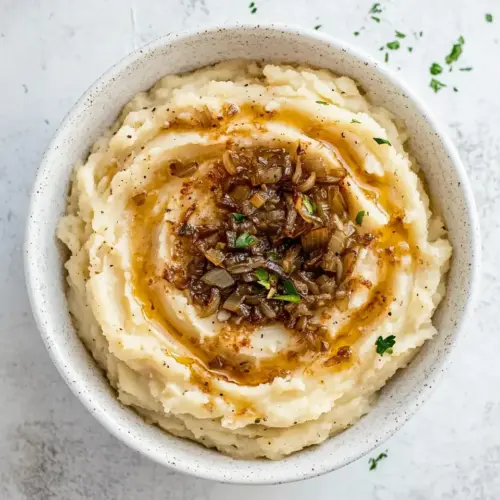
French Onion Mashed Potatoes
French Onion Mashed Potatoes are creamy, savory, and richly flavored with slow caramelized onion and melted Gruyere, making them an irresistible side for an easy weeknight dinner or a special holiday spread. Fluffy potatoes meet luxurious cream and butter for comfort with a gourmet twist, ideal when you want something familiar yet elevated. Make it ahead and reheat for effortless entertaining.
Equipment
- Skillet
- Large Pot
- Saucepan
- Potato masher or ricer
Ingredients
- 6 tablespoons Simply Nature Organic Unsalted Butter Melted and nuttier in flavor to enrich the caramelizing onions and mashed potatoes; used early to sauté onions until golden and later folded into potatoes for a silky mouthfeel and added richness.
- 4 sweet onions, thinly sliced Thinly sliced to release natural sugars during slow cooking; sautée gently in butter until deeply caramelized to build the sweet, savory backbone and layer of flavor for the dish.
- kosher salt Used sparingly to season layers during cooking; sprinkle while caramelizing onions and boiling potatoes to enhance natural flavors and balance sweetness and richness in the finished mash.
- 5 pounds russet or yukon gold potatoes, washed and peeled Starchy and hearty when peeled and cooked, providing the creamy foundation of the mash; boil until tender, drain, and mash thoroughly so they properly absorb butter, cream, and cheese for a smooth texture.
- 12 tablespoons Simply Nature Organic Unsalted Butter Added for extra creaminess and buttery flavor; incorporated into the mashed potatoes after mashing to create a luxurious, velvety consistency and deepen the overall richness.
- 1 1/2 cups Friendly Farms Heavy Whipping Cream Poured warm to loosen and enrich the mash; heat before adding so it blends smoothly with butter and potatoes, producing a creamy, luscious texture without cooling the mixture.
- 8 ounces Emporium Selection Le Gruyere Cheese, freshly grated Grated to introduce nutty, savory complexity and gooey melting character; folded into hot potatoes so it melts evenly and contributes a pronounced cheesy finish and umami depth.
- 1 to 2 teaspoons salt Used to finish and adjust seasoning precisely; add incrementally after mashing and tasting to ensure the potatoes are properly seasoned without overpowering the other flavors.
- freshly ground black pepper Ground to taste to add bright, sharp spice and aromatic lift; freshly grind over the finished mashed potatoes to provide contrast and highlight the dish's savory-sweet components.
Instructions
- Heat the butter in a skillet over medium-low heat. Add the onions with a big pinch of salt. Cook for 10 minutes, stirring often, so the onions begin to cook down. After 10 to 15 minutes, reduce the heat to low. Continue to cook, stirring occasionally, until the onions are golden and caramelly, about 45 to 60 more minutes. Continue to cook until your desired caramelization is reached.: As the butter warms, it should melt slowly and begin to shimmer without browning immediately, releasing a gentle, nutty aroma. You will hear a faint sizzle as the surface moisture leaves, and the surface will look glossy. This gentle heat is crucial because it allows the onion to soften evenly rather than sear. If the butter starts to foam aggressively or darken quickly, the pan is too hot; lower the heat to avoid bitter burnt flavors. Stir frequently to coat the pan and distribute heat, and use a pan with a wide surface area so the onion lays out in a single layer for even caramelization. Be patient, the payoff is a sweet, complex base for the whole dish.
- Note: to prep these ahead of time, wash, peel and chop your potatoes. Place them in a large bowl and cover them with cold ice water. Store them in the fridge for 12 to 18 hours before preparing.: When you add the thinly sliced onion , you will feel the temperature dip slightly and then slowly rise as the moisture evaporates. The salt draws out juices from the onion , helping them break down and begin to soften, releasing a light savory perfume. You should stir often in these early minutes to prevent sticking, but not constantly, so the onion can make contact with the hot surface and begin to brown. A common slip is under salting here; without that initial pinch, the onion may taste flat even after caramelization. Monitor the heat so the onion sweats and becomes translucent before any significant browning occurs.
- Slice the potatoes in half or in quarters, depending on the size. You want the potato chunks to all roughly be the same size and not too small.: In this phase the onion will go from crisp and raw to soft and translucent, releasing a sweeter scent that fills the kitchen. The sound changes from a high sizzle to a lower, gentler simmer as water evaporates. Stirring often prevents uneven patches from sticking or browning too fast, and it helps you notice when the edges start to color. If you rush this stage with higher heat, the exterior may brown too quickly while the interior remains raw. Keep an eye for even softening and a uniform pale gold color before moving on.
- Place the potatoes in a large pot of cold water over medium heat. Season the water with a big pinch of salt. Bring the potatoes to a boil, then boil until they are fork tender, about 12 to 15 minutes. (If your potato chunks are smaller, check after 10 minutes.): Dropping to low creates the slow, patient environment the onion needs to transform from soft to deeply caramelized. At low heat the onion will take on richer amber hues and a sweet, almost toasty aroma. You should notice little wisps of steam rather than vigorous bubbling, and the onion will stick lightly then release as sugars develop. If the pan is still too active, lower further; aggressive bubbling indicates the temperature is too high, which can lead to bitter burnt bits. This step matters because slow cooking concentrates flavor without charring.
- While the potatoes are boiling, heat the butter and cream in a saucepan over medium-low heat until the mixture is warmed through.: Over this long period the onion will transform completely, going from pale strings to deep, glossy ribbons that smell sweet, almost raisiny. You will see edges darken to rich brown while inner layers remain slightly translucent. Stir occasionally to prevent hot spots and scraping, and scrape the pan bottom to reincorporate sticky browned bits, which are flavor gold. Watch for any bitter black flecks; if you see them, you have cooked too hot at some point. This slow patience yields the signature savory sweetness that makes these mashed potato s special.
- Drain the potatoes well and place them back in the pot. Use a potato masher or ricer to begin mashing the potatoes into the consistency you enjoy. Mash in half of the butter and cream mixture and 1 teaspoon salt. At this point, if you want to use a hand mixer, now is the time. You don’t want to over mix! Keep it on low speed and move it around the bowl constantly, just for a minute or two, breaking up any larger chunks that didn’t mash. Stir in the rest of the milk and butter mixture. Stir in the gruyere cheese. Mix slowly, allowing the cheese to melt. Stir in half of the caramelized onions. Taste and season the potatoes with more salt if needed. Taste frequently so you can get an idea of how much salt to add!: Trust your nose and eyes here, because caramelization can be tailored to your taste. Lighter caramelization gives gentle sweetness and softer texture, while deeper caramelization adds intense, savory complexity and darker color. As you approach deeper stages, the aroma will become more concentrated and almost nutty. Avoid pushing past the point of pleasant brownness into burnt bitterness. If you prefer a milder profile, stop sooner and reserve some of the cooking time for reheating before serving.
- Serve the potatoes with the rest of the caramelized onions on top.: to prep these ahead of time, wash, peel and chop your potatoes : Prepping the potato saves time on serving day and prevents oxidation when stored properly in cold water. Placing the chopped potato in a bowl of ice cold water removes excess surface starch and keeps them from discoloring. Store in the refrigerator for 12 to 18 hours and the potatoes will remain fresh. A common error is leaving them at room temperature in water, which can invite bacterial growth; always refrigerate if storing overnight.
- To serve 4: Cut this recipe in half exactly. Taste and season with more salt if necessary.: Cutting the potato into uniform pieces ensures even cooking and prevents some chunks from becoming overdone while others remain firm. Aim for similarly sized pieces so they all reach fork tender at roughly the same time. If pieces vary too much, you risk uneven texture in the final mash. A sharp knife and steady hand help you achieve consistency quickly.
- To serve 12 to 16: Double this recipe exactly, but taste after 2 teaspoons of salt have been added. Continue to mash and taste and season until your desired flavor is reached.: Starting the potato in cold water allows them to heat evenly from the inside out, reducing the chance of a mealy or waterlogged center. Add a big pinch of kosher salt to the water to season the potato as it cooks. Bring to a gentle boil, and you will see the surface bubble steadily, with a rolling boil indicating they are cooking through. Rapid, aggressive rolling boils can break up the potato pieces and make them absorb too much water, so keep the heat controlled.
- Season the water with a big pinch of salt: This step seasons the potato internally as it hydrates, which is more effective than salting only at the end. You will notice a subtle difference in the final flavor when the cooking water is seasoned. Resist the temptation to over salt here; you can always add more later. If your table salt is very fine, use slightly less than called for, as it measures differently than kosher salt .
- Bring the potatoes to a boil, then boil until they are fork tender, about 12 to 15 minutes: As they approach doneness you will see steam and hear a gentle bubbling; test by piercing with a fork, which should slide through easily without resistance. If your pieces are smaller, check after 10 minutes to avoid overcooking. Overcooked potato can become waterlogged and break down into gluey texture when mashed, so aim for fork tender but not falling apart.
- While the potatoes are boiling, heat the butter and cream in a saucepan over medium-low heat until the mixture is warmed through: Warming the butter and cream prevents the mash from chilling when combined and helps everything integrate smoothly. The aroma will be rich and dairy forward, and you may see small steam wisps as it warms. Keep the temperature gentle to avoid scalding the cream . If you let the mixture simmer, it can thicken or scald, so warm until it is just hot to the touch.
- Drain the potatoes well and place them back in the pot: Draining thoroughly eliminates excess cooking water that could dilute the mash. Return the hot potato to the pot and let residual heat evaporate a bit, creating a drier surface that will absorb the warmed dairy more effectively. Leaving them sitting too long uncovered can cool them and make incorporation harder, so work efficiently here.
- Use a potato masher or ricer to begin mashing the potatoes into the consistency you enjoy: The tool you choose matters for texture. A ricer produces very smooth results, while a masher gives more rustic lumps. As you work, you will notice the soft, starchy potato releasing steam and becoming pillowy. Overworking, especially with an electric mixer on high, develops gluten like starches and creates a gluey texture, so be gentle.
- Mash in half of the butter and cream mixture and 1 teaspoon salt: Adding warmed dairy in stages ensures it absorbs evenly and prevents a cold shock that can make the mash congeal. As you fold the first portion in, the mash will soften and take on a glossy sheen. Taste the mix after this addition because the salt will bloom and flavors will shift; adjust incrementally. A common misstep is dumping all the dairy at once, which can make the texture too loose or create lumps.
- At this point, if you want to use a hand mixer, now is the time: If you elect to use a hand mixer, keep it on low and move it constantly through the bowl to avoid over mixing. You will hear a steady but gentle whir and see the mash become silkier, but prolonged mixing develops starch and leads to a gummy mouthfeel. Use the mixer briefly to eliminate large chunks, then stop and finish folding by hand if needed.
- Keep it on low speed and move it around the bowl constantly, just for a minute or two, breaking up any larger chunks that didn’t mash: The goal here is smoothness without gluing. Low speed preserves air and lightness, while short bursts let you target remaining lumps. If you notice the mash becoming overly glossy and elastic, you have likely overmixed; stop immediately and fold gently by hand to recover texture.
- Stir in the rest of the milk and butter mixture: Incorporating the remaining warmed dairy finishes the silkiness and ensures even temperature throughout. The mash should now become creamy and cohesive, with steam rising gently. Stirring slowly helps the cheese melt more evenly when added next. If the mash feels too loose, refrigerate briefly to firm it up slightly before serving, then reheat gently.
- Stir in the gruyere cheese: As you add the freshly grated cheese , you will see it melt into ribbons, adding a nutty aroma and silky threads. Mix slowly so the cheese melts uniformly without separating into oily pools. If the heat is too high, the cheese may clump or become stringy; lower the temperature and stir patiently to achieve a smooth melt.
- Mix slowly, allowing the cheese to melt: This patient stirring lets the cheese integrate and round out the richness without breaking the emulsion. The aroma will deepen and the texture will become noticeably more luxurious. If you rush or use high speed, the cheese can become grainy, so slow is best.
- Stir in half of the caramelized onions: Folding in part of the caramelized onion disperses its sweet savory flavor through the mash, so every bite carries that golden complexity. The ribbons meld visually into the pale mash and offer subtle pockets of concentrated sweetness. Reserve the remainder to top the dish for presentation and flavor contrast. Adding all at once can mute the contrast between mixed and topping layers.
- Taste and season the potatoes with more salt if needed: Tasting here is essential because the cheese and reserved onion will affect the final salt balance. Add salt incrementally, tasting after each pinch, until the flavors sing. Over salting is difficult to fix, so proceed cautiously. Freshly ground black pepper adds brightness and should be added to taste.
- Serve the potatoes with the rest of the caramelized onions on top: Spoon the hot mash into a serving dish and crown it with the reserved glossy onion ribbons. The contrast between the fluffy mash and the jewel like onion topping creates a beautiful presentation and a delightful burst of texture. Serve immediately for best results, as the cheese will start to set as it cools.
- To serve 4: Cut this recipe in half exactly : Scaling down works reliably; just divide all ingredients and follow the same techniques. After halving, be mindful that smaller volumes cook and heat more quickly, so watch timing and adjust tasting points accordingly. Underestimating salt when scaling is common, so taste as you go.
- To serve 12 to 16: Double this recipe exactly, but taste after 2 teaspoons of salt have been added : When scaling up, seasoning becomes less linear, so begin with the recommended benchmark and adjust gradually. Larger batches retain heat longer and require longer mixing to incorporate warmed dairy evenly. Avoid adding all seasoning at once; taste from the pot and fine tune incrementally to reach the perfect balance.
Notes
- Change potato type Use russet for light, fluffy results, or Yukon gold for a creamier, more buttery mouthfeel that holds together slightly better on the plate.
- Adjust caramelization Stop the onion earlier for a milder sweetness or continue longer for a deeper, almost nutty savor that pairs well with robust mains.
- Control cheese intensity Add the cheese in increments, tasting as you go, to dial the umami level to your preference without overwhelming the onion flavor.
- Make ahead strategy Prepare the caramelized onion up to two days ahead and rewarm gently before folding some into the mash and using the rest as a topping.
- Texture tuning Use a ricer for uniformly smooth mash or a hand masher for a rustic texture with pleasant chunks that catch the melted cheese.