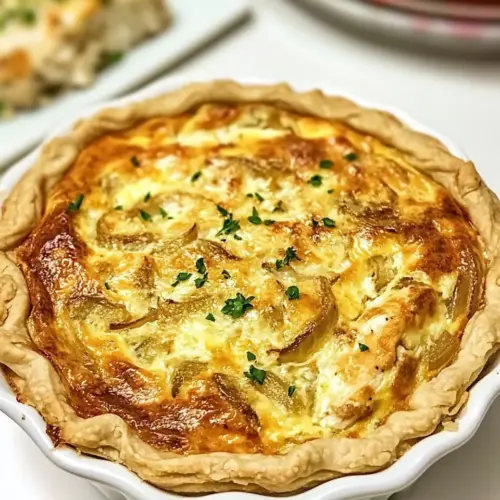
French Onion Chicken Quiche
French Onion Chicken Quiche is a creamy, savory custard loaded with tender chicken, crunchy french fried onions, and melty cheddar cheese. This easy weeknight dinner or brunch favorite uses a frozen deep dish crust and a sour cream based French Onion Dip for deep flavor without extra effort. Serve warm or room temperature for an approachable, make ahead meal everyone will ask for again.
Equipment
- Chef Knives
- Cutting Board
- Mixing Bowls
- Rotary Cheese Grater
- Hand Mixer
Ingredients
- 1 (9-inch) frozen deep-dish pie crust Use frozen deep-dish pie crust as the sturdy base that holds the quiche filling together and provides a golden, flaky edge when baked. Press into a 9-inch pie dish if needed and allow it to thaw slightly before filling to prevent cracking. Blind-bake briefly if recipe calls for a firmer bottom to avoid a soggy crust.
- 1 cup cooked chopped chicken Incorporate cooked chopped chicken to add savory protein and a hearty texture that complements the creamy custard. Ensure chicken pieces are bite-sized and evenly distributed so every slice contains a balanced amount. Use leftover rotisserie or poached chicken for convenience and consistent moisture.
- 1/2 cup french fried onions Sprinkle french fried onions to contribute a sweet, crunchy contrast and classic French onion flavor notes. Add some on top before baking for a caramelized crisp, reserving extra for garnish to maintain texture. Be mindful of salt levels since fried onions can be seasoned.
- 3/4 cup shredded cheddar cheese Fold shredded cheddar cheese to provide sharp, melty richness and help thicken the quiche filling as it bakes. Choose a medium or sharp cheddar for pronounced flavor and grate fresh for best melting quality. Distribute evenly to prevent clumping and to ensure each slice has a cheesy pull.
- 1/4 cup refrigerated sour cream based French Onion Dip Blend refrigerated sour cream based French Onion Dip to introduce tangy creaminess and concentrated French onion seasoning into the custard. Stir into the egg and cream mixture to infuse the filling with onion flavor and smooth texture. Adjust other seasonings accordingly because the dip may already contain salt and herbs.
- 3 eggs Whisk eggs vigorously to create the structure and custard base that sets during baking and binds all ingredients together. Beat until yolks and whites are fully combined to yield a uniform, silky texture in the quiche. Temper eggs with warm dairy if needed to avoid curdling when mixed.
- 1 cup heavy cream or milk Mix heavy cream or milk to define the richness and consistency of the quiche custard, choosing heavy cream for a richer, creamier result or milk for a lighter texture. Pour into the egg mixture slowly while whisking to achieve a smooth custard that will set properly in the oven. Adjust proportion based on desired firmness and mouthfeel.
Instructions
- Preheat oven to 350ºF.: Right away you will notice the warm oven scent that primes the kitchen, and the steady heat ensures even baking. Preheating is crucial because inserting the quiche into a cold oven changes the way the custard sets, leading to uneven texture. A common error is putting the dish in too soon, which can cause the center to remain undercooked even as edges brown. Use an oven thermometer if you suspect your oven runs hot or cool so you can trust the temperature.
- Spread cooked chicken and french fried onions in the bottom of pie crust. Top with shredded cheddar cheese.: The combination of tender chicken and crunchy onions forms the textural foundation, and arranging them evenly prevents heavy spots. Press them lightly into the bottom so they do not float to the top when the custard is poured. If you pile ingredients unevenly, you may find dense pockets that take longer to heat through, resulting in uneven doneness. Aim for a single even layer for consistent slices.
- Whisk together eggs, heavy cream, and french onion dip. Pour egg mixture over chicken and cheese mixture in pie crust.: Sprinkling the cheddar cheese across the filling creates a melty barrier that helps hold moisture and adds savory complexity. Look for the cheese to begin softening as the dish warms in the oven. A mistake to avoid is using too much cheese which can make the quiche overly greasy and mask the onion flavor. Keep coverage even, not overloaded.
- Bake 1 hour. Allow quiche to rest for 5-10 minutes before serving.: As you whisk, the mixture should become glossy and uniform, the dip folding into the custard and releasing onion seasoning. This step determines the texture of the final custard, so whisk until smooth but not frothy. Over whipping introduces air bubbles that will puff and then collapse, creating holes in the set custard. Mix gently until homogenous for the best silky result.
- Pour egg mixture over chicken and cheese mixture in pie crust.: Pouring slowly lets the custard seep around the fillings, creating even distribution, and you may notice small bubbles rising to the surface that settle during baking. If the filling shifts, nudge it back into place with a spoon edge, but avoid disturbing the crust. A common mishap is pouring too fast and filling the crust above safe levels, which can cause spills and uneven bake. Aim to fill just below the rim.
- Bake 1 hour.: During baking the edges will turn a warm golden brown and the center will puff slightly, signals that the custard is setting. An oven can produce a faint caramelized aroma as cheese and onions finish, and you should see a gentle jiggle fade from the middle when it is done. If you pull it too early, the center may be runny; if you leave it far too long the custard can dry out. Check near the end, and if the top browns too quickly, tent with foil.
- Allow quiche to rest for 5 to 10 minutes before serving.: Resting lets the custard finish setting and makes slicing neater, with a firmer texture and a cleaner presentation. The steam dissipates and flavors settle, so the first bite will be smooth and cohesive. Cutting too soon results in a sloppy center that will not hold its shape. Wait patiently, and you will be rewarded with beautiful slices.
Notes
- Use quality pre cooked chicken The texture of the chicken matters. I prefer tender rotisserie or leftover roasted meat because it stays juicy once baked in the custard. If you use very dry chicken it will draw moisture from the custard, making slices less succulent.
- Don’t overbeat the eggs Whisk until just combined so the custard stays silky. Overbeating introduces air, causing the quiche to puff dramatically then collapse, leaving a holey texture that is less elegant.
- Opt for heavy cream for richness Substituting milk lightens the quiche but reduces creaminess. If you want a richer mouthfeel and more luxurious slices, pick heavy cream, especially when serving for company.
- Evenly distribute fillings Before pouring the custard, make sure the chicken, cheddar cheese, and french fried onions are spread uniformly. This guarantees that each bite has balanced flavor and texture without dense pockets.
- Watch the oven near the end Ovens vary, so start checking for doneness about 10 minutes before the listed bake time ends. Look for a gentle jiggle in the center to disappear and a golden top, tenting with foil if browning too fast.
- Make ahead and freeze You can assemble and freeze the unbaked quiche, then thaw in the refrigerator before baking. This is a lifesaver for meal prep and keeps well if wrapped tightly.