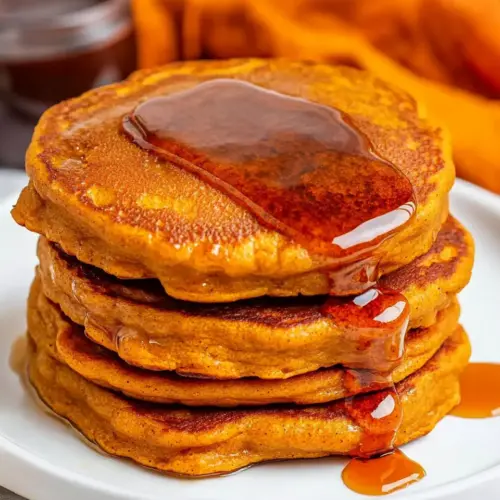
Fluffy Pumpkin Pancakes
Fluffy Pumpkin Pancakes blend creamy pumpkin with warm spices for soft, airy stacks that taste like fall. Light, tender, and easy to make, these pancakes work for an effortless weekend brunch or a special holiday breakfast. Serve warm with syrup for a cozy morning that feels indulgent without fuss, and you'll have a reason to celebrate small moments.
Equipment
- Griddle
- Mixing Bowl
- Whisk
- Spatula
- Measuring Cups
Ingredients
- 1 1/2 cup (186 g) all-purpose flour Provides structure and bulk to the batter, forming the gluten network that gives pancakes their body; sift or whisk to remove lumps and ensure even mixing for a light texture.
- 1/4 cup (50 g) brown sugar Adds moisture-retaining sweetness and caramel-like depth, helping brown the pancakes; adjust amount for preferred sweetness and pack brown sugar for accurate measurement.
- 2 teaspoons baking powder Leavens the batter by releasing carbon dioxide when heated, contributing to fluffy rise; distribute evenly through dry ingredients to avoid uneven pockets.
- 1/2 teaspoon baking soda Enhances lift and reacts with acidic components for additional tenderness; measure precisely to prevent metallic or soapy aftertastes in the final pancakes.
- 1/2 teaspoon salt Balances and enhances flavors while controlling fermentation and protein interaction; ensure even distribution so salt does not create salty spots.
- 1 teaspoon ground cinnamon Warms and complements pumpkin flavor with sweet, aromatic notes; incorporate into dry ingredients to evenly season the batter.
- 2 teaspoons pumpkin pie spice Provides a blend of warm spices that intensifies fall flavors and aroma; use as directed to maintain balanced spice without overpowering the pumpkin.
- 6 tablespoons (65 g) pumpkin puree Contributes moisture, natural sweetness, and pumpkin flavor while adding a smooth, dense texture; use pure pumpkin puree rather than pumpkin pie filling for best results.
- 2 large eggs Binds ingredients together, helps create steam for lift, and adds richness and structure; whisk eggs with wet ingredients for uniform incorporation.
- 1 tablespoon (15 ml) vegetable oil Adds fat for tenderness and moisture, promoting a tender crumb and preventing sticking; use neutral oil and mix with wet ingredients before combining with dry.
- 1 teaspoon vanilla Infuses sweet aromatic complexity and enhances other flavors; stir into wet ingredients to evenly distribute the vanilla flavor.
- 1 cup (237 ml) milk (any kind or nondairy) Provides liquid to hydrate dry ingredients and create a pourable batter; choose the milk type that suits dietary needs and adjust thickness as needed.
Instructions
- Preheat griddle to approximately 350°F. If using a pan, preheat over medium heat only once batter is mixed.: The air warms and your kitchen fills with expectation as the surface approaches temperature, and you may notice a faint, dry smell from the hot metal before you even add fat. A properly preheated cooking surface yields a quick set at the edges, which helps produce that golden crust while keeping the center soft. A common mistake is cooking on too high heat, which browns the outside before the interior cooks through, so aim for steady, moderate heat and adjust if the pancakes brown too quickly. If you are using a skillet, a drop of water should sizzle and dance briefly when the pan is ready, which is your audio cue to begin.
- Add flour, brown sugar, baking powder, baking soda, salt, ground cinnamon, and pumpkin pie spice to a medium or large mixing bowl. Whisk to combine.: When you whisk the dry ingredients together you create an even distribution of leavening and spice, so every pancake rises and tastes consistent. The aroma of ground cinnamon and pumpkin pie spice becomes more pronounced as you mix, and the brown sugar loosens into the flour, creating a slightly sandy texture. The why behind this step is uniformity, ensuring no pockets of baking soda or spice concentrate, which could cause uneven rise or bitter spots. Avoid overworking by using a gentle whisk, because too much mixing after liquids are added can toughen the final texture.
- Add eggs, pumpkin puree, milk, oil, and vanilla. Whisk to combine, batter may be slightly lumpy.: As the wet ingredients come together the batter darkens to a gentle orange and the scent shifts toward pumpkin and sweet vanilla. Lumps are fine, they signal minimal gluten development which keeps pancakes tender. The milk controls the batter's thickness, and you can see how it flows when lifted on a spoon; it should pour slowly but not be watery. One common error is overwhisking at this stage, which yields denser pancakes, so stop when ingredients are just combined and expect a few lumps to remain. The visual cue is a cohesive mixture that still has small pockets of unblended flour.
- Spray cooking surface with nonstick cooking spray or rub with butter for more flavor. Add approximately 3 tablespoons of batter to prepared pan and spread. Cook until bubbles in the center of the pancake start to pop and flip, cooking until the bottom is golden brown and cooked through.: You will hear a gentle hissing as batter hits the hot surface, then see edges set and tiny bubbles form and pop across the center. These bubbles are the best visual indicator that the interior is setting and ready to flip, and once turned you should find a warm, golden brown underside that gives slightly when pressed. This technique ensures a crisp exterior contrast and a tender interior. A frequent mistake is flipping too early or too many times, which can prevent proper browning and create a gummy center. Aim for a single confident flip and watch for a consistent golden color on the cooked side.
- Serve warm with syrup.: Steam rises in delicate wisps when you plate a fresh stack, and the combination of warm pancakes with a glossy pour of syrup accentuates contrast between sweet and spiced notes. Serving right away preserves texture and temperature, and small pats of butter melt into little pools that glisten on the surface. If you wait, pancakes can cool and lose that ephemeral crisp edge, so keep them in a low oven if making a larger batch to hold briefly. A common pitfall is stacking too many at once without separating them, which traps steam and softens the bottoms.
- Store in an airtight container in the fridge. Freeze cooled pancakes between layers of paper towels in an airtight container; reheat in toaster, microwave, or air fryer.: As pancakes cool they release steam, so wrapping them correctly prevents sogginess and preserves texture. In the refrigerator they will keep for a few days, and freezing between paper layers prevents them from sticking together while protecting the surfaces. Reheating restores warmth and some crispness, depending on method, with the air fryer usually giving the best revived texture and the microwave being fastest. Avoid reheating straight from the freezer in a pan without thawing slightly, because the centers can stay cold while the edges brown too quickly.
Notes
- Swap milk types: Use a nondairy milk if you prefer a lighter mouthfeel, and expect a subtle change in richness depending on fat content.
- Adjust sweetness: Reduce the brown sugar slightly for a less sweet pancake that pairs beautifully with tart toppings.
- Boost the spice: Add a pinch more pumpkin pie spice for a more pronounced autumn aroma when serving to spice lovers.
- Make mini pancakes: Spoon smaller portions for bite sized pancakes that are perfect for kids or brunch grazing.
- Hold pancakes warm: Transfer cooked pancakes to a wire rack in a low oven to keep texture while you finish the batch.