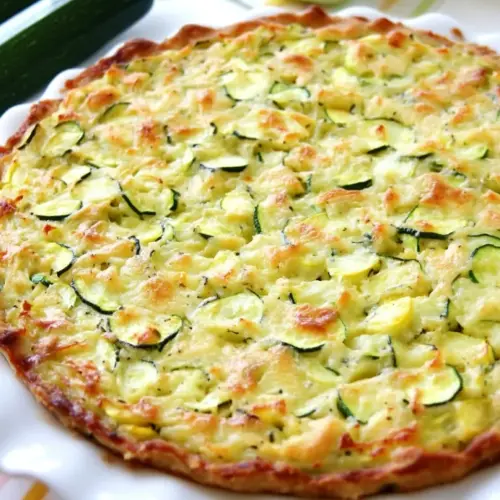
Flourless Zucchini Pie
Flourless Zucchini Pie is a creamy, savory summer bakes that is easy to make and full of bright, vegetal flavor. Packed with shredded zucchini, tangy goat cheddar, and bound by whole eggs, it delivers a lightly golden crustless slice perfect for an easy weeknight dinner or a casual brunch. Try it when zucchini is abundant for a satisfying reason to use your harvest.
Equipment
- 9-inch pie pan
- Oven
- Mixing Bowl
- Dish towel
- Spatula
Ingredients
- 3 cups shredded zucchini (about 3 medium squashes) Providing bulk and moisture, shredded adds a tender, slightly watery texture that keeps the pie light; excess liquid should be gently squeezed to prevent sogginess. Offering a mild vegetal flavor, shredded zucchini melds with eggs and cheese for a cohesive, savory filling.
- 2 whole eggs Binding the mixture, whisked eggs create structure and help set the pie as it bakes; they also contribute moisture and a rich mouthfeel. Enriching flavor, eggs help emulsify the cheese and zucchini for a uniform custard-like interior.
- 3 oz . raw goat cheddar, shredded Contributing a tangy, savory profile, shredded goat cheddar melts into pockets of creamy, slightly sharp flavor that elevate the pie. Adding fat and saltiness, the cheese promotes browning and a satisfying, rich finish to each slice.
- 1/2 teaspoon baking soda Leavening gently, baking soda introduces light lift by reacting with acidic components to produce small bubbles, promoting a tender crumb. Balancing density, it helps prevent an overly heavy texture in this flourless preparation.
- 1/2 teaspoon salt Enhancing overall flavor, salt amplifies other ingredients and brightens the savory profile of the pie; it also aids in drawing out some moisture from the zucchini. Regulating seasoning, salt ensures the custard sets with balanced taste rather than blandness.
- 1 teaspoon onion powder Adding a concentrated savory note, onion powder provides subtle depth and umami without altering texture, blending seamlessly into the filling. Offering consistent flavor distribution, the dried seasoning gives a gentle onion aroma that complements the cheese and zucchini.
Instructions
- Preheat your oven to 350 F and grease a 9" pie pan generously with butter.: Warm air begins to coax moisture from the batter into a stable set so preheating ensures an even bake; you should hear a faint hum from the oven as it settles into temperature. The buttered pan will sizzle gently the instant you slide the pie in, and that contact helps the edges brown. If the oven is not fully up to temperature the center may take longer to set, so always wait until the oven indicator shows readiness. A common mistake is using too little grease, which can make the pie stick and tear when removed.
- After shredding the zucchini (I used a salad shooter to make the process go quickly), you'll want to squeeze it well in a thin dishtowel, to remove any excess moisture. You should be able to squeeze out at least a couple tablespoons worth of liquid.: When you press and twist the towel you will feel water bead and the zucchini will compact; this step ensures the filling will be custardy rather than watery. The smell here is fresh and green, almost vegetal, and squeezing concentrates that aroma. If you skip squeezing, the bake will weep and the texture will turn soggy, which is the mistake I see most often.
- In a medium bowl, combine the drained zucchini with the rest of the ingredients, and mix until well combined. Transfer the mixture to the greased pie pan, and smooth the top with a spatula.: As you fold the ingredients together you will notice the mixture become cohesive and slightly glossy from the eggs . The sound is quiet, the motion rhythmic, and visually you want an even surface with no large pockets of cheese or clumps of baking soda. Smooth it gently so air pockets escape, because trapped air can create uneven holes after baking. Overmixing to the point of breaking down the zucchini will reduce texture, so mix until homogenous but still a bit rustic.
- Bake for 30 minutes at 350 F, or until the top starts to turn golden brown.: During the bake the kitchen fills with a toasty, savory aroma and you may hear a soft crackle as edges set. The surface should take on a warm, light gold color and the center should gently darken while still retaining a slight wobble. Testing too early can yield an underdone center, so wait until the visual cues appear. If the top darkens too fast, tent with foil to prevent overbrowning while the interior finishes cooking.
- Allow to set in the pan for 5 minutes, then slice and serve while it's still hot! Divide the pie into 4-6 large slices, depending on your appetite.: Resting lets residual heat finish the setting process and the structure firms so slices hold together. You will notice steam rising when you cut, and the aroma will be at its peak during those first warm bites. Serving too quickly risks a sloppy slice, while waiting too long cools the custard and alters the texture; five minutes gives perfect balance. A common trap is trying to unmold when it is still piping hot, which often leads to breakage.
Notes
- Mini muffins option: If you want handheld bites, grease a mini muffin pan well and reduce bake time to fifteen to twenty minutes; watch for a light golden top and a slight spring back to know they are done.
- Cheese distribution: Shred the cheese finely so it melts into the filling evenly, preventing dense pockets and ensuring a consistent tang throughout every slice.
- Zucchini prep: After shredding, transfer the zucchini to a thin dish towel and squeeze until you extract several tablespoons of liquid; this step prevents a soggy pie and concentrates flavor.
- Pan selection: Use a nine inch pie pan for a shallow, tender set; deeper pans may require extra bake time and can alter sliceability.
- Storage: Keep leftovers refrigerated in an airtight container for up to three days, reheating gently in a low oven so the texture warms evenly without drying out.