Flag Cake
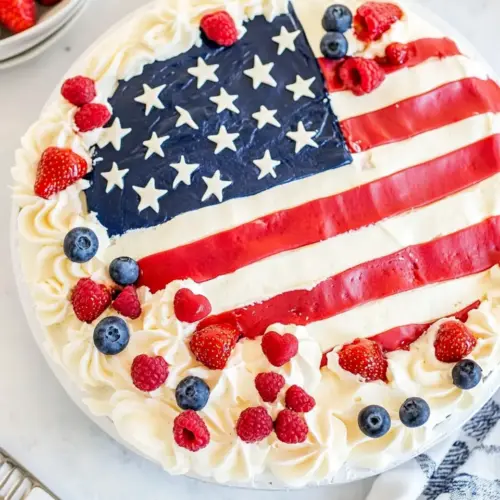
Flag Cake is a tender honey flavored sheet cake frosted with tangy cream cheese frosting and decorated with fresh blueberries and strawberries for a patriotic, crowd pleasing dessert. The texture is moist and light, with a creamy frosting complementing bright summer fruit, making it an easy weeknight dessert or a show stopping party cake you will want to make again.
Equipment
- Stand mixer
- Hand Mixer
- Rubber spatula
- 11x17 inch half sheet pan
- Wire Rack
Ingredients
- 1/2 cup unsalted butter softened to room temperature (1 stick) Soften and cream to create a smooth base for the batter, providing richness and tender crumb structure while aiding in leavening when creamed with sugar.
- 1 cup granulated sugar Granulate and aerate to incorporate air when creamed with butter, contributing sweetness, structure, and browning to the cake.
- 1/2 cup honey Pour and sweeten while adding moisture and a subtle floral complexity that enhances overall flavor and keeps the cake tender.
- 2 large eggs at room temperature Bring to room temperature and beat to add lift, structure, and emulsification, helping to bind ingredients and trap air for a lighter crumb.
- 2 teaspoons vanilla extract Measure and fold in to provide aromatic depth and balance, enhancing other flavors and lending a warm, familiar scent.
- 3/4 cup nonfat plain Greek yogurt at room temperature Whisk to contribute moisture and tang while replacing some fat, improving texture and adding a slight acidity that reacts with leavening.
- 1 1/4 cups white whole wheat flour Sift or whisk to form part of the dry structure, offering whole-grain nutrients and a nuttier flavor while maintaining a tender crumb.
- 1 cup all-purpose flour Combine with whole wheat flour to balance gluten development and ensure a light, consistent texture with familiar cake characteristics.
- 1 teaspoon baking soda Measure precisely to activate with acidic components, producing carbon dioxide that helps the cake rise and creates a delicate crumb.
- 1/2 teaspoon kosher salt Salt and balance flavors to enhance sweetness and depth, controlling the overall taste of the batter without overpowering.
- 3/4 cup milk plus 2 tablespoons—any kind you like—I used 2%, at room temperature Warm to room temperature and whisk into the batter to adjust consistency, contribute moisture, and help dissolve sugars for smoothness.
- 12 ounces reduced-fat cream cheese Neufchatel, at room temperature Soften and mix to form a creamy, tangy frosting base that provides stability and a rich mouthfeel with balanced acidity.
- 6 tablespoons unsalted butter at room temperature Soften and blend with cream cheese to create a smoother, richer frosting texture while contributing buttery flavor and body.
- 1 1/3 cups powdered sugar Sift and sweeten the frosting to add sweetness, structure, and stability while creating a light, spreadable consistency for decorating.
- 1/4 cup nonfat plain Greek yogurt at room temperature Stir in for additional tang and moisture in the frosting, helping to reach desired spreadability and a slight tangy finish.
- 1 teaspoon pure vanilla extract Add depth and aroma to the frosting, enhancing sweetness and harmonizing flavors while contributing to a classic vanilla profile.
- 1 cup fresh blueberries Rinse and scatter as a fresh, juicy topping that provides natural sweetness and a pop of color while contrasting textures.
- 2 -3 cups sliced fresh strawberries Slice and arrange as a bold, vibrant topping to create the flag design, offering juicy sweetness and a fresh texture complementing the cake.
Instructions
- Preheat the oven to 325 degrees F. Generously grease and lightly flour an 11×17-inch half-sheet pan or coat with baking spray (the floured kind, like this). Set aside.: The kitchen fills with a warm scent when the oven warms, and that preheated air is important for even rise and a nicely browned top. You want the oven to reach temperature before the batter goes in so the cake begins to set right away, producing a tender crumb with a delicate crust. A common misstep is skipping the greasing and flouring or using too little, which can make the cake stick along the edges. Pay attention to the even coating on the pan so the cake releases cleanly.
- In the bowl of a stand mixer fitted with the paddle attachment or a large bowl with a hand mixer or spoon, cream the butter for 1 minute on medium speed, until it is smooth and creamy.: At this stage, you should notice the butter soften and loosen, feeling almost glossy as air is incorporated. The creaming creates tiny pockets that contribute to a lighter texture. If the butter is not soft enough, the mixture will look clumpy and will not trap air well, making a denser cake. Scrape the bowl once to ensure even mixing and to prevent overworking one spot.
- Add the sugar on medium speed and beat until fluffy and light in color.: As the sugar blends in, the mixture should become noticeably paler and airy. You will hear a softer, almost satin like sound from the mixer as the sugar aerates the butter. This fluffiness is crucial for lift, so beat until you see that change. Under beating leaves less incorporated air, and over beating after the eggs are added can break down the structure, so be mindful of timing.
- Beat in the honey, then the eggs and vanilla until smooth and nicely combined, stopping to scrape down the sides and bottom of the bowl a few times. The mixture may look curdled. Beat in the yogurt on medium-high speed until blended.: The mixture may briefly appear curdled when you add the eggs, that is normal and the Greek yogurt will help bring it back together. The aroma of honey will rise, and the batter will take on a glossy sheen as it emulsifies. Scraping down the bowl ensures there are no pockets of unmixed ingredients. A pitfall here is adding ingredients too quickly, which can prevent proper emulsification and leave streaks of unmixed butter or egg.
- In a large bowl, whisk together the whole wheat flour, all-purpose flour, baking soda, and salt.: The dry ingredients should look uniform and free of lumps. Whisking aerates them slightly and distributes the baking soda evenly so the cake rises uniformly. The mix will have a faint nutty scent from the whole wheat component. If you skip this step, you risk pockets of baking soda or uneven texture in the final cake.
- Pour one-third of the flour mixture into the butter mixture. Beat on low speed for 5 seconds, then pour in half of the milk. Beat on low speed for 5 seconds. Repeat with the next third of the flour, then the remaining half of the milk. Add the last third of the flour and beat just until combined and the batter is smooth. Do not overmix.: You will notice the batter rhythmically change as you alternate dry and wet additions; it becomes smoother and shinier without becoming runny. This technique protects gluten development so the cake remains tender. Stop as soon as the lumps disappear, overmixing will develop gluten and make the cake tough. If you see long streaks of dry flour, fold gently rather than continuing to beat.
- Spread the cake batter into the prepared pan, smoothing it into a thin, even layer with a rubber spatula.: The batter should glide into a uniform sheet with a slight sheen. Smoothness ensures even baking, preventing thin spots from overbrowning. Use a light touch with the spatula, and tap the pan once on the counter to release trapped air bubbles. Avoid pressing too hard which can deflate the batter and lead to a denser result.
- Bake for 18 to 22 minutes or until the top is lightly browned and a toothpick inserted in the center comes out clean, rotating the pan 180 degrees once halfway through.: During baking you will smell a warm, honeyed aroma and see the edges pull away slightly from the pan. The toothpick test is the best visual cue; a clean toothpick signals doneness. Opening the oven early or repeatedly can cause the cake to sink, so limit oven peeks. Rotate as instructed for even browning, especially if your oven has hot spots.
- Place the baked cake on a wire rack and let cool in the pan completely. Meanwhile, make the frosting.: Cooling fully in the pan prevents the crumb from breaking when you remove it. The cake s surface will firm and slightly contract as it cools, which helps when you spread the frosting. If you try to frost while it is still warm, the frosting will melt and slide, so allow adequate cooling time to avoid a messy finish.
- For the frosting: In the bowl of a stand mixer fitted with the paddle attachment or a large bowl with a hand mixer or spoon, beat the cream cheese, butter, powdered sugar, yogurt, and vanilla on medium speed until smooth and combined.: Expect a silky, tangy frosting that smells softly of vanilla and dairy. Beat until there are no visible lumps and the texture is spreadable. Add the powdered sugar gradually to prevent a dust cloud and to control sweetness. Overbeating can thin the frosting, so stop when smooth and slightly billowy.
- Spread the frosting over the cooled cake. Arrange blueberries in rows in top left corner to form the 'star' portion of the flag. Line the strawberry slices in 5 rows to form the 'stripes.' Refrigerate until ready to serve.: The final assembly is tactile and visual, you will feel the smooth frosting under your spatula and see the vibrant fruit pop against the white backdrop. Press the blueberries gently into the frosting in a compact grid for the star block, then align the strawberry slices into neat stripes for a classic look. Refrigeration helps the frosting set and keeps the fruit fresh. Beware of arranging fruit on a warm frosting surface, which can cause sliding and smudging of the design.
Notes
- Swap flours with caution Use all-purpose flour in place of the white whole wheat if you prefer a lighter crumb, but reduce the milk slightly to maintain the right batter consistency.
- Make it ahead Bake the cake up to one day before serving and store it at room temperature tightly covered, then frost the next day for a fresher finish.
- Chill the frosting If your kitchen is warm, let the frosting chill briefly to firm up before spreading so it holds the fruit better.
- Uniform fruit slices Slice strawberries to a consistent thickness so the stripes look tidy and cut well when serving.
- Presentation matters Arrange fruit while the frosting is slightly tacky, not wet, for a neat, stable design that holds during transport.