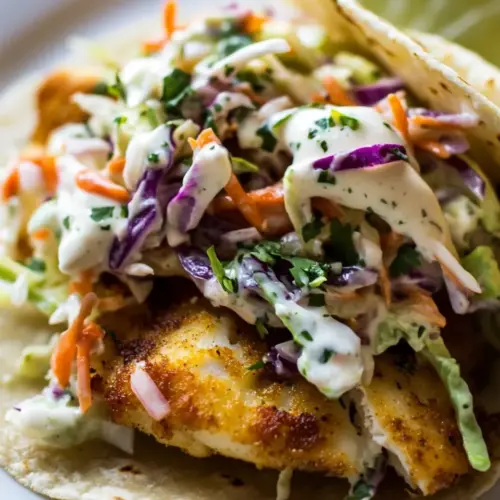
Fish Tostadas with Yogurt Slaw
Fish Tostadas with Yogurt Slaw are a bright, crispy summer favorite featuring flaky white fish, tangy Greek yogurt slaw, and crunchy corn tortillas. This easy weeknight dinner balances creamy, spicy, and citrus notes for a fresh, satisfying bite. Quick to prepare and perfect for casual gatherings, these tostadas are an excellent reason to make a flavorful, fast meal tonight.
Equipment
- Oven
- Baking Sheet
- Foil
- Frying Pan
- Tongs
Ingredients
- 2 cups coleslaw mix (or you can just use cabbage) Provide a crunchy, fresh base for the slaw and add a crisp texture contrast to the warm tostada; finely shredded cabbage absorbs dressing flavors and keeps the filling bright. Offer mild sweetness and a refreshing bite that balances richer components like fried tortillas and fish.
- 2 tablespoons cilantro chopped Add a herbaceous, citrusy note that brightens the slaw and ties together the fish and yogurt; chop finely to release essential oils for maximum flavor. Provide visual color contrast and a touch of aromatic freshness to each bite.
- Juice of 1/2 lime Provide bright acidity to balance richness and awaken flavors throughout the slaw and fish; squeeze evenly to avoid overpowering the dish. Contribute subtle tang that enhances both the yogurt dressing and the seafood.
- 4 tablespoons Greek yogurt Provide creaminess and tang to the slaw dressing while adding protein and body to the topping; whisk smoothly with lime and seasonings for a silky coating. Help mellow strong flavors like garlic and cumin while contributing a slight tangy richness.
- 1 -2 cloves garlic minced Offer pungent savory depth and aromatic sharpness when minced and mixed into the dressing or applied to the fish; sauté briefly with oil to soften harshness if cooking. Impart a warm, garlicky complexity that complements both yogurt and cumin-seasoned fish.
- 2 tablespoons spring onions sliced Provide mild oniony sweetness and a delicate crunch when thinly sliced for the slaw or garnish; use both white and green parts for varied texture. Contribute fresh, sharp accents that lift the overall flavor profile without overwhelming other ingredients.
- 5 tablespoons corn (canned) Add small bursts of sweet, juicy kernels that contrast texturally with cabbage and tortillas; use canned corn for convenience and a consistent sweetness. Bring color, a slight chew, and pleasant sweetness that pairs well with cilantro and lime.
- Salt & pepper to taste Season the slaw and toppings to enhance all flavors and create balance; add a pinch at a time and taste to avoid over-salting. Use freshly ground pepper to add mild heat and aromatic spice that complements fish and yogurt.
- 1/2 pound white fish (I used a piece of cod) Provide tender, flaky protein as the main filling when cooked; choose a mild white fish like cod for its delicate texture and ability to absorb seasonings. Season simply and cook until opaque and flaky so it contrasts with crunchy tortillas and creamy slaw.
- Olive oil Moisten the fish and help conduct heat when pan-searing or grilling; drizzle a little to prevent sticking and encourage even browning. Use a light-flavored oil to avoid overpowering the fish while promoting a pleasant golden crust.
- Cumin Impart warm, earthy spice to the fish and complement the yogurt slaw; sprinkle sparingly and taste as you go to achieve a gentle, smoky note. Pair with salt, pepper, and lime to build a balanced seasoning profile for the seafood.
- Salt & pepper to taste Enhance flavor and control seasoning intensity for both fish and slaw; apply separate portions as needed during cooking and finishing. Use sparingly on the slaw and slightly more on the fish to highlight natural flavors without overwhelming them.
- 6 -8 corn tortillas Provide a sturdy, crunchy base for assembling tostadas and hold toppings in place; warm or lightly fry tortillas before adding toppings for extra crispness. Offer neutral corn flavor that complements the Mexican-inspired components of the dish.
- Oil for frying (I used peanut oil) Provide hot oil for frying tortillas until crisp and blistered, creating the signature tostada texture; choose a high smoke point oil and heat to the proper temperature for quick frying. Drain on paper towels to remove excess oil and maintain a crunchy bite.
- Sour cream Add an extra creamy, tangy element useful for drizzling over finished tostadas or serving alongside as a cooling condiment; adjust quantity to taste. Blend with lime or seasonings if desired to mirror the yogurt slaw’s tang and offer additional richness.
- Avocado sliced Provide a creamy, rich, and buttery finish when sliced and added atop tostadas; add immediately before serving to retain texture and color. Offer healthy fats and a silky mouthfeel that balances crisp tortillas and flaky fish.
Instructions
- Pre-heat oven to 375 F.: The air in the oven should feel steady and warm before you put the fish in, which helps set a consistent roast. You will notice the oven humming and a gentle even heat, ensuring the white fish cooks through without drying out. This temperature allows the fish to become flaky in about 15 minutes, giving you tender layers that pull apart easily with a fork. A common mistake is skipping the preheat, which can lead to uneven cooking and a rubbery texture, so wait until the oven reaches the full temperature.
- Line baking sheet with foil for easy clean-up. Place fish on foil and coat it with olive oil. Sprinkle some cumin, salt, and pepper on top.: You should feel the slickness of the olive oil as you rub it over the fish , and the scent of cumin will bloom when it hits the oil, hinting at the warm flavor to come. Lining the sheet keeps the cooking surface clean and reflects heat for even browning. This technique matters because the oil locks moisture in and the seasoning forms a light crust. Avoid using too much oil, which can prevent the fish from developing a subtle roasted edge.
- Cook fish until it easily flakes with a fork. Mine took about 15 minutes.: As the fish roasts, you will notice its surface shift from translucent to opaque and feel it give slightly when nudged. The aroma will become savory and slightly nutty from the cumin . Flaking test is the best indicator of doneness, ensuring the center is cooked without overcooking. A common pitfall is relying on a timer alone, which can produce dry fish if the piece is thinner or thicker than average; always check for flaking at the thickest part.
- While fish is cooking, make slaw by combining cabbage, cilantro, lime juice, Greek yogurt, garlic, spring onions, and corn.: When you toss these ingredients, the lime juice will perfume the air and the Greek yogurt will give the mixture a creamy sheen while the cabbage provides crunchy resistance. Mix gently so the corn kernels remain whole and the cabbage keeps its bite. This balance prevents a watery slaw and keeps textures distinct. One mistake to avoid is overdressing the slaw too early which can make it limp; mix it close to serving time for best crunch.
- Make the tostadas by frying corn tortillas in oil for 1-2 minutes per side. Ensure oil is hot prior to putting the tortillas in. Once tortillas are cooked, remove to plate lined with paper towel to soak up oil. You may need to fry them one by one.: Hot frying oil should shimmer but not smoke, and you will hear a quick sizzle when the tortillas hit the surface. Frying for about 1 to 2 minutes per side creates a golden, blistered texture that stays crisp under toppings. Use tongs to gently press and flip so the tortilla cooks evenly and forms a sturdy shell. A frequent error is using oil that is not hot enough, which leads to greasy, limp tostadas instead of crispy shells.
- Once fish is done, you can start assembling the tostadas by adding the slaw, fish, sour cream (optional) and avocado slices (optional). Add extra salt and pepper if desired.: The paper towel will whisper as you set each tortilla down and it will quickly absorb excess oil, keeping the surface crisp. Frying one by one helps you control color and prevents stacking that traps steam. This step preserves the crunch and ensures the tacos do not become oily. Avoid piling them hot together, which creates condensation and sogginess.
- Once fish is done, you can start assembling the tostadas by adding the slaw, fish, sour cream optional and avocado slices optional.: When assembling, the slaw will look glossy and the fish will flake into tender pieces that nestle on the tortilla. Spoon the slaw first to create a cushion, then layer the fish so each bite has both crisp and tender elements. Add a dollop of sour cream or slices of avocado for creaminess that calms the lime and cumin . A mistake to watch for is overloading the tortilla, which makes them hard to pick up and causes toppings to slide off; keep portions balanced.
- Add extra salt and pepper if desired.: A final sprinkle of salt and pepper will sharpen the flavors and lift the whole dish. Taste one assembled tostada and adjust seasoning as needed, because the corn and Greek yogurt can mute intensity. Seasoning at the end helps tailor the dish to your preference. The common error is under seasoning during earlier steps, so give a small finishing taste to ensure balance.
Notes
- Make it lighter: Use extra Greek yogurt and skip the optional sour cream to reduce richness while preserving creaminess.
- Boost the herbs: Increase chopped cilantro for a more vibrant, herb forward slaw that pairs well with summertime meals.
- Crisp tortillas without frying: Bake corn tortillas at a high temperature until they are golden and brittle for a lower oil alternative.
- Shrimp or firm white fish: If your white fish is not available, choose another mild seafood, keeping cooking times similar to preserve flakiness.
- Make ahead slaw: Combine slaw ingredients but hold back lime juice and add just before serving to keep the cabbage crunchy.