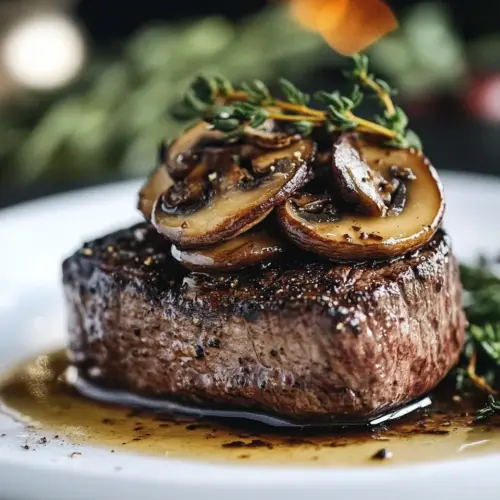
Filet Mignon with Porcini Mushroom Compound Butter
Filet Mignon with Porcini Mushroom Compound Butter features tender, seared steaks finished with a silky porcini infused compound butter. The result is a rich, savory, and elegant meal that is surprisingly fast to prepare, perfect for an easy weeknight dinner or a special occasion. Try it to savor intense umami and a restaurant quality finish at home.
Equipment
- cast iron pan
- Instant read thermometer
- Oven
Ingredients
- 2 1 1/2" thick Filet Mignon steaks, about 5-6 ounces each, at room temperature Sear to develop a rich brown crust on the steak while retaining a tender, juicy interior; allow to come to room temperature before cooking for even doneness and season just before searing to enhance flavor.
- 1 -2 cloves of garlic, peeled and thinly sliced Infuse thinly sliced garlic into fat and butter during cooking to release aromatic oils and a mellow, slightly sweet garlic flavor; add toward the beginning of pan-roasting to lightly brown without burning.
- 10 sprigs fresh thyme Provide fresh herbal aromatics that impart a bright, citrusy, and slightly floral note when added to the pan; light bruising of sprigs before cooking releases essential oils for better infusion.
- kosher salt and freshly ground black pepper Season generously with kosher salt and freshly ground black pepper to enhance the natural beef flavor and create a balanced savory profile; salt helps with crust formation while pepper adds subtle heat.
- 1 teaspoon extra virgin olive oil Coat the pan and help promote even searing by lightly lubricating the surface; use a high-quality extra virgin olive oil for a touch of fruity flavor and a moderate smoke point.
- 1 tablespoon butter Brown to add nutty richness and deepen pan flavors while basting the steaks; use real butter for its emulsifying qualities and to carry the aromatics into the meat during finishing.
- Porcini butter, recipe below Enrich the steak with a concentrated porcini mushroom compound butter that adds earthy, umami depth and luxurious mouthfeel; spoon a pat over the resting steaks so it melts into the meat for intense flavor.
Instructions
- Preheat the oven to 475°F.: From the moment you set the oven, you should feel the anticipation build, and the kitchen will gradually warm. A properly heated oven ensures the steaks finish quickly, preserving juiciness while the exterior stays crisp. You might notice a faint scent as the oven climbs, and the metal racks will radiate heat differently depending on position. A common error is placing steak in an oven that is not hot enough, which can lead to overcooking as you wait for temperature recovery, so always preheat fully before the pan goes in.
- Season the steaks generously with kosher salt and ground black pepper. Season more than you think you’ll need as much of it comes off during the cooking process.: Right after patting the steaks dry, sprinkle the salt and fresh black pepper so the seasoning adheres and begins to enhance the natural beef flavor. The salt draws a whisper of moisture to the surface, which then dissolves and helps create a savory crust during searing. You should see the grains glint on the meat and feel the coarse texture as you press it in. Overseasoning is less likely than underseasoning here, but avoid pouring on fine table salt too early, as it can pull out more moisture than you want.
- Heat a cast iron pan on the stovetop over high heat. Melt the butter in the olive oil. Add the steaks and cook each side of the steaks including the top, bottom and sides for about 4 minutes on each side or until browned.: As the pan heats you will hear a rising hum that stops when it is hot enough for a strong sizzle. Cast iron holds heat exceptionally well, giving an even sear that encourages deep browning. Add the oil and watch it shimmer but not smoke; this shimmer is your cue that the pan is ready. The wrong pan temperature will either prevent browning or burn the exterior, so allow a full moment for the pan to come to temperature before adding the steaks.
- Remove from heat and add the garlic slices and thyme and cook in the oven until the internal temperature reaches 140-145°F for medium rare.: When the oil shimmers, add your tablespoon of butter and let it foam and brown slightly, carrying a rich, nutty aroma. The mixture should foam and release a toasty scent, which is perfect for flavor development. If the foam darkens too fast, the pan is too hot, and you should remove it from heat for a breath before proceeding. Burned butter will impart bitterness that masks the delicate flavors of the Filet Mignon .
- Meanwhile, remove the Porcini Butter Compound from the refrigerator and slice into 1/2 inch pats.: When the steaks hit the pan they will announce themselves with a loud sizzle and immediate browning at the contact points. Press the steak slightly to ensure even contact, and watch the edges to see the Maillard reaction create a deep brown crust. After a few minutes flip and repeat on the other side, including quick sears on the edges if needed. Resist the urge to move them constantly; steady contact creates the best crust. A common pitfall is flipping too often which prevents proper browning.
- Remove from the oven, spoon cooked juices over the steak and serve with a pat of Porcini butter over the Filets and garlic. Garnish with more fresh thyme if desired.: Once the steaks are well seared, nestle in the sliced garlic and sprigs of thyme so their oils flavor the pan juices before finishing in the oven. The garlic will become fragrant and softened rather than raw, while the thyme imparts a subtle herbaceous lift. Transfer the whole pan to the preheated oven and monitor internal temperature with an instant read thermometer. Aim for roughly 140 to 145°F for medium rare, remembering that carryover heat will raise the temperature slightly as the steaks rest. A common error is relying on time alone instead of temperature, which can lead to over or under cooking.
- Meanwhile, remove the Porcini Butter Compound from the refrigerator and slice into 1/2 inch pats: You should see a firm, chilled block that smells of earthy porcini and butter . Slicing into half inch pats gives you generous melting pieces that will slowly soften on the hot steak without becoming a greasy pool. Keep them cold right up until plating so they maintain shape when they hit the hot meat. The mistake to avoid is leaving the compound butter out too long, causing it to lose structure and melt away too fast.
- Remove from the oven, spoon cooked juices over the steak and serve with a pat of Porcini butter over the Filets and garlic: After the oven, transfer the steaks to warm plates and tilt the pan to collect the glossy cooking juices. Spoon those juices over the steaks so each bite gets moisture and concentrated flavor, then nestle a pat of chilled Porcini butter atop each filet. The butter will begin to soften into ribbons, releasing its umami and aromatics into the meat, creating a silky finish. If the steak feels too hot to hold, let it rest for a brief moment; cutting too soon will allow juices to run away and produce a drier bite.
- Garnish with more fresh thyme if desired: A final scatter of fresh thyme brightens the presentation and adds a fresh herbal lift as you bring the plate to the table. The tiny green leaves contrast with the deep brown of the crust and invite the diner to inhale before tasting. Avoid adding herbs that have been overcooked and dried out earlier, as they add little beyond appearance.
Notes
- Swap steak size thoughtfully - If you prefer a larger or smaller portion, adjust the cooking time slightly and rely on internal temperature rather than clock minutes to reach desired doneness.
- Adjust garlic intensity - For a subtler garlic presence, use a single clove or add the slices later in the sear so they brown less and retain milder flavor notes.
- Herb infusion - Increase the number of thyme sprigs for a more pronounced herbal profile, or bruise the sprigs to release more aromatic oils into the pan.
- Oil choice matters - Use a light, high smoke point oil if you need more aggressive searing heat; keep the extra virgin olive oil quantity small to avoid burning.
- Porcini butter timing - Prepare the compound butter up to a day ahead to let flavors meld, which intensifies the porcini aroma when it melts over the hot steak.
- Pan selection - If you do not have cast iron, choose a heavy stainless steel skillet that retains heat well to get similar crust development.