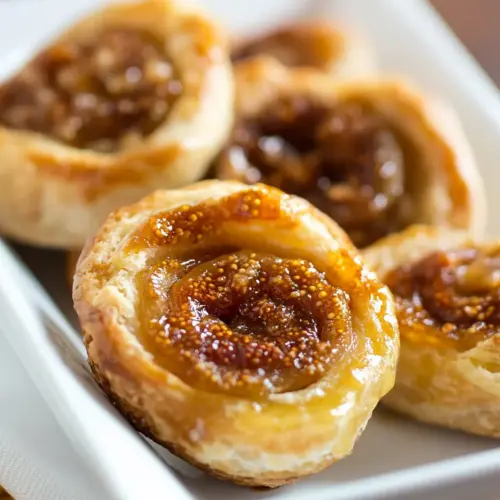
Fig and Gruyere Palmiers
Fig and Gruyere Palmiers are crispy, cheesy bites with a sweet glossy finish, perfect for easy entertaining. The flaky puff pastry, nutty Gruyere, and warm fig jam create a balanced sweet and savory appetizer, ideal for a quick party platter or a cozy afternoon snack. Make ahead friendly and crowd pleasing, they are a smart choice for any gathering.
Equipment
- Oven
- Baking Sheet
- Parchment Paper
- Serrated bread knife
- Rolling Pin
Ingredients
- One half 17.3-ounce package frozen puff pastry (1 sheet), thawed Thawed and pliable for easy handling, provides the buttery, flaky layers that form the classic palmier structure when rolled and baked. Keeps the assembly process quick by offering a ready-made laminated dough that crisps to golden perfection. Requires gentle handling to prevent tearing and maintain lift during baking.
- 1 cup (4 ounces) shredded Gruyere cheese, divided Shredded finely to melt evenly, contributes a nutty, savory richness that balances the jam's sweetness and creates a gooey interior. Divided so some cheese integrates into the layers while a portion sprinkles on top for browning and extra flavor. Melting properties help bind the filling and add depth to each bite.
- 1/4 cup fig jam, softened in the microwave for a few seconds Softened briefly to spreadable consistency, imparts concentrated fruit sweetness and jammy texture that complements the cheese. Acts as a flavorful adhesive to help the layers stick together and introduces a contrasting sweet note to the savory pastry. Warming eases application and prevents tearing the dough.
Instructions
- Preheat oven to 400°F.: As the oven warms to 400°F , you will hear the low hum of the heating elements and smell a faint dry, warm air that signals readiness, this high heat is important so the puff pastry encounters immediate steam and puffs quickly, creating crisp layers. If the oven is not fully heated, the pastry may spread instead of rising, resulting in denser palmiers, so always wait until the temperature is reached and stable before baking. A helpful check is to place a small baking sheet in the oven to confirm even heat distribution, because uneven heat can cause one side to brown faster than the other.
- On a lightly floured surface, roll the puff pastry sheet into a 14×10-inch rectangle. Sprinkle with Gruyère cheese. Roll both narrow ends of puff pastry sheet in to meet in center of rectangle.: When you roll the chilled puff pastry , you should feel a slight resistance and see delicate layers glide as the dough thins; aim for a rectangle roughly 14 by 10 inches to achieve the right thickness. Rolling from the center outward helps maintain even thickness, and a light dusting of flour prevents sticking without altering the pastry texture. Avoid pressing too hard, which compresses the layers and reduces flakiness, and if the dough warms and becomes sticky, pop it back in the fridge for 10 minutes to firm up before continuing.
- Cut the roll into 1/4-inch slices (which is easiest to do when you saw gently with a bread knife). Place slices on parchment paper-lined baking sheets; brush with melted fig preserves.: Scatter half of the shredded Gruyere evenly across the rolled pastry so the cheese nests into the surface and melts into pockets when baked; you want full but even coverage, not big mounds. The visual should be a thin, uniform layer that will brown and bubble, creating savory contrast to the jam. If you heap the cheese, the rolls can become overly greasy and weigh down the pastry, so distribute carefully and tap the sheet lightly to settle any loose shreds.
- Bake for 12 minutes or until golden. Serve warm.: As you roll each narrow end toward the center until they meet, notice how the layers curl and create a seam in the middle; this double roll forms the classic palmier spiral. Keep the rolls tight but not strained, because overly tight rolling can squeeze out filling and distort the shape. A useful trick is to use a ruler or bench scraper to press a light guideline down the center so both ends align perfectly, and if the pastry becomes too soft to roll cleanly, chill for a few minutes to regain structure.
- Cut the roll into 1/4 inch slices (which is easiest to do when you saw gently with a bread knife).: Use a steady, gentle sawing motion with a serrated bread knife to slice the roll into very thin pieces, about 1/4 inch thick, this helps preserve the spiral and prevents the layers from compressing. You should feel slight resistance as the knife passes through and see tidy cross sections that reveal the swirl of pastry and cheese. If you press straight down, the slices will flatten and lose their vertical lift, so sawing is key, and refrigerating the roll briefly can make slicing cleaner and reduce crumbling.
- Place slices on parchment paper lined baking sheets; brush with melted fig preserves.: Arrange the cut palmiers on a baking sheet lined with parchment leaving space so they can expand, and brush their tops with slightly warmed fig jam to create a shiny, caramelized glaze. As you brush, notice the jam pooling into seams and catching the light, this adds color and sticky-sweet contrast to the browning cheese. Avoid over-brushing because excess jam can drip and caramelize too far down, causing sticking, and ensure the sheet is flat and centered in the oven for even browning.
- Bake for 12 minutes or until golden.: While baking for about 12 minutes, listen for the quiet, escalating crackle as moisture escapes and the layers set, and watch the edges turn a warm golden brown as the Gruyere bubbles and the jam deepens in hue. The aroma should shift to a rich, toasty cheese note with sweet fruit undertones. If you remove them too early they will be pale and soft, but if you leave them too long they can become overly dark and bitter; the trick is to rotate the pan midway if your oven has hot spots so they brown evenly.
- Serve warm.: Serve the palmiers while still warm so the layers are crisp and the cheese is slightly molten, the contrast between the flaky pastry and the melting Gruyere is at its peak. As they cool they will remain crisp but the cheese firms, changing the mouthfeel, so plan to plate and enjoy within minutes of coming out of the oven. If you need to hold them, leave them on a wire rack to avoid steam softening the bottoms, and reheat briefly in a hot oven to revive crispness if necessary.
Notes
- Double the batch, if you have a full package of frozen puff pastry available, thaw and use both sheets to make more palmiers for a larger gathering, they freeze well as unbaked rolls.
- Adjust cheese quantity, you can scatter slightly less Gruyere for a lighter, flakier pastry or a touch more for a bolder, gooey center, just ensure the distribution stays even to prevent greasy spots.
- Chunky jam handling, if your fig jam has large pieces, pulse it briefly in a food processor or press through a sieve for a smoother brushable glaze that adheres cleanly to the palmiers.
- Chill before slicing, after rolling the pastry, refrigerate the log for 10 to 20 minutes to firm it, this makes cutting very thin slices much easier and cleaner.
- Make ahead, assemble and freeze unbaked rolls wrapped tight, then thaw briefly and bake for fresh pastries the day you need them, this is a lifesaver for entertaining with minimal last minute fuss.