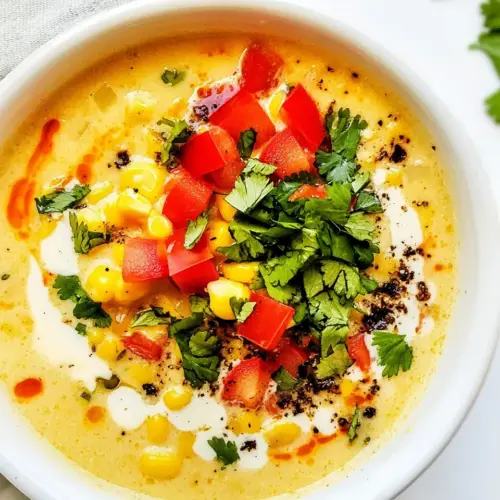
Fiesta Chicken Corn Chowder
Fiesta Chicken Corn Chowder is a creamy, smoky, and slightly spicy chowder that blends sweet corn, tender chicken, and melty cheeses for an easy weeknight dinner. This rich and comforting soup balances bright tomatoes and green chilies with silky cream cheese, creating a bowl that is both cozy and exciting. Make it for a family meal when you want fuss free flavor and satisfying warmth.
Equipment
- Large Dutch oven or soup pot
- Whisk
- Wooden spoon or spatula
Ingredients
- 3 tablespoons unsalted butter Melted to provide a rich, silky base and help sauté aromatics; contributes mellow dairy flavor and helps build a creamy mouthfeel in the chowder.
- 2 tablespoons olive oil Used to sauté vegetables and prevent sticking while adding a subtle fruity flavor; helps carry spices and balance the butter for a rounded sauté.
- 1/2 large onion, diced Diced and cooked until translucent to add natural sweetness and savory depth; provides textural contrast and forms the aromatic backbone of the soup.
- 1 jalapeno, seeded and minced Seeded and minced then sautéed briefly to add bright heat and a fresh, vegetal bite; contributes lively spice and enhances overall flavor complexity.
- 1 pound chicken breasts, chopped/uncooked (or 2 1/2 cups shredded rotisserie chicken) Chopped uncooked to simmer in the broth or substituted with shredded rotisserie for convenience; supplies lean protein and absorbs the chowder’s spices and liquids.
- 2 teaspoons ground cumin Added to build warm, earthy flavor notes; pairs with chili powder and cumin forward seasonings to create a southwestern spice profile.
- 1 tsp EACH salt, chili powder Measured and combined to season the dish with balanced umami and chili warmth; enhances overall savory character and ties spices together.
- 1/2 tsp EACH smoked paprika, dried oregano Included to provide smoky and herbaceous undertones that deepen flavor; used in small amounts to complement the chili powder and cumin without overpowering.
- 1 red bell pepper, chopped Chopped and sautéed to contribute sweetness, color, and a pleasant crunch when not fully softened; brightens the chowder and balances spicy elements.
- 1/4 cup flour Whisked into the sautéed vegetables to create a roux that thickens the chowder; imparts slight toasty flavor and helps stabilize the final texture.
- 4 garlic cloves, minced Minced and added to release aromatic pungency while sautéing; amplifies savory notes and layers flavor throughout the soup.
- 4 cups low sodium chicken broth, divided Divided so some is used for simmering the chicken and vegetables while more is added to adjust consistency; provides a savory liquid base and controls salt levels.
- 2 tablespoons cornstarch Mixed with cold water to make a slurry and stirred in to rapidly thicken the chowder without altering flavor; adds glossy body and stability.
- 2 (14.75 oz.) cans cream-style corn Added for creamy sweetness and corn flavor that blends with the broth; helps create a smooth, velvety base characteristic of cream-style chowders.
- 1 (15 oz.) can sweet corn, drained and rinsed (or 2 cups fresh or frozen) Drained and added for additional corn kernels and texture; provides a contrast to the cream-style corn with whole-kernel bite and natural sweetness.
- 1 (14 oz.) can fire-roasted diced tomatoes, drained Drained and stirred in to add bright tomato acidity and charred flavor from fire-roasting; contributes color, mild tang, and complexity.
- 1 (14 oz.) can mild diced green chilies Added for mild, tangy heat and green-chili flavor; enhances southwestern character and adds subtle warmth without overwhelming the chowder.
- 4 oz . block cream cheese, very soft Softened and blended into the hot soup to enrich body and add tangy creaminess; helps achieve a luscious, velvety consistency.
- 1/2 cup EACH shredded sharp cheddar, Monterrey Jack cheese Shredded into the chowder or sprinkled on top to add sharp, salty tang and melt-in-mouth cheesiness; contributes richness and depth of flavor.
- Hot sauce to taste Used sparingly to adjust heat level to personal taste; provides immediate bright vinegar-forward heat that lifts flavors without altering texture.
- Sour cream (highly recommended) Served as a cool, tangy garnish to contrast the warm chowder; adds creamy acidity and balances spicy, rich components for enhanced mouthfeel.
- Cheese Sprinkled or melted on top for extra cheesiness and savory appeal; boosts flavor intensity and provides an indulgent finish when desired.
- Cilantro Chopped and added fresh as a leafy herb garnish to inject bright, citrusy notes; elevates aroma and offers visual freshness to each bowl.
- Avocados Sliced or diced to add creamy, buttery richness and temperature contrast as a garnish; contributes healthy fat and soft texture against hot chowder.
- Tomatoes Diced and used fresh as a bright, acidic garnish to add color and a juicy counterpoint; balances richness with fresh tomato tang.
- Tortilla chips Crumpled or served alongside to provide crunchy, salty contrast for scooping; adds texture and a familiar southwestern accompaniment to the chowder.
Instructions
- Melt the butter in the olive oil over medium-high heat in a large Dutch oven or soup pot. Add the chopped chicken, onions, jalapenos, and seasonings; then sauté for 3 minutes.: As the fats warm, you should notice a glossy shimmer and a gentle sizzle when a piece of chicken hits the surface. This combination helps prevent scorching while letting the chicken develop a golden edge that adds savory depth to the final chowder. You want audible, steady sizzling, not furious sputtering; if it spits aggressively, the pan is too hot and you should reduce heat immediately. A common mistake here is overcrowding the pot, which causes the chicken to steam instead of brown, resulting in less flavor. The aroma will turn richer as the onion softens and the spices bloom in the fat, signaling readiness for the next ingredients.
- Add the bell peppers, garlic, and flour. Cook, while stirring for 2 minutes.: During these first few minutes the onion should go from opaque to translucent and the jalapeño will soften while releasing its green pepper notes into the oil. The spices will become fragrant, almost perfume like, which indicates they are blooming properly. If the spices smell sharp or burned, the heat is too high and you should lower it. Stir frequently to ensure even cooking and to stop any bits from sticking to the bottom, which can impart burnt flavors to the chowder.
- Reduce the heat to low and gradually stir in 3 cups chicken broth.: As you stir, the flour will lose its raw edge and begin to take on a nutty aroma, which is important for a smooth, cooked-through thickening base. The bell pepper should soften but keep some body, offering a sweet counterpoint to the chilies. If the mixture becomes dry or starts to stick, add a splash of the reserved broth to loosen it, avoiding lumps. A typical pitfall is rushing and not cooking the flour long enough, which can leave a chalky texture in the finished chowder.
- Whisk 2 tablespoons cornstarch with the remaining 1 cup chicken broth and add it to the soup. Stir in the creamed corn, whole corn, diced tomatoes, and green chiles.: Adding the broth slowly while stirring helps incorporate the flour paste into the liquid, preventing lumps and creating a satin texture. You will notice the mixture ease into a more liquid state and begin to smell fuller and more rounded. Keep the heat gentle so the starches hydrate evenly, and stir until smooth. If small clumps appear, whisk vigorously or strain the liquid, but prevention by gradual addition is best practice.
- Bring to a boil, then reduce to a simmer. Add rotisserie chicken if using. Simmer, uncovered, for 10 minutes, stirring occasionally.: This slurry technique gives a glossy, stable body to the chowder without making it stodgy. When you add the slurry and canned items, the pot will look thicker and the aroma will brighten from the tomatoes. Stir thoroughly so the cornstarch activates uniformly; if you add it straight to hot liquid without dissolving, it can clump. One common error is adding the slurry at too high a temperature which can cause rapid thickening in uneven pockets, so temper and stir continuously as you combine.
- Reduce the heat to low, and stir in the softened cream cheese until melted. Then, add the shredded cheeses, a handful at a time, and continue to stir until completely melted.: When the pot reaches a boil you will see steady bubbles and a rising steam column; reduce to a gentle simmer so flavors meld and the corn softens without breaking apart. If using pre cooked rotisserie chicken , add it now to warm through and meld flavors. Stir occasionally to avoid sticking and to check thickness, because simmering concentrates the liquid and intensifies seasoning. A mistake here is leaving the pot at a high boil which can cause dairy or cheeses added later to separate, and it can make the corn kernels lose structure.
- Garnish servings with desired toppings.: As the cream cheese melts, the chowder will become visibly silkier and the surface will take on a glossy sheen. Adding shredded cheeses gradually prevents them from clumping into oily ribbons and encourages smooth emulsification. Pay attention to texture and keep the heat low, as overheating can cause the cheeses to seize and release fat, resulting in a greasy mouthfeel. If this happens, remove from heat and whisk in a splash of warm broth to bring it back together.
- Garnish servings with desired toppings: The final garnishes transform the bowl into a composed dish, adding brightness, creaminess, and crunch. A spoonful of sour cream cools and fattens the edge, while chopped cilantro adds fresh herb notes and crushed tortilla chips introduce textural contrast. Taste for final seasoning here and add hot sauce sparingly to balance. A common oversight is over topping, which can overwhelm the chowder base; add toppings thoughtfully to complement, not mask, the flavors.
Notes
- Control the heat: Cook aromatics and spices gently so they soften and bloom without burning, which preserves their sweet and earthy qualities.
- Bloom spices in fat: Toast cumin and paprika briefly in the butter and olive oil to release their essential oils, which deepens the overall flavor.
- Use a slurry: Whisk cornstarch into cold broth before adding it to the hot pot to avoid lumps and achieve a glossy thickness.
- Temper cheeses: Add shredded cheeses slowly and keep the heat low to ensure smooth melting and to prevent separation.
- Finish with bright toppings: Dollops of sour cream and fresh cilantro add contrast that lifts the rich chowder, making each spoonful more interesting.
- Pace your seasoning: Salt in stages, tasting after the chowder reduces and after cheeses go in, to prevent over salting.