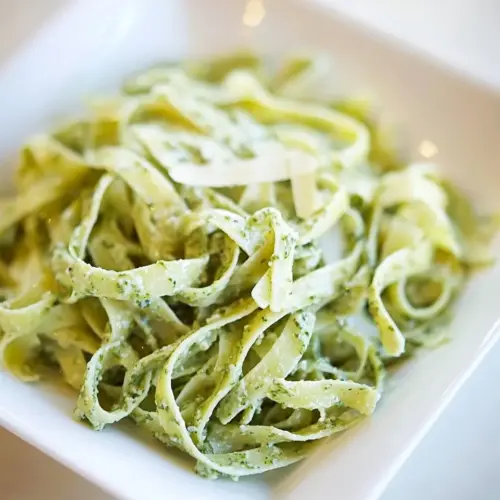
Fettucine al Pesto Genovese
Fettucine al Pesto Genovese is a creamy, herb forward pasta that bursts with fresh basil aroma and nutty parmesan depth. This easy weeknight dinner comes together quickly, offering silky sauce and bright green color that feels both homey and elegant. Perfect when you want a fast, flavorful meal that tastes like a small celebration, and an excellent reason to buy extra basil.
Equipment
- Large Pot
- Food Processor
- Colander
- Ice Bath Bowl
Ingredients
- 4 cups packed basil 1/2 cup extra-virgin olive oil 1/2 cup finely grated parmesan 1/4 cup pine nuts 3 tbsp. finely grated pecorino 2 cloves garlic, finely chopped Coarse sea salt, to taste 1 lb fresh linguine or fettuccine pasta Provide a bright, aromatic foundation and vibrant green color; packed basil is finely chopped or pulsed to release its oils and herbaceous flavor, balancing the richness of cheeses and oil while giving pesto its characteristic freshness and scent. Use fresh, tender leaves to ensure a bright taste and smooth texture, and handle gently to avoid bruising that can darken the sauce.
Instructions
- Bring a large pot of water to a boil. Blanche basil leaves for 20 to 30 seconds or until vibrant green. Remove from boiling water and immediately immerse in an ice water bath to halt cooking process. Drain. Keep pot of water boiling on the stove.: Even before you touch the basil , you should feel the kitchen warming as the pot heats. The sound of a rolling boil is steady, and steam will begin to fog the air, carrying a promise of what is to come. A vigorous boil reduces starchy water loss and helps the pasta cook evenly. One common mistake is under salting the water, which leaves the pasta bland, so salt it generously and wait until it is truly bubbling before adding the noodles. If the boil sputters when you add pasta, stir immediately to prevent sticking.
- In a food processor combine basil, oil, parmesan, pine nuts, pecorino, and garlic. Pulse until smooth; season with salt and pepper.: The sight of the leaves turning brighter almost instantly is joyful, and the brief heat unlocks aromatic compounds that soften raw edge. The leaves will wilt and darken slightly; this is the cue to remove them. Don’t overcook, since prolonged heat will dull the color and flavor. A frequent slip is leaving leaves in the hot water too long, which yields a muted, limp pesto.
- Add pasta to boiling water and cook until al dente. Drain, reserving 1/2 cup of cooking water. Return pasta to pot. Toss with pesto until evenly coated, adding reserved cooking water as needed to thin sauce. Serve immediately.: The cold shock locks in that neon green and stops enzymatic cooking. You will hear the water settle and see tiny beads of condensation on the leaves, a sign they are cooling rapidly. This contrast protects flavor and keeps the texture bright. Skipping the ice bath will continue the cooking and lead to a brownish, less vibrant sauce.
- Drain: After shocking the leaves, drain them thoroughly so you do not dilute the pesto with excess water. The leaves should be just damp, not dripping. Gently pressing with your hands or a towel removes extra liquid while preserving the leaf integrity. A common error is squeezing too vigorously and bruising the basil, which extracts bitter chlorophyll. Patience here keeps the sauce fresh.
- Keep pot of water boiling on the stove: Maintain that rolling boil so you can add the pasta immediately. The continuity of heat prevents temperature loss, helping the noodles cook within the expected time window. If you let the pot cool, cooking times become unpredictable and texture suffers. A misstep is turning the burner down too soon, which makes pasta gummy.
- In a food processor combine basil, oil, parmesan, pine nuts, pecorino, and garlic: As the blades spin, the mixture will transform from separate ingredients into a fragrant, emerald paste. The pine nuts release oils and the cheeses begin to bind everything, creating a silky mouthfeel. The aroma will intensify, filling the kitchen with herbal, nutty notes. Overprocessing can lead to a too oily paste, so pulse and watch the texture, stopping when it is cohesive but still slightly textured.
- Pulse until smooth; season with salt and pepper: Smoothness means the sauce clings easily to pasta, but you still want a little grain for interest. Taste and adjust seasoning carefully, since the cheeses carry salt already. A pinch of coarse sea salt will lift the flavors; fresh cracked pepper adds a subtle heat. Too much salt is hard to correct, so season incrementally and taste often.
- Add pasta to boiling water and cook until al dente: As you add the fresh linguine or fettuccine , the water will roar briefly and then settle, and the noodles will soften quickly. Al dente means tender with a slight bite at the center, the texture that makes each forkful satisfying. Overcooking will make the pasta mushy and unable to hold the sauce, so check a strand early. A common miscalculation is assuming fresh pasta needs the same time as dried; it often cooks faster.
- Drain, reserving 1/2 cup of cooking water: The starchy water is liquid gold for finishing the sauce, lending slip and cohesion. When you lift the colander, listen for the sizzle of remaining droplets, and reserve the measured water immediately. Discarding it loses the emulsifying agent that helps the pesto cling. Many cooks forget to reserve water and then the sauce can be too thick or separate.
- Return pasta to pot: Bringing the drained noodles back into the warm pot lets residual heat open the pasta's surface, helping it accept the sauce. The pot will be gently steamy and the strands glossy. Leaving pasta in a cold bowl can cause clumping. Do not wait too long to add pesto, or the pasta will cool and the sauce will not integrate properly.
- Toss with pesto until evenly coated, adding reserved cooking water as needed to thin sauce: At this point, you will see the sauce cling to the pasta and a light sheen form. Add the reserved cooking water sparingly to coax the pesto into a silky emulsion that coats every strand. The sound is a soft, cohesive movement as fork or tongs glide through. A typical mistake is adding too much water at once, which makes the sauce watery instead of glossy; add in small amounts and watch the texture change.
- Serve immediately: Serve while the pasta is warm and aromatic so the oils and cheeses feel fresh. The steam will carry the scent of basil and garlic , and the plate will glisten. Delaying serving causes the sauce to settle and lose its vitality. If you must hold it briefly, keep it loosely covered and warm, but avoid long waits which diminish flavor.
Notes
- Cheese first: Grate the parmesan and pecorino finely so they melt into the sauce without graininess, giving a creamy mouthfeel.
- Oil control: Add extra-virgin olive oil slowly while pulsing the processor to ensure a smooth emulsion rather than an oily separation.
- Nut timing: Lightly toast the pine nuts for extra depth, but remove them from heat at the first sign of color to avoid bitterness.
- Pasta water reserve: Save the specified 1/2 cup of water, then add in teaspoons to reach the perfect sauce consistency, rather than pouring all at once.
- Garlic moderation: Mince the garlic finely and taste as you go to prevent an overly sharp raw bite that can dominate the basil.
- Serve immediately: Pesto is brightest fresh, so plate and eat soon after tossing to enjoy the full aromatic profile.