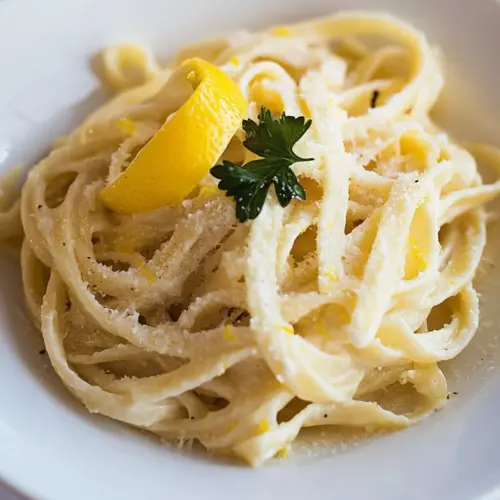
Fettuccine with Lemon Mascarpone Sauce
Fettuccine with Lemon Mascarpone Sauce is a creamy, bright pasta that feels luxurious yet comes together quickly. Silky mascarpone clings to ribbons of fettuccine pasta, while fresh lemon juice and lemon zest add a lively lift. This easy weeknight dinner is perfect when you want a simple but elegant meal that impresses without effort.
Equipment
- Large Pot
- Colander
- Large Pan
- Measuring Cup
- Microplane
Ingredients
- 1 pound fettuccine pasta Provide a hearty base for the dish by delivering tender, ribbon-like noodles that hold sauce well; cook until al dente and toss immediately to coat with sauce for even flavor distribution.
- 1/2 lemon juice Add bright acidity to balance the richness by squeezing fresh juice from half a lemon; adjust to taste and combine gradually to avoid overpowering the creamy sauce.
- 4 tablespoons unsalted butter Melt smoothly into the sauce to create a silky mouthfeel and add a rich, buttery backbone; use unsalted butter to control seasoning and stir until fully incorporated.
- 3 tablespoons mascarpone Contribute creamy tang and body to the sauce, enriching texture while lending a subtle lactic flavor; whisk into warm butter and lemon juice off the heat to prevent separation.
- lemon zest Provide concentrated citrus aroma and a burst of fresh flavor, enhancing the sauce’s brightness; grate finely over the finished pasta to lift and finish the dish.
Instructions
- Cook the fettuccine according to package instructions. When done al dente, reserve 1 cup of pasta water, drain the pasta, and put the pasta back in the pan.: The air will smell faintly of wheat as the pot comes to a vigorous boil and the surface bubbles steadily, so keep an eye on the pot to avoid overboiling. When you add the fettuccine pasta , listen for the quiet hiss as it hits the water, then stir gently to keep the strands separate. Cook until the pasta is al dente, which should feel tender with a slight resistance when you bite it. This texture is important because overcooked pasta becomes mushy and will not hold the mascarpone sauce properly. A common mistake is forgetting to salt the water, which can result in bland pasta; add salt earlier so it seasons the pasta internally. Before draining, reserve 1 cup of the starchy cooking water; the warm water acts like glue to bring the sauce and pasta together. Drain the pasta and return it to the pan, leaving it hot and ready to absorb the sauce.
- Add the butter, add the lemon juice, half of the lemon zest, and mascarpone. Mix well and adjust the mascarpone or lemon to your liking. If dry add some of the cooking water.: As you skim a mug into the pot to save the starchy liquid, notice how the water becomes cloudy from the released starch, that cloud is exactly what helps the sauce emulsify. Draining should be quick and efficient to keep the pasta hot, and when you return it to the pan the residual heat will help the mascarpone melt into a silky coating. A frequent error at this stage is letting the pasta sit too long after draining, which cools it down and makes it harder for the sauce to adhere. Keep everything warm and work swiftly to preserve the ideal temperature for emulsification.
- Serve on pasta dishes and sprinkle the remainder of the lemon zest.: When you drop the unsalted butter into the hot pan with the pasta, it will sizzle softly and release a nutty aroma as it melts, creating a glossy base. Add the lemon juice next; its bright steam will lift immediately, filling the kitchen with citrusy perfume. Sprinkle in half of the lemon zest , its oils infusing the sauce with floral top notes. Dollop the mascarpone in small spoonfuls so it gently melts rather than clumping, then begin to toss or stir so the ingredients coalesce. The why here is texture: small additions and warm motion let the mascarpone integrate smoothly, building a sauce that clings, rather than pools. One mistake is adding cold mascarpone all at once to a lukewarm pan, which can create lumps; ensure the pan and pasta are hot enough to melt the cheese gently.
- Mix well and adjust the mascarpone or lemon to your liking: As you mix, notice the transformation as the sauce turns velvety and coats each strand with a silky sheen. Taste and modulate the balance, adding a touch more mascarpone for creaminess or a squeeze of lemon juice for extra brightness. Stirring rhythmically helps the sauce become homogeneous. The reason this matters is that small adjustments at this stage determine the final flavor profile, making it either leaning toward rich or lively. Avoid the common trap of over seasoning too early; make incremental changes and taste after each adjustment so you do not overshoot the flavor you want.
- If dry add some of the cooking water: If the sauce seems tight or clumpy, add reserved pasta water a little at a time until the texture loosens and becomes glossy, and the sauce clings like a thin veil to the fettuccine pasta . The first spoonfuls of starchy water will transform texture noticeably, smoothing and thinning the sauce while maintaining creaminess. The visual cue to watch for is a silky shine and a ribbon-like coating on the pasta. A common mistake is adding too much water at once, which will make the sauce watery; add gradually and allow it to incorporate between additions.
- Serve on pasta dishes and sprinkle the remainder of the lemon zest: When plating, the sound of steam rising is a good indicator the dish is at an ideal temperature. Scatter the remaining lemon zest over the top for an aromatic finish that brings bright citrus oils right to the surface of each portion. The final presentation should look glossy and inviting, with flecks of zest adding a visual pop. Avoid letting the plates sit too long before serving because the sauce firms as it cools, and immediate service preserves the silky mouthfeel. A common misstep is skipping the finishing zest, which diminishes the lift that makes this recipe feel lively and complete.
Notes
- Control salt early, salt the pasta water generously so the fettuccine pasta is seasoned from the inside out, which prevents a flat final dish.
- Keep ingredients warm, ensure the pan and pasta are hot so the mascarpone melts smoothly and the sauce emulsifies without clumping.
- Add water gradually, when the sauce feels stiff, stir in the reserved pasta water one tablespoon at a time to reach a glossy consistency.
- Zest last, finish with fresh lemon zest right before serving to capture the volatile oils and brightest aroma.
- Adjust with taste, tweak the balance between mascarpone and lemon juice slowly, tasting as you go to find your preferred harmony.