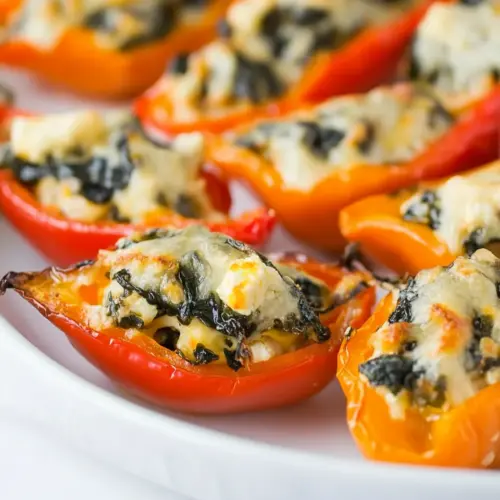
Feta Stuffed Mini Sweet Peppers
Feta Stuffed Mini Sweet Peppers are creamy, tangy, and easy to assemble, offering a perfectly portable appetizer for summer parties or weeknight snacks. Roasted mini peppers filled with caramelized onion, wilted spinach, and melty feta make an irresistible bite. This easy make ahead recipe is ideal for entertaining and guarantees crowd pleasing results.
Equipment
- Large Skillet
- Baking Sheet
- Sharp Knife
- Parchment Paper
Ingredients
- 15 mini sweet peppers sliced in half lengthwise Provide a colorful base and vessel for the stuffing, offering crisp texture and natural sweetness when roasted or served fresh. Halve and deseed to expose cavities that hold the filling, making them ideal bite-sized appetizers. Serve warm or chilled depending on preparation to highlight their tender skins and bright flavor.
- 2 tbsp avocado oil divided Coat and lightly brown filling components to prevent sticking and add a subtle, buttery mouthfeel; reserve half for sautéing and brush remaining on peppers before roasting. Warm oil helps meld flavors and carries heat efficiently for even cooking of aromatics. Use sparingly to maintain a balance between richness and the peppers' natural sweetness.
- 1 medium-sized yellow onion Sauté until translucent to build savory depth and a slightly sweet backbone for the filling; finely dice for even distribution throughout the stuffing. Release fragrant sugars that complement the garlic and spinach, creating a mellow, caramelized note. Adjust cooking time to avoid browning too much, preserving a tender texture that mixes well with cheese.
- 3 cloves garlic minced Infuse the filling with sharp, aromatic bite by mincing and gently cooking to release oils without burning; combine with onions for a layered savory profile. Provide a bright, pungent counterpoint to the creamy feta and mild spinach, enhancing overall flavor complexity. Add toward the end of sautéing to preserve fresh garlic aroma if preferred.
- 5 ounces baby spinach Wilt down to concentrate flavor and reduce volume, adding tender green color and a subtle earthy note to the filling. Squeeze or drain excess moisture after cooking to prevent a soggy filling and ensure the feta adheres well inside the pepper halves. Fold into the onion-garlic mixture to create a cohesive, nutrient-rich stuffing.
- 12 ounces feta cheese crumbles Contribute a salty, tangy creaminess that binds the filling components and delivers signature Mediterranean flavor. Crumble directly into the spinach mixture and adjust quantity to taste, offering both texture and a savory punch that contrasts the sweet peppers. Choose a balance between creamy and crumbly pieces to create pleasant mouthfeel in each bite.
- Sea salt to taste Enhance and balance overall flavors by seasoning sparingly to taste, bringing out natural sweetness of peppers and savory notes of the filling. Sprinkle during cooking and adjust at the end to achieve the desired saltiness without overpowering the feta. Use cautiously due to feta's inherent salt content, tasting as you go.
Instructions
- Begin by caramelizing the onion, as it will require the most amount of time. Heat 1 tablespoon of avocado oil in a large skillet over medium-high heat. Add the chopped onion and sauté, stirring occasionally, until the onion begins to sweat, about 3 to 5 minutes. Reduce the heat to medium or medium-low and continue cooking, stirring occasionally, until the chopped onions have turned golden brown, about 30 minutes total.: Warmth releases sweetness slowly, creating a deep aromatic base that lifts the entire dish. As the yellow onion softens it will first release a sharp, almost grassy scent that mellows into a rich, sweet aroma, and the pan will sound different, shifting from loud sizzling to softer, rhythmic pops. This slow transformation concentrates the onion sugars and prevents a raw edge in the filling. A common mistake is rushing the heat, which leads to burnt edges and a bitter taste. If you notice any sticking early, lower the heat and add a teaspoon of water, scraping the fond to coax those sugars out gently.
- Pre-roast the sweet peppers while the onion is cooking (instructions below).: The oil should shimmer but not smoke, indicating it is hot enough to start softening the onion without burning. You will hear the initial sizzle as the chopped yellow onion hits the pan, and that sound signals moisture escaping and the browning process beginning. This initial sear helps create flavor compounds that develop into caramelization. Avoid turning the heat too high, because that creates dark spots rather than even golden browning, which give an acrid rather than sweet flavor.
- Once the onion is caramelized, add the garlic and spinach. Cover the skillet and cook for a few minutes to help steam the spinach. Stir well and continue cooking until the spinach has completely wilted and much of the liquid has evaporated.: You will see the onion become translucent and slightly glossy as moisture is released. The kitchen will start to smell faintly sweet, and the pieces will soften so they bend easily. Stirring occasionally helps the pieces cook evenly without losing moisture too quickly. A typical error is crowding the pan, which traps steam and prevents browning, so use a wide skillet for best results.
- Add in the feta cheese and stir well. Continue cooking and stirring until the cheese is mostly melted.: This is the patient phase where the sugars caramelize and deepen in color. Watch for an even golden hue rather than scattered dark spots, and notice the aroma shift to nutty and sweet. Stir every few minutes to prevent sticking, and if the pan starts to look dry, add a splash of the remaining avocado oil or a teaspoon of water to deglaze. Rushing this step will rob the filling of its layered sweetness.
- Preheat the oven to 350 degrees Fahrenheit.: Roasting softens the flesh and concentrates the natural sugars in the mini sweet peppers , giving them a tender texture that will hold the filling without collapsing. The skin may blister slightly and the flesh will become more fragrant. A mistake is to under roast, which leaves the peppers too crisp and hollow, or over roast, which makes them floppy. Aim for tender but intact pieces for the best bite.
- Use a sharp knife to cut the tops off of the peppers, then slice them in half.: The heat will coax the garlic fragrance forward and will rapidly wilt the baby spinach , releasing a faint green scent that complements the sweet onion. Covering the skillet briefly traps steam and helps the spinach collapse quickly, which evaporates excess moisture so the filling does not become soggy. Overcooking the garlic here can make it bitter, so stir and monitor the aroma; it should smell warm and savory rather than sharp.
- Transfer the halved peppers to a large baking sheet in a single layer and drizzle them with avocado oil. Toss the peppers with your hands to be sure all of the flesh is covered with a very light layer of oil. Roast for 8 to 10 minutes, or until the peppers have softened but still maintain their shape.: Trapping the steam accelerates wilting and concentrates flavors, and you will see the spinach dramatically reduce in volume into a glossy mass. This condensation stage lets you remove excess water by uncovering and stirring until the liquid evaporates. Leaving too much moisture will dilute the feta cheese crumbles and result in a runny filling, so ensuring most liquid evaporates is important.
- Remove the peppers from the oven and allow them to cool.: The mixture should look cohesive, not watery, and it will smell layered with sweet onion, warm garlic , and a fresh green note from the baby spinach . Use a spoon to press the spinach gently to test for excess liquid. If it still seems wet, keep cooking on low heat, stirring, until it dries down. A common pitfall is stuffing peppers with a wet filling, which makes the peppers lose structure when baking.
- Once cool enough to handle, stuff the roasted peppers with the spinach feta stuffing and place them on a parchment-lined baking sheet.: The feta cheese crumbles soften and begin to incorporate with the vegetables, creating a creamy, slightly grainy texture that clings to the spinach and onion. You will notice the saltiness blooming and the mixture taking on a richer mouthfeel. Stir until the cheese is mostly melted into the warm veggies. If the filling seems too loose, let it cool briefly to firm up before stuffing. Overheating the cheese can make it grainy, so moderate heat is best.
- Bake the stuffed peppers at 400 degrees F for 8 minutes. Place the oven on the High broil setting and broil for 2 to 3 minutes, or until the feta is showing a little golden-brown color.: The pan should emit a warm, tangy aroma, and the visual cue is when the cheese loses its stark white crumble form and becomes integrated into the greens. This melding creates a well rounded filling that will hold together when spooned into the mini sweet peppers . Avoid stirring aggressively which can break down textures; gentle folding preserves the bite.
- For best results, serve the spinach and feta stuffed mini peppers fresh out of the oven. You can also make this as a make ahead appetizer and simply reheat the peppers in the oven when you're ready to serve.: A moderate oven ensures the peppers roast through without blistering too aggressively, and it prepares the tray for a quick initial roast. You will feel a rise in kitchen warmth and see the oven indicator reach temperature. Skipping preheating leads to uneven roast and longer cooking times, so give the oven time to stabilize before inserting the peppers.
- Use a sharp knife to cut the tops off of the peppers, then slice them in half: Clean cuts create neat little vessels for the filling and make assembly faster. A sharp blade gives smooth edges, while a dull one tears the flesh and risks crushing the pepper. Wear caution when trimming, and keep the halves relatively even so they bake uniformly on the sheet pan.
- Transfer the halved peppers to a large baking sheet in a single layer and drizzle them with avocado oil: Spreading them out prevents steaming and helps each pepper roast evenly, developing gentle caramelization on the cut edges. Tossing them lightly by hand ensures the oil coats every surface, aiding in browning and preventing sticking. Overcrowding will cause soggy, uneven results, so give them room to breathe on the pan.
- Toss the peppers with your hands to be sure all of the flesh is covered with a very light layer of oil: The tactile step helps you feel for missed spots and keeps the oil distribution minimal, which preserves the pepper’s natural sweetness. You will notice the flesh looking glossy and slightly darker where the oil clings. Too much oil can cause greasy spots, so aim for a sheen rather than a pool.
- Roast for 8 to 10 minutes, or until the peppers have softened but still maintain their shape: As they roast, the peppers will become more aromatic and tender, with edges showing slight browning. The sound in the oven is quiet, and the visual cue is softened, slightly translucent flesh. Under roasting leaves peppers too firm, over roasting risks collapse, so check at the earlier time and adjust for your oven’s behavior.
- Remove the peppers from the oven and allow them to cool: Letting them cool briefly makes them easier to handle and prevents the filling from liquefying on contact. The aroma will cool to a comforting warm sweetness, and the shells will firm up slightly. Rushing this step can lead to burned fingertips or a filling that slides out when stuffing.
- Once cool enough to handle, stuff the roasted peppers with the spinach feta stuffing and place them on a parchment lined baking sheet: Use a spoon to mound the filling so each half has an ample, attractive amount of mixture. The contrast between the pinkish white of softened feta cheese crumbles and the vibrant pepper shells is visually appealing. Press the filling gently to compact, but avoid overpacking which can cause spills while baking.
- Bake the stuffed peppers at 400 degrees F for 8 minutes: This step warms the filling through and helps the edges of the feta cheese crumbles begin to set, creating cohesion. The oven’s heat will amplify aromas and slightly concentrate the flavors. Baking too long at this stage can dry the filling, so follow the timing closely and trust the visual signs of warmth and slight browning.
- Place the oven on the High broil setting and broil for 2 to 3 minutes, or until the feta is showing a little golden brown color: Broiling adds a final layer of color and texture, creating just a few toasted notes on the cheese that heighten its flavor. Watch carefully because broilers vary; the cheese can go from beautifully golden to burnt in moments. Keep the oven door slightly ajar if your broiler is particularly intense, and move the rack down a notch if the edges darken too quickly.
- For best results, serve the spinach and feta stuffed mini peppers fresh out of the oven: Served warm, the filling is creamy and fragrant, and the pepper shells are tender with a slight bite. If you are making them ahead, reheat gently in the oven so the filling warms evenly without drying. A common serving mistake is microwaving, which can turn the peppers soggy; reheating in an oven or air fryer preserves texture best.
- You can also make this as a make ahead appetizer and simply reheat the peppers in the oven when you're ready to serve: Preparing the filling in advance and assembling just before your event cuts down last minute work while keeping the final dish vibrant. Store assembled but unbaked peppers in an airtight container in the refrigerator and reheat at 350 degrees Fahrenheit until warmed through. Avoid freezing stuffed peppers as the texture of the roasted shells changes noticeably when thawed.
Notes
- Caramelization patience, take your time when cooking the yellow onion, it transforms the flavor and is worth the wait.
- Oil distribution, use your hands to coat the mini sweet peppers so each one roasts evenly and avoids pooling oil.
- Moisture control, squeeze excess liquid from the wilted baby spinach so the stuffing does not become runny.
- Broil vigilance, stay by the oven during the final broil to catch the feta cheese crumbles as they turn golden without burning.
- Make ahead, prepare the filling a day early and refrigerate, then stuff and bake when you are ready to serve for fresher texture.