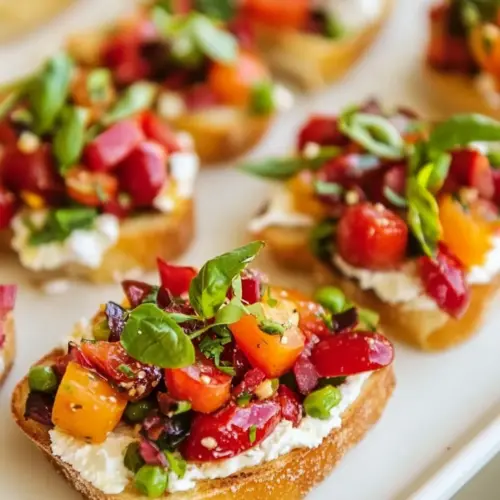
Festive Bruschetta
Festive Bruschetta bursts with creamy, crispy, and tangy contrasts, perfect for easy holiday entertaining or an easy weeknight appetizer. Bright pomegranate arils and tart cranberries pair with herby pesto and juicy cherry tomatoes, creating a colorful platter that kids can help assemble. Make it for gatherings when you want fast prep and a show stopping presentation.
Equipment
- Oven
- Broiler
- Food Processor
- Knife
- Mixing Bowl
Ingredients
- 24 slices baguette Provide crisp, toasted bases for assembling the bruschetta; can be sliced and lightly brushed with oil before toasting to achieve a golden crunch. Serve as handheld vehicles that contrast creamy and fruity toppings, helping present bites attractively at parties. Store leftover slices in an airtight container to maintain texture for a day or two.
- 6 ounce cream cheese, low fat Add a creamy, tangy layer that balances sweet and acidic toppings; spread thinly onto each baguette slice for smooth mouthfeel and mild flavor. Choose low-fat to reduce richness while still offering a pleasant base for the pesto and fruit components. Keep refrigerated until ready to assemble to maintain firmness and food safety.
- 1/4 cup pesto Provide herbaceous, savory notes that enhance overall flavor and add moisture to the base; spoon a small amount over the cream cheese to introduce basil and garlic aromas. Use pesto sparingly to avoid overpowering delicate fruit toppings, and opt for a fresh-tasting variety for best results. Store refrigerated and bring to room temperature briefly for easier spreading.
- 1 cup cherry tomatoes Contribute juicy, sweet-acid pop and colorful appeal when halved or quartered; distribute evenly across toasts to add freshness and texture. Pair with the creaminess and pesto to create bright flavor contrasts, and select ripe tomatoes for maximum juiciness. Rinse and dry gently before cutting to avoid excess moisture on the crostini.
- 2 tablespoon olive oil Provide a light coating for toasting the baguette slices and finish brushed crostini with a subtle fruity richness; drizzle prior to baking or use to sauté any toppings if desired. Use high-quality extra-virgin olive oil for best flavor and aroma, and measure carefully to prevent soggy bread. Store at room temperature away from heat and light.
- 1 cup , chopped cranberries, raw Add tart-sweet fruitiness and chewy texture that complements creamy and herbal elements; chop raw cranberries into small pieces to disperse bursts of flavor across each bite. Balance their natural tartness with honey and orange to integrate into a festive relish or topping. Keep refrigerated and use within a few days for optimal freshness.
- 1/4 cup orange juice Provide bright citrus acidity and natural sweetness to meld fruit flavors and deglaze pans if making a compote; use orange juice to loosen chopped fruit and create a cohesive topping. Combine with honey and zest to amplify citrus character and help macerate cranberries for softer texture. Refrigerate until needed and avoid prolonged storage to preserve freshness.
- 1/4 cup honey Contribute smooth, natural sweetness and sticky binding power to create a glaze or dressing that tames tart fruit and adds shine. Honey helps balance cranberry tartness and helps pomegranate arils adhere to the crostini without adding excess moisture. Store honey at room temperature in a sealed container to preserve consistency.
- 3/4 cup arils (seed/juice sacs) pomegranate Add jewel-like bursts of sweet-tart juice and striking color as a final garnish; scatter arils across assembled toasts for crunchy, refreshing pops in every bite. Provide a pleasing contrast to creamy and herbal layers while enhancing visual appeal for a festive presentation. Rinse gently and drain before using to avoid diluting other flavors.
- 1 tbsp orange zest Deliver concentrated citrus oils and bright aroma when finely grated; sprinkle orange zest over toppings to lift flavors and add a fragrant finish. Use sparingly to avoid bitter pith and to complement orange juice and honey in any glaze or dressing. Zest immediately before using for maximum aromatic impact.
Instructions
- Lightly toast slices of baguette in the oven. I put my oven on broil and closely watched my slice, after about 2 minutes they were toasted and I flipped the pieces and let them broil again. Keep your kiddos in mind! If you don’t think they will like really crunchy bread, then just barely toast them!: The edges should turn a warm golden color and give a satisfying crisp sound when tapped, which signals that the bread will hold toppings without becoming soggy. You'll notice a toasty aroma fill the kitchen as moisture leaves the bread, and the crust will firm while the interior remains slightly tender. This step matters because a properly toasted base prevents the spread from soaking through, preserving texture. A common mistake is leaving slices under the broiler too long, which can burn them quickly, so watch the slices closely and flip after the first minute to promote even browning.
- Spread a light layer of cream cheese (or ricotta) on each piece of bread. I zapped mine in the microwave to make it a little easier to spread on.: Once the slices are warm but not hot, the softened cream cheese will glide across the surface and create a cool, creamy contrast to the warm toast; you'll feel the smooth drag of the knife and see a white glossy layer. This provides a mild, rich base that tames sharper flavors and helps other toppings adhere. If the cream cheese is too cold, it will tear the bread, so warm it slightly or microwave for a few seconds to make spreading easier. Avoid overwarming because melted cream cheese becomes runny and will not hold toppings.
- On half the slices, spread about a teaspoon of pesto over the cream cheese.: The herbal scent should pop immediately, green and fragrant, adding a savory backbone to those bites. You will see a thin green ribbon atop the white layer, and when you press gently with a spoon the pesto should remain intact. This small amount ensures the herb flavors come through without overpowering, and it helps the tomato pieces adhere. One error to avoid is using too large a quantity which can mask other flavors and make the bread soggy over time.
- Slice your cherry tomatoes and toss in olive oil. (You can heat them over medium heat in a sauce pan if you want your tomatoes cooked a little.) Spoon tomatoes over your pesto layer and finish with a pepper! You can also drizzle a little balsamic vinegar over the top as well!: As you slice, the juicy interiors will glisten, and tossing them in olive oil adds a silky mouthfeel and gentle gloss; the aroma becomes slightly fruity from the oil. If you decide to warm them briefly, they will release some juices and smell sweeter, which creates a lovely concentrated flavor. This technique matters because the oil helps the tomatoes stick to the pesto and enhances the overall texture. A common mistake is overcrowding the bowl while slicing, which can bruise the tomatoes and release too much liquid.
- On the other slices of bread with cream cheese, you’ll want to prepare your cranberry-pomegranate relish. Place your cranberries, orange juice and honey in a blender or food processor. Run the food processor a few times, you don’t want to make a smoothie! You just want everything chopped. Remove from food processor and stir in pomegranate arils. Taste! If you want it sweeter, drizzle in more honey!: When you add the tomato pieces, you should hear a soft plop as they settle, and the color contrast is instantly appealing. The pepper adds a final seasoning that balances the oily sheen and herb notes. This layering keeps each bite balanced in texture and flavor, as the creamy base, oily tomatoes, and herby pesto play together. Watch out for adding too much tomato, which can make the bruschetta slippery and difficult to pick up.
- Spoon over cream cheese layer and top with orange zest!: As the machine pulses, you'll hear the berries break down into chunky pieces, releasing a citrus scent from the orange juice , and a sticky sweetness from the honey will blend in. The goal is an even chopped texture, not a smooth puree, so brief pulses work best. This pulsed texture offers chew and body in the relish, which contrasts the soft cream cheese . One mistake to avoid is overprocessing, which destroys the toothy texture you want for topping.
- Run the food processor a few times: The rhythmic chopping produces a coarse mixture where you can still identify bits of cranberries , the sound changing from sharp pops to softer mashes as pieces break down. That sound, along with a bright, tart scent, tells you you have the right consistency. This matters because coarse pieces hold up on the bread and allow the pomegranate arils to remain distinct. Avoid running the processor continuously, which leads to a soupy mess.
- Remove from food processor and stir in pomegranate arils: When you fold in the pomegranate arils by hand, they glisten and add a fresh crunch, making the relish jewel like. Stirring gently keeps the arils intact so they burst in the mouth instead of releasing all their juice. This step preserves texture contrast and visual appeal. Do not stir roughly, which can break the arils and make the mixture too wet for spreading.
- Taste and adjust sweetness if needed: Sample a spoonful to check balance; the interplay of tart cranberries and sweet honey should be lively, with the orange juice brightening the profile. If it needs more sweetness, add a touch more honey , mixing and tasting as you go. Tasting is crucial because everyone’s fruit sweetness perception differs. A typical slip is adding too much sweetener at once, so increment slowly and taste between additions.
- Spoon over cream cheese layer and top with orange zest: The final scatter of orange zest releases citrus oils that perfume each bite, while the relish should sit neatly on the creamy platform without sliding off. The zest adds a fragrant finish that elevates the overall bite. This finishing step matters because the oils in the zest are intensely aromatic and amplify the relish flavors. A common error is zesting too coarsely which can introduce pith, so use a fine grater.
Notes
- Make it dairy free by swapping the cream cheese for a plant based spread that has similar texture, allowing the rest of the toppings to shine without changing the assembly process.
- Adjust sweetness by adding more or less honey to the cranberry mix, tasting as you go so the relish complements but does not overpower the savory half.
- Use mini toasts by cutting the baguette slices smaller for a bite sized appetizer that’s easier for kids to hold and for guests to sample multiple toppings.
- Prep ahead by making the relish up to one day early and storing it chilled, which lets flavors meld and reduces last minute workload.
- Change the herb note by stirring a small pinch of chopped fresh basil into the tomato mix if you want a brighter, herb forward savory bite.