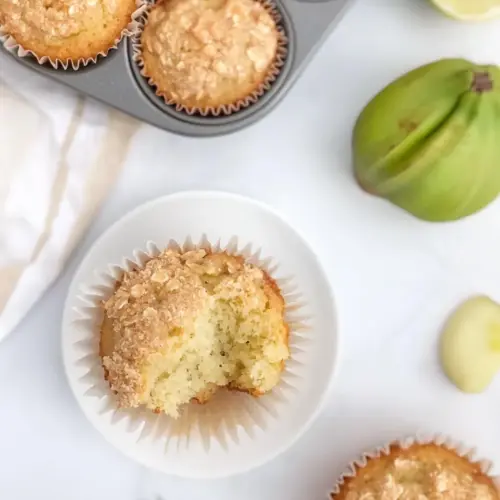
Feijoa Muffins
Feijoa Muffins are fragrant, slightly tangy, and wonderfully moist, combining floral feijoa flesh with chewy desiccated coconut and a hint of lemon. These easy muffins bake into golden, tender treats that make a perfect easy weeknight breakfast or relaxed weekend bake. Try them to enjoy a unique seasonal flavor and a simple recipe that reliably impresses.
Equipment
- Mixing Bowls
- Muffin Tin
- Whisk
- Spatula
Ingredients
- 1 cup Feijoa flesh 220 g, 7-8 feijoas Puree until smooth and provide natural fruity moisture and pulp that contributes a fragrant, tangy flavor and body to the batter. Retain small pieces for texture and to distribute feijoa aroma throughout the muffins.
- 1 lemon zest and juice Zest and squeeze to add bright citrus acidity and aromatic oils that balance sweetness and enhance overall flavor complexity. Incorporate both zest and juice into wet ingredients to ensure even dispersion.
- 1/2 cup olive oil Measure and pour to supply healthy fat that keeps muffins tender and moist while contributing a subtle savory note. Whisk with sugar and egg to create a smooth emulsion that helps trap air for lift.
- 1 teaspoon vanilla essence Add sparingly to impart warm, sweet vanilla aroma that complements fruit and coconut flavors without overpowering. Mix into wet ingredients to evenly distribute its fragrance throughout the batter.
- 1 egg Beat lightly to bind wet and dry components, create structure, and help leavening agents produce lift. Whisk until combined with sugar and oil to ensure even texture in the finished muffins.
- 1/2 cup brown sugar Stir in to provide caramel-like sweetness and deeper flavor than white sugar, while contributing slight moisture that affects crumb tenderness. Cream with wet ingredients to dissolve and incorporate evenly into the batter.
- 1/2 cup desiccated coconut Fold in to introduce chewy texture and a toasty, mildly sweet coconut flavor that pairs well with feijoa. Toast lightly beforehand if desired to intensify flavor and prevent sogginess in the muffins.
- 1 1/2 cup flour Sift or measure accurately to form the bulk of the muffin structure, offering gluten-based framework when combined with liquids. Combine with leavening and other dry ingredients to ensure even rise and proper crumb.
- 3 teaspoon baking powder Sprinkle through dry mix to supply chemical leavening that produces lift and creates a light, airy crumb. Ensure even distribution to avoid uneven rising or dense spots in the muffins.
Instructions
- Preheat your oven to 180 degrees celsius.: When the oven reaches temperature you will notice the air feels steadily warm and a faint dry scent of heated air emerges, which ensures the batter begins rising the moment it hits the tin. Preheating is important for proper oven spring and even baking. A common mistake is putting batter into a cold oven, which leads to pale, dense tops and longer bake times, so always wait until the oven indicator is stable.
- Scoop out the flesh of the feijoas into a medium sized bowl and mash roughly with a fork.: The mashed feijoa flesh should look pulpy with some small chunks remaining, releasing a heady, floral aroma that signals ripeness. The texture informs moisture content, and leaving small pieces gives bursts of fruity pockets in the crumb. Avoid over pureeing, which can make the batter too liquefied and alter rise and texture.
- Add, oil, egg, juice and zest of lemon, and vanilla to the mashed feijoa. Combine well with a whisk or fork.: After combining you will notice the mixture glosses slightly from the olive oil , and the lemon scent will brighten the feijoa fragrance. Whisking creates a cohesive emulsion so the wet ingredients distribute evenly through the dry mix. If you skip whisking thoroughly you may find streaks of oil or clumps of egg white, which leads to uneven baking.
- In a second larger bowl, combine the dry ingredients: flour, baking powder, brown sugar and coconut. I do this with a whisk to ensure they are combined and any lumps of brown sugar or coconut are broken up.: Whisking these dry items together removes lumps and aerates the mix, and you should see a uniform pale, sandy texture with small flecks of coconut. Breaking up brown sugar clumps is key so chunks do not create dense pockets. Do not over whisk, as overworking the flour can develop gluten early and toughen the muffins.
- Add the wet ingredients to the dry ingredients. Gently combine with a wooden spoon or spatula to make the feijoa muffin batter.: As you fold the wet into the dry the batter will come together into a slightly thick, speckled mixture smelling faintly floral and citrusy, with visible flecks of coconut. Folding rather than vigorous stirring protects the tender crumb by minimizing gluten development. A common error is overmixing until smooth, which tightens the crumb and makes the muffins tough instead of light.
- Spoon the feijoa muffin batter into a 12 portion muffin tin. I line mine with a greaseproof bake cup.: The batter should be thick enough to mound slightly on the spoon and hold shape as you drop it into each cavity, producing uniform tops and even bake times. Lining with greaseproof paper or muffin cups helps with release and presentation. Beware of underfilling or overfilling, which leads to uneven rise, so aim for about three quarters full for a nice domed top.
- Optional extra: scoop the flesh from a couple of feijoas and slice thinly. Gently push into the top of the muffin and sprinkle with a little brown sugar.: Gently pressing these thin slices into the batter's surface before baking will caramelize the edges and give an attractive, fragrant topping that signals the fruit inside. The thin slices will glisten and take on a slight golden edge as they bake, adding texture and visual appeal. Avoid thick slices which can sink and make the center undercooked.
- Bake at 180 degrees for approximately 25 minutes.: During baking you will hear a faint dry settling sound and smell a sweet, toasty aroma as the sugar caramelizes and the coconut toasts lightly. The tops should turn golden and spring back when lightly pressed, with a toothpick inserted into the center coming out clean or with moist crumbs. A common troubleshooting tip is to rotate the tray halfway if your oven has hot spots; underbaking results in gummy centers while overbaking yields dry, crumbly muffins.
Notes
- Check your baking powder, make sure it is active within its date range because stale leavening is the number one cause of flat muffins, replace if necessary and store in a cool dry place.
- Use room temperature egg, because it blends more smoothly with oil and mashed fruit producing a uniform batter that traps air for better rise.
- Choose mild olive oil, a light flavored oil keeps the feijoa aroma unmasked, or use melted butter for a richer profile if you prefer dairy notes.
- Do not overmix, fold until the dry streaks disappear, stopping early preserves tender texture and prevents a gummy crumb.
- Portion evenly, use an ice cream scoop to fill the muffin tin for uniform sizes and consistent baking times across the tray.
- Consider topping slices, thin slices of feijoa pressed on top caramelize and create a pretty finish, but avoid thick wedges that sink.
- Freeze extras, wrap cooled muffins individually and store in an airtight container for up to three months, defrost at room temperature for a quick snack.