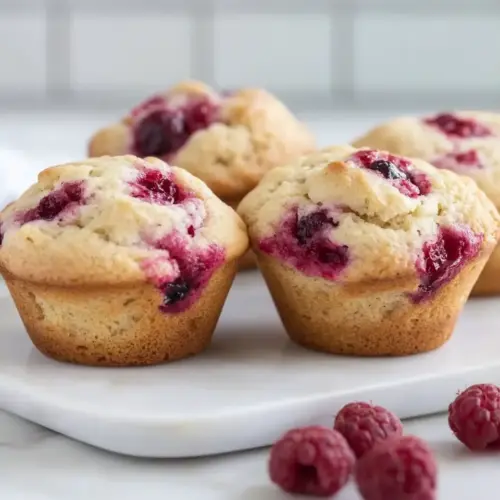
Favorite Raspberry Muffins
Favorite Raspberry Muffins are tender, slightly tangy, and studded with juicy raspberries and bright lemon zest. This easy muffin recipe blends whole wheat and all purpose flour for a wholesome crumb, and uses Greek yogurt for moisture, creating a soft, flavorful bite that is perfect for breakfast or a snack. Make a batch to enjoy warm or freeze extras for quick mornings.
Equipment
- Muffin Pan
- Storage Containers
- Whole-Wheat Flour
Ingredients
- 3/4 cup all-purpose flour Provide structure and texture to the muffins by forming the bulk of the dry ingredients; balances moisture and contributes to a tender crumb when combined with wet components. Use all-purpose flour for moderate protein content that supports rise without becoming tough, and sift or whisk to remove lumps for even mixing.
- 3/4 cup whole wheat flour Add heartier texture and nuttier flavor while increasing fiber and whole-grain character; helps create a denser, more wholesome crumb when blended with all-purpose flour. Measure accurately and avoid overmixing to prevent developing too much gluten, which can toughen the muffins.
- 1 cup sugar (or honey or maple syrup) Sweeten and tenderize the batter while aiding browning and moisture retention; can be swapped with honey or maple syrup for a different flavor profile and slightly altered liquid ratios. Cream with wet ingredients or dissolve in yogurt to ensure even distribution and consistent sweetness throughout the muffins.
- 1 teaspoon baking powder Leaven the muffins by producing carbon dioxide when combined with acidic ingredients and heat, contributing to lift and lightness in the crumb. Use fresh baking powder for reliable rise and measure precisely to avoid a soapy or metallic taste.
- 1/2 teaspoon baking soda React with acidic components to produce additional lift and a finer crumb; also helps neutralize acidity from yogurt, creating balanced flavor. Ensure accurate measurement because excess baking soda can impart a bitter, soapy aftertaste to the muffins.
- 1/4 teaspoon salt Enhance and balance flavors by subtly lifting sweetness and controlling bitterness, while also strengthening gluten slightly to support structure. Use the specified small amount to avoid detectable saltiness while ensuring the other flavors are bright and well-rounded.
- 1 cup plain whole milk Greek yogurt (or regular yogurt) Contribute tang, richness, and moisture while acting as an acid to react with leaveners for better rise; thick Greek yogurt imparts a creamy texture and tender crumb. If using regular yogurt, expect slightly higher moisture and adjust mixing to achieve the same consistency.
- 1/4 cup unsalted butter (melted and slightly cooled) Provide fat for richness, tenderness, and moisture while improving mouthfeel and aiding in browning; melting and cooling prevents cooking the eggs when mixed. Use unsalted butter to control sodium levels and pour in gradually to incorporate smoothly with the yogurt and eggs.
- 2 eggs Bind ingredients, add moisture, and contribute to structure and leavening through protein coagulation when baked, creating a cohesive crumb. Beat lightly before adding to ensure even distribution and to avoid overbeating, which can make muffins dense.
- 1 teaspoon pure vanilla extract Impart warm, aromatic flavor and enhance the overall sweetness perception while complementing the raspberries and lemon; a small amount goes a long way. Use pure vanilla extract for a clean, natural flavor profile rather than artificial substitutes.
- 2 cups raspberries Introduce bright, fruity bursts of flavor and a soft, juicy texture that contrast with the muffin crumb; folding in gently prevents crushing the berries and discoloring the batter. Use fresh or thawed raspberries and coat lightly in flour if particularly juicy to help suspend them in the batter.
- 1 tablespoon lemon juice Deliver a bright, acidic note that enhances fruit flavors and balances sweetness; lemon juice also interacts with baking soda to help leavening. Use freshly squeezed juice for the cleanest, most vibrant citrus flavor rather than bottled juice.
- 2 tablespoons lemon zest Provide concentrated citrus aroma and intense lemon flavor while adding texture and visual appeal; zest contains essential oils that boost fragrance without extra acidity. Use only the yellow portion of the peel to avoid bitterness from the white pith and finely grate for even distribution.
Instructions
- Preheat oven to 375 degrees F and grease a 12-cup muffin tin with nonstick spray (or parchment liners).: As the oven warms, you may smell a faint warm scent from the heating elements, which is your cue that the environment is ready to bake. Greasing the tin or using liners prevents sticking and helps the muffin edges bake evenly. I preheat for at least 10 minutes to ensure steady heat, which encourages an even rise. A common mistake is skipping preheat, which can result in flat muffins, so always wait until the oven reaches the full temperature before placing the tin inside.
- Add the flours, sugar, baking powder, baking soda, and salt to a medium bowl. Stir.: When you mix the dry ingredients, you distribute leaveners and salt evenly, ensuring a uniform rise and flavor. The combined dry mix should look homogenous, with the powders fully incorporated and no visible clumps of baking powder or soda. Stirring also awakens the flours so they blend readily with the wet ingredients. Avoid over mixing at this stage beyond combining, as doing so can develop gluten and make the muffins tough.
- Stir the yogurt, butter, eggs, and vanilla in a separate bowl.: Whisking these wet components creates a smooth, slightly glossy mixture where the butter disperses through the yogurt . The aroma of vanilla will become noticeable, and the batter will look cohesive. Room temperature eggs whisk in more easily, reducing the chance of streaks. If you add very hot butter, it can cook the eggs, so be sure the butter is just warm and not piping hot.
- Use a spatula to gradually fold the yogurt mixture into the flour mixture. Add the raspberries, lemon juice, and lemon zest and fold in to mix gently. (The batter will be thick.): Folding gradually prevents overworking the batter while allowing the dry ingredients to hydrate. The batter will be thick and slightly lumpy, which is desirable for tender muffins. When you fold in the raspberries , do so carefully so they stay intact and create pockets of fruit rather than turning the entire batter pink. You should see ribbons of batter and intact berries. A common error is vigorous stirring that bruises the berries and yields a uniformly colored batter rather than distinct fruit pockets.
- Divide the batter among the prepared muffin tin, using about 1/4 cup batter in each cup.: Spoon or use an ice cream scoop for even portions so muffins bake uniformly. Each cup filled consistently leads to similar baking times and matching domes. As you fill, you may notice the batter slightly resist scooping because of its thickness, which is normal. If portions vary, some muffins will finish sooner than others; try to keep them equal to avoid uneven doneness.
- Bake for 16-18 minutes, or until muffins are golden brown around the edges and a cake tester inserted into the center comes out cleanly.: During baking, the kitchen will be filled with a warm lemon berry scent and you should hear a subtle crackle as edges set. Golden edges and a springy top are visual cues of readiness. Insert a toothpick or cake tester into the center to check for crumbs rather than wet batter. Underbaked muffins will be dense and gummy, while overbaked ones dry out, so start checking at the lower end of the time range.
- Let cool in the pan for a minute or so, then run a paring knife around the edges. Transfer to a wire rack and let cool fully.: Allowing a brief rest lets the muffins finish setting, which makes them easier to remove intact. Running a knife around the edges prevents tearing, and transferring to a wire rack helps prevent soggy bottoms by allowing air to circulate. You will notice a gentle release of steam as you move them, and the tops will firm slightly as they cool. A mistake here is leaving them too long in the pan, which can trap steam and soften the crust, or removing them too quickly and causing crumbling if they have not set enough.
Notes
- Room Temperature Ingredients help ingredients combine smoothly, especially when whisking eggs into warm melted butter, preventing curdling and ensuring a uniform batter.
- Donot Overmix aim for a just combined batter with a few lumps, as overmixing develops gluten and yields tougher muffins rather than a tender crumb.
- Portion Evenly use an ice cream scoop or measuring cup to distribute batter evenly so muffins bake uniformly and finish at the same time.
- Freshness of Leaveners check dates on baking powder and baking soda because old leaveners can cause flat, dense results despite correct technique.
- Gentle Berry Folding fold in raspberries carefully to preserve shape, which keeps bright berry pockets and prevents a stained batter.