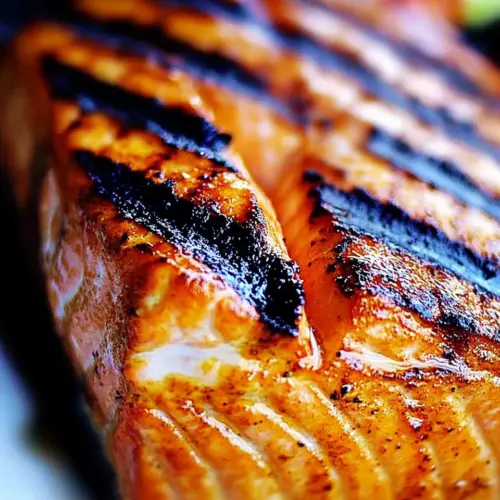
Favorite Grilled Salmon Recipe
Favorite Grilled Salmon Recipe delivers glossy, caramelized fillets with a sweet and savory glaze. This easy weeknight dinner features bright lemon juice, rich brown sugar, and umami from soy sauce or coconut aminos, producing tender, flaky salmon that impresses without fuss. Make it for casual family meals or summer gatherings, it is reliable, flavorful, and worth repeating.
Equipment
- Grill
- Zip-top Bag
- Measuring Cup
- Large spatula
- Instant read thermometer
Ingredients
- 2 pounds salmon fillets Provide rich, flaky texture and hearty protein to the dish while forming the base of the recipe; cooks quickly over medium-high heat and benefits from a flavorful glaze or marinade to enhance natural oils and taste.
- 1/2 cup brown sugar Add deep caramelized sweetness that balances salty and savory elements; helps create a sticky, glossy crust when combined with heat and acidic components during grilling.
- 1 teaspoon tone House Seasoning Contribute a savory, umami-forward seasoning boost that elevates overall flavor complexity; blends with other seasonings to round out the marinade and enhance the salmon's natural taste.
- 1/3 cup lemon juice Deliver bright acidity that tenderizes the fish and lifts heavier flavors; pairs with sugar and soy for a balanced sweet-tart glaze that cuts through richness.
- lemon zest Provide concentrated citrus aroma and bright, zesty flavor to accent the grilled fish; sprinkled sparingly it adds fragrant oils and freshness without extra liquid.
- 1/4 cup soy sauce or coconut aminos Supply salty, savory depth and umami contrast that complements the brown sugar and lemon; functions as the salty backbone of the marinade and helps with glaze formation.
- 1/3 cup water Offer mild dilution to adjust marinade intensity and distribute flavors evenly across the fillets; helps achieve the right consistency for brushing or basting while preventing overpowering saltiness.
- 1/4 cup olive oil Impart a silky mouthfeel and help carry fat-soluble flavors into the salmon while preventing sticking on the grill; contributes subtle fruitiness and aids in browning.
Instructions
- Place salmon filets where they lay flat in a zip top bag. In a 2-cup measuring cup, mix together all remaining ingredients, stirring until the sugar has dissolved. Pour over salmon filets, press out all excess air from bag and seal well. Place flat into the refrigerator and allow to marinate for about 120 minutes, flipping the bag after 60 minutes.: The aroma is subtle at this stage, mostly clean and fishy, and handling the fillets gently preserves their texture. Laying fillets flat prevents overlapping, which would block marinade contact and unevenly season the fish. A common mistake is stuffing too many pieces in one bag, which leads to patchy flavor penetration and uneven cooking; space them so every surface can absorb the mixture.
- Preheat grill to medium heat. Brush grate with olive oil and place salmon onto grill, flesh side down for about 6-7 minutes. Flip onto skin side and continue to grill until internal temperature registers 120º F. Allow to rest about 5 minutes before serving as the carryover temperature will continue to rise in the salmon to about 127º F. If you prefer a more well-done salmon, cook to 135º and allow carryover to reach 140º F as the salmon rests.: When you stir the marinade, the brown sugar should disappear into the liquid, leaving it slightly syrupy and glossy; you will notice the citrus scent sharpen and the oil float gently. The even dissolution matters because undissolved sugar will not glaze properly on the grill, creating spotty caramelization. Avoid stirring too vigorously or for too long, which can over emulsify the oil and change the mouthfeel.
- Using a large spatula, remove the skin from the salmon and serve.: Pouring the marinade over the fillets releases that citrus and soy aroma, and the bag makes it easy to massage the liquid around each piece. Pressing out air ensures close contact between marinade and flesh, maximizing flavor absorption. A frequent slip up is failing to seal the bag properly, which can lead to leaks and an under marinated fish; double check the zipper and place the bag in a shallow dish to catch any drips.
- Place flat into the refrigerator and allow to marinate for about 120 minutes flipping the bag after 60 minutes: As the fillets chill, the flavors settle into the surface and the lemon juice brightens the profile without over curing the flesh. Flipping halfway ensures both sides see equal marinade time; you will notice a slightly firmer texture at the exterior as acids start to work. Over marinating is a common trap, which can make the interior mealy, so stick close to the timing provided.
- Preheat grill to medium heat: Before you grill, the air should warm and you might detect a faint scent of char from the grate if it was recently used. Preheating to medium establishes a consistent cooking environment, which prevents the outside from burning before the interior warms; consistent heat is key to a glossy glaze. A mistake is rushing this step, placing cold fillets on a cool grate, which leads to limp, pale fish rather than a seared surface.
- Brush grate with olive oil and place salmon onto grill flesh side down for about 6 to 7 minutes: Oiling the grate adds a soft sizzle when the fish touches the metal, and the flesh side will begin to show defined grill marks and a caramel gloss. The sound is important, a steady gentle sizzle indicates the heat is right. If you hear violent popping, the grill is too hot and will char the exterior prematurely; reduce the heat and wait for an even sizzle.
- Flip onto skin side and continue to grill until internal temperature registers 120º F: After flipping, expect a different sound and visual as the skin crisps and darkens; the aroma shifts to toasted, slightly smoky caramel. The 120º F target yields a medium tender center after resting, allowing the proteins to set without drying. Using an instant read thermometer avoids guesswork. A common misstep is flipping repeatedly; each flip wastes contact time and prevents a proper crust from forming.
- Allow to rest about 5 minutes before serving as the carryover temperature will continue to rise in the salmon to about 127º F: Resting the fish calms the sizzling, and you will notice the surface settle and the juices redistribute, making the flesh succulent. Carryover heat gently finishes the interior, so the final texture is silky rather than dry. Cutting too soon causes immediate juice loss, yielding a drier mouthfeel, so give it the rest time it needs.
- If you prefer a more well done salmon cook to 135º and allow carryover to reach 140º F as the salmon rests: Choosing a higher finished temperature changes the texture to firmer and flakier, with a deeper caramelization on the surface. This is a personal preference and works well for diners who avoid pink centers. Avoid overshooting the temperature, which yields a dry, stringy flesh; monitor closely as the fish approaches the target.
- Using a large spatula remove the skin from the salmon and serve: Removing the skin exposes the glossy, seasoned flesh and releases a nutty, slightly toasted scent if the skin crisped well. Serving without the skin presents a clean plate and an elegant bite. A common oversight is trying to peel the skin while the fish is too hot and fragile; let it rest briefly so the flesh firms slightly and the skin lifts cleanly.
Notes
- Choose even thickness: Select fillets that are similar in thickness so they cook at the same rate and you avoid some pieces overcooking while others finish underdone.
- Pat fillets dry before marinating: Removing excess surface moisture helps the marinade cling and promotes better caramelization on the grill surface.
- Massage the marinade gently: When you seal the bag, give it a soft massage so the flavors distribute evenly without breaking the flesh apart.
- Mind the grill heat: Medium heat offers control and prevents flare ups, keeping the exterior nicely seared while the interior stays tender.
- Rest before removing skin: Let the fish sit a few minutes so it firms up slightly, and the skin will peel away cleanly with a spatula.