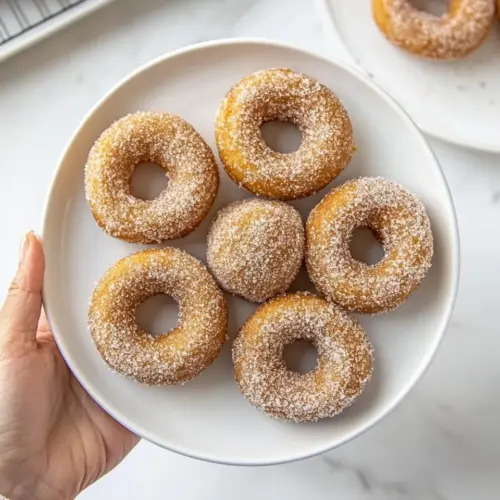
Favorite Baked Donuts
Favorite Baked Donuts are tender, cakey rings made with creamy Greek yogurt and a hint of cinnamon, delivering a soft interior and warm flavor. These easy to bake treats are perfect for an easy weeknight breakfast or a relaxed weekend brunch, offering crispy cinnamon sugar contrast and crowd pleasing texture. Make a batch for sharing, they are simple yet irresistibly nostalgic.
Equipment
- Donut Pan
- Mixing Bowl
- Storage Containers
Ingredients
- 1/2 cup plain Greek yogurt (whole milk preferred) Provide creamy richness and tangy moisture that helps create tender donut batter while contributing to a tender crumb; choose whole-milk Greek yogurt for extra richness and a slightly higher fat content that enhances flavor and texture.
- 1/2 cup milk Add liquid volume and help dissolve sugar while thinning the batter to the proper consistency; using milk at room temperature prevents shocking the batter and promotes even mixing.
- 1/4 cup unsalted butter (melted and cooled slightly) Introduce fat and richness that improves mouthfeel and tenderness; melted and slightly cooled butter distributes evenly through the batter and adds a subtle buttery flavor.
- 1 egg (lightly beaten) Bind ingredients and provide structure through coagulation during baking; lightly beaten egg also traps air for a lighter texture and helps with browning.
- 1 teaspoon vanilla extract Impart warm sweet floral notes and depth to the batter; vanilla extract enhances other flavors and rounds out the overall taste profile.
- 1 1/2 cups all-purpose flour Supply structure and bulk through gluten formation and starch gelatinization; all-purpose flour provides the necessary framework for the donuts while keeping them tender when measured properly.
- 1 cup sugar Contribute sweetness and assist in browning through caramelization; sugar also tenderizes by interacting with the wet ingredients and helps with texture.
- 1 teaspoon cinnamon Add warm, aromatic spice that complements the sweetness and gives the donuts a cozy flavor; cinnamon can be mixed into the batter or used in a coating for added impact.
- 1 teaspoon baking powder Act as a leavening agent by creating gas pockets when combined with moisture and heat, helping donuts rise and become light; use fresh baking powder for reliable lift.
- 1/2 teaspoon baking soda React with acidic components to produce carbon dioxide for additional rise and tenderization; baking soda helps achieve a balanced rise when paired with Greek yogurt.
- 1/4 teaspoon salt Enhance and balance flavors by providing subtle savory contrast; salt strengthens the gluten network slightly and heightens the perception of sweetness and spice.
- 1/4 cup sugar Provide a sweet finishing layer for coating donuts, creating a crisp sugary exterior when combined with cinnamon or butter; use for rolling or sprinkling after baking.
- 1/2 teaspoon cinnamon Offer a concentrated hit of warm spice for a topping or swirl that complements the sugar coating; cinnamon in the topping brings aromatic depth and visual appeal.
- 2 tablespoons unsalted butter (melted and cooled slightly) Create a glossy, flavorful coating when mixed with sugar or cinnamon and brushed on warm donuts; melted butter adds richness and helps toppings adhere.
Instructions
- Preheat the oven to 375 degrees F and grease two 6-cup donut pans with nonstick spray.: As the oven warms you will notice a dry, warming hum from the element and a slight metallic scent that signals it is getting ready. This step is crucial because baking in a properly preheated oven ensures even rise and consistent texture, and greasing the pans prevents the delicate edges from sticking. If you skip proper greasing you risk tearing the donuts when removing them, so take a moment to coat each cavity thoroughly, including the center post. A common mistake is preheating to the wrong temperature, which can produce pale, underbaked donuts, so confirm the dial or digital readout before starting.
- Add the yogurt, milk, butter, egg, and vanilla to a medium bowl. Whisk to combine well.: When you whisk these wet ingredients they should form a smooth, slightly glossy mixture with gentle streaks that vanish as you mix. The aroma will be milky and slightly sweet, and the texture should feel cohesive but not watery. Properly integrating these components helps the batter emulsify, allowing the fats to distribute evenly for a tender crumb. If you notice lumps of cold butter, let it warm a bit more to avoid uneven pockets; a common error is adding hot butter which can cook the egg, so ensure it is only warm.
- Add the flour, sugar, cinnamon, baking powder, baking soda, and salt to the bowl. Whisk to combine into a thick batter.: As you incorporate the dry ingredients the scent of cinnamon will bloom and the batter will thicken to a spoonable consistency that just holds its shape. This texture matters because it controls how the donuts rise and whether they remain light rather than dense. Use a gentle folding motion to avoid overworking the batter, which can develop gluten and produce tougher donuts. Avoid overmixing; if you beat until smooth you may end up with a tighter crumb, so stop when the ingredients are just combined.
- Use 1/4 cup batter in each prepared donut spot.: Filling each cavity with the same amount creates uniform donuts that bake evenly. You should see batter fill the donut ring to about two thirds full, with a domed top forming as it bakes. An easy way to portion is using a 1/4 cup measuring cup or a piping bag for control. Be careful not to overfill, which causes overflow and misshapen donuts, or underfill, which yields thin rings.
- Bake for 12-14 minutes, or until puffed up, golden brown, and a cake tester or toothpick inserted into the center of a donut comes out clean.: During baking you will notice the kitchen fill with a toasty, sweet scent and the tops will turn a warm golden brown. The visual cue of puffiness and a firm top is what I look for instead of just timing alone, because ovens vary. Using a cake tester lets you confirm the center is set. Avoid opening the oven door repeatedly as this can drop the temperature and affect rise, so check through the window when possible.
- Remove from oven and let cool for a minute or two. Run a knife around the edges to loosen, as needed, then transfer donuts to a wire rack to cool completely.: The donuts will steam slightly as they cool and the bottoms will set, so waiting a minute helps them hold together during removal. Running a knife gently around the edges prevents tearing, and transferring to a wire rack allows air to circulate so they cool evenly and do not sweat. If you try to remove them while too hot they may break, so be patient and use a thin spatula if needed.
- Optional: Stir the sugar and cinnamon together in a small bowl. Dip the top of each donut first in the melted butter, then in the cinnamon-sugar mixture. This makes them taste just like a cake donut!: Stir the sugar and cinnamon together in a small bowl. Dip the top of each donut first in the melted butter, then in the cinnamon-sugar mixture. This makes them taste just like a cake donut : When you brush each donut with warm butter the surface becomes tacky and glossy, allowing the cinnamon sugar to adhere and form a crisp, flavored crust. The act of dipping releases a warm, sweet spice aroma and creates a contrast between the tender interior and the slight crunch of the coating. Work quickly while the donuts are slightly warm so the topping sticks, but not so hot that it melts the sugar away. A common misstep is coating donuts that are fully cold; the sugar will not adhere properly and will fall off.
Notes
- Storage tip: Store cooled baked donuts in an airtight container at room temperature for up to 3 days, or about a week in the fridge. I line the container with a paper towel to absorb moisture. For longer storage freeze in a freezer bag with air removed for up to 6 months, then thaw overnight in the fridge or at room temperature.
- Dairy free option: Use vegetable oil, avocado oil, or coconut oil in place of the butter and nondairy milk. Replace the yogurt with applesauce for moisture. I recommend testing one donut to check texture because substitutions can slightly change crumb and browning.
- Gluten free swap: Use an all purpose gluten free flour blend. When I bake gluten free I let the batter rest briefly to hydrate the flours, which helps prevent gumminess and yields a better crumb.
- Egg free variation: Omit the egg and add 2 tablespoons additional milk. This keeps the batter moist though the structure may be a touch more tender. I usually place the pans on a lower oven rack and check a minute early to avoid overbaking.
- Sugar guidance: The recipe performs best with granulated sugar for texture. If you substitute maple syrup or honey reduce other liquids slightly; those alternatives change browning and moisture, so proceed cautiously and test a small batch.