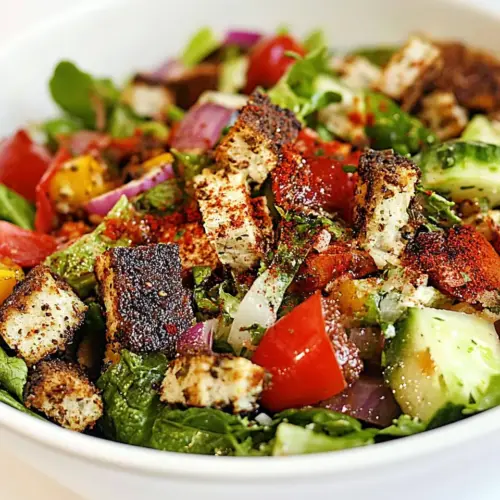
Fattoush Lebanese Salad
Fattoush Lebanese Salad is a crisp, tangy Mediterranean salad featuring toasted whole wheat pita, crunchy Romaine, juicy tomatoes, cooling cucumber, and herbaceous mint and parsley, all tossed in a lemony sumac dressing. This easy, refreshing salad is perfect for summer meals and quick gatherings, offering bright flavors and satisfying textures that make it a must try.
Equipment
- Oven
- Baking Sheet
- Knife
- Cutting Board
- Salad Bowl
- Small bowl or jar
Ingredients
- 2 Joseph's Flax, Oat Bran, and Whole Wheat pita bread, cut into strips about 3/4 inch wide, then toasted and crumbled (see notes) Cut into strips then toasted and crumbled to provide crunchy texture and a toasty, slightly nutty flavor that contrasts with the fresh vegetables; commonly used as the salad’s crispy element and soak up the dressing. Keeps well if toasted ahead and adds authentic Levantine character to the dish.
- 2 heads Romaine lettuce, chopped Chopped to form the leafy base of the salad, offering a crisp, slightly bitter backbone that supports the other ingredients and dressing. Provides bulk and freshness while balancing richer or acidic components.
- 1/2 cup thinly sliced green onion Thinly sliced to contribute a mild oniony bite and subtle sharpness distributed evenly through the salad; adds delicate crunch without overpowering herbs and vegetables. Works well to brighten flavors and meld with the dressing.
- 1 cup diced tomatoes (let drain a minute or two if extra juicy) Diced to bring juicy, acidic sweetness that complements the herbs and greens; drains briefly if extra juicy to prevent watering down the salad. Adds color and a fresh, ripe tomato flavor that balances salty and tangy notes.
- 1 cup diced cucumber (same size as tomatoes) Diced to match the tomatoes in size and texture, supplying cool, crisp hydration and a mild vegetal flavor that contrasts tomatoes and herbs. Helps maintain a refreshing mouthfeel and lightens the overall salad.
- 1/2 cup coarsely chopped fresh mint leaves Coarsely chopped to deliver a bright, aromatic, and slightly sweet herbal lift that pairs especially well with lemony dressings; distributes fragrant pockets throughout the salad. Fresh mint adds a cooling note that complements other Mediterranean flavors.
- 1/2 cup coarsely chopped flat-leaf parsley (leaves only, no stems) Coarsely chopped leaves only to add robust, slightly peppery herbal depth and green freshness that anchors the salad’s Mediterranean profile. Parsley also enhances flavor complexity and provides visual vibrancy.
Instructions
- Preheat oven or toaster oven to 400 F/200 C.: The first thing you'll notice is the warm, toasty heat filling your kitchen as the oven comes up to temperature. Heating the oven to 400 F or 200 C ensures the pita crisps quickly, developing a nutty aroma rather than a dry, cardboard like smell. Preheating is important because placing pita into a cold oven will lengthen the toasting time and can dry them out unevenly. A common mistake is to skip preheating, which leads to unpredictable browning. Keep the oven rack in the middle so heat circulates evenly and check the pita after six minutes to avoid over browning.
- Cut whole wheat pita into strips about 3/4 inch wide and arrange on baking sheet. (Some recipes call for brushing the pita with olive oil, but I didn't do that.): The act of slicing pita releases a faint wheaty scent, and arranging the strips in a single layer helps each piece toast uniformly. Consistent strip width around 3/4 inch produces similar sized crumbles later, so your salad has balanced texture. If pieces overlap, they will steam instead of crisping, which is a frequent slip up. Use a sharp knife and a roomy baking sheet to give each strip breathing room, which keeps edges from burning while centers crisp.
- Bake until pita strips are crisp but only barely starting to brown, less than 10 minutes. Watch carefully because they can go from crisp to overly brown rather quickly. Let pita bread strips cool, then crumble into bite-sized pieces.: As the pita toasts you'll smell a warm, roasted grain note and maybe a faint nuttiness if the pitas have seeds. Aim for a pale golden color, because deeper browning signals bitterness. Cooling is crucial, since hot pita can steam and soften if crumbled right away. One thing to avoid is leaving them unattended, as they can transition from perfect crunch to burnt in moments. After cooling, crumble by hand for uneven, rustic pieces that catch dressing beautifully.
- Chop tomatoes and let them drain a bit if they're extra juicy. Chop cucumbers.: When you chop tomatoes , their fragrant juices become more apparent, releasing sweetness and acidity. Let excess liquid drain briefly on paper towel to prevent the salad from becoming watery. Cucumber chopping gives a crisp, cucumber fresh aroma and a satisfying snap when bitten. A common misstep is mixing in overly wet tomatoes that dilute the dressing, so patience here keeps the salad bright and textured.
- For dressing, mash together the chopped garlic and salt using a mortar and pestle, or the side of a knife or spoon. Put garlic-salt paste in a small bowl, then add lemon juice and 1 tsp. Sumac (affiliate link). Whisk in olive oil and set dressing aside. (You can also make the dressing in a glass jar and shake to combine.): Crushing garlic with salt creates a paste that mellows raw bite while releasing aromatic oils, and mixing with lemon juice and sumac gives the dressing its tangy, slightly fruity note. Whisking in olive oil forms a glossy emulsion that coats leaves and herbs. If you don't emulsify properly the oil may separate, leaving uneven coating. A mortar and pestle gives depth, but shaking in a jar is a quick alternative if you're short on time. Taste and adjust acidity so the dressing brightens but does not overpower the herbs.
- Remove outer leaves from Romaine, trim stem end, then wash and spin dry or dry with paper towels. Cut Romaine into fourths lengthwise, then turn and chop crosswise into small pieces. (If you have a salad spinner (affiliate link), you can chop the Romaine first, then wash.): Freshly washed Romaine lettuce has a vegetal, slightly sweet scent and a crisp snap when properly dried. Using a salad spinner or towels to remove moisture helps the dressing cling rather than slide off. Chopping into small pieces makes for convenient forksful and ensures even dressing distribution. Leaving leaves too wet is a frequent oversight that dilutes flavor and prevents the dressing from coating the greens evenly.
- Put chopped Romaine into salad bowl large enough to toss all ingredients.: Placing the chopped greens into a roomy bowl makes tossing effortless and prevents spillage. You'll notice the fresh green aroma intensify as everything is mixed later. Using a too small bowl makes tossing messy and can bruise the leaves, which is a common error. Choose a bowl with slack so you can lift and toss without crowding the ingredients.
- Wash and chop the fresh mint, fresh parsley, and green onions. (Use the ingredients you prefer.): Chopping the herbs releases aromatic oils that perfume the air and the salad, with mint offering cooling notes and parsley adding a bright, green backbone. Thinly slicing green onion contributes gentle allium fragrance. A typical mistake is over chopping, which can bruise herbs and make them appear limp, so aim for coarse pieces to keep texture and aroma lively.
- Add tomatoes, cucumber, fresh herbs, and green onions to bowl.: Adding the vegetables and herbs creates a colorful medley and a chorus of scents, from tomato sweetness to herbaceous mint. Toss gently so the delicate herbs distribute without wilting. Over vigorous tossing can tear leaves and muddle presentation, so be attentive. Mixing at this stage readies the salad for dressing, ensuring every element has contact with flavors to come.
- Add about half of the dressing and toss, then add crumbled pita chips and toss again with more dressing. (You may not want all the dressing, but this salad should be quite wet.) At this point the salad should sit for a few minutes (or longer) to let flavors blend and so the pita chips absorb some of the dressing.: The aroma intensifies as dressing meets greens and herbs, and the first toss hydrates the vegetables so the pita can later absorb flavor. Adding pita in the second toss ensures it gets coated but not completely softened immediately. Letting the salad rest allows flavors to meld and the pita to plump slightly, creating a pleasant chew. A common pitfall is adding too much dressing too soon, which can oversaturate the pita and make the salad limp; add gradually and taste as you go.
- To serve, arrange salad on individual plates and sprinkle with a bit more Sumac. You can also serve it in a large bowl with the Sumac sprinkled over.: Final plating releases citrus and herb aromas, and a light dusting of Sumac adds a bright, lemony finish and a pop of color. Serving on plates preserves the crispness of individual portions, while a large bowl has casual charm. Avoid serving immediately after heavy stirring if you want maximum pita crunch; a short rest helps textures settle and flavors integrate.
- When I made this for guests I tossed the salad together before they arrived, and it was perfect when I served it about 30 minutes later.: Letting the salad sit for about thirty minutes can deepen flavor as the dressing permeates the herbs and vegetables, and the pita reaches a pleasant soaked but still textured state. The aroma by the time you serve will be a balanced blend of citrus, herbs, and toasted pita. Be cautious not to let it sit too long, otherwise the greens may wilt and the pita can become overly soft. Planning ahead and tasting before serving ensures everything is just right.
Notes
- Toast technique: Try toasting pita on a baking sheet or in a toaster oven for a slightly different crisp and watch closely to avoid burning.
- Herb emphasis: Increase the ratio of mint to parsley for a more cooling, aromatic profile that pairs beautifully with lemony dressing.
- Dressing texture: Crush garlic into a paste before mixing to mellow sharpness and integrate more smoothly into the olive oil and lemon.
- Pita timing: Add the pita closer to serving if you prefer the chips to remain very crisp, or earlier for a softer, soaked bite.
- Presentation: Serve in individual shallow bowls to maintain more of the pita crunch on each plate and improve the dining experience.