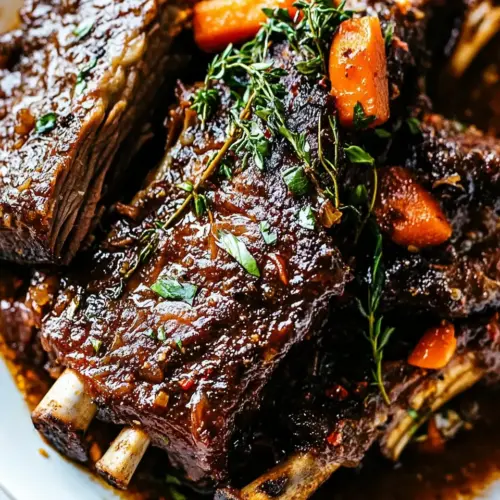
Fall off the Bone Slow Cooker Short Ribs
Fall off the Bone Slow Cooker Short Ribs deliver rich, savory, melt in your mouth beef with a silky sauce created by slow braising. This easy weeknight dinner uses simple pantry staples like beef broth and tomato paste to build deep flavor, making it perfect for cold evenings when you want hands off cooking and maximum comfort. Try it for a crowd pleasing meal that rewards patience.
Equipment
- Large Skillet
- Slow Cooker
- Small Bowl
- Whisk
Ingredients
- 8 -10 beef short ribs Season liberally and draw out natural flavors; helps create a savory crust when searing and balances the richness of the dish. Enhances overall taste and texture while contributing to the braising liquid as the ribs cook slowly.
- salt and pepper Season sparingly to enhance savory notes and balance sweetness; provides essential contrast to rich, fatty meat. Helps bring depth to the braising sauce and rounds out flavors throughout the long cook.
- 1 tablespoon olive oil Sear to develop browned, caramelized surfaces that add deep flavor through the Maillard reaction; provides a cooking medium to begin building the sauce. Adds a light, fruity richness that complements beef without overpowering it.
- 5 large carrots sliced Add for body, natural sweetness, and texture; slowly softens and imparts an earthy carrot flavor to the braising liquid. Contributes aromatic depth and balances acidity from tomato paste and Worcestershire.
- 1 cup beef broth Deglaze and provide a savory foundation for the sauce; supplies liquid for gentle, prolonged braising to tenderize the short ribs. Concentrates flavor as it reduces, creating a rich, cohesive cooking liquid.
- 3 cloves garlic minced Build aromatic depth and savory complexity; crushed or minced garlic infuses the sauce with pungent, slightly sweet notes as it cooks. Enhances umami and rounds out the overall flavor profile of the braise.
- 1/4 cup tomato paste Concentrate tomato flavor and acidity to thicken and deepen the sauce; adds umami and a rich, slightly sweet-tart backbone. Helps create a glossy, clingy glaze that coats the ribs as the sauce reduces.
- 1 tablespoon Worcestershire Sauce Boost savory, umami-rich tang and complexity; adds a slightly sweet, fermented depth that lifts the braising liquid. Balances richness and acidity, helping to unify flavors in the final dish.
- 1 tablespoon Italian Seasoning Introduce an herby, aromatic blend to season the braise; adds savory, slightly floral notes that complement beef and vegetables. Provides a consistent Mediterranean flavor profile that holds up during slow cooking.
Instructions
- Salt and pepper the beef short ribs. Heat a large skillet with the olive oil over medium high heat. Add the short ribs and sear each side for 1-2 minutes or until they have a golden brown crust. Remove from skillet and add to the slow cooker and add the carrots on top.: The first sensory cue is the tactile feel of seasoning on the meat, and you should notice a slight grain when you run your fingers over the ribs. Seasoning early helps build a seasoned crust during searing, which deepens overall flavor. A common misstep is timid seasoning, which produces an under-flavored result even after slow cooking. If the ribs look pale when they hit the pan, that usually means the pan was not hot enough; let the oil shimmer before adding the meat.
- In a small bowl whisk the beef broth, garlic, tomato paste, Worcestershire sauce and Italian seasoning. Add to the slow cooker.: You will hear a faint pop as the oil warms and it will shimmer visually when it is ready. That shimmer signals the right temperature for a good sear without burning. If the oil smokes quickly, the pan is too hot, which risks bitter notes. Waiting until the oil is properly hot is worth the few extra seconds because it ensures the crust develops correctly and seals in juices.
- Cook on low for 8-9 hours or high 4-5 hours.: When you place the ribs in the pan, listen for a steady, confident sizzle, and resist moving them too soon. The visual cue is a deep golden brown crust that releases easily from the pan, which indicates Maillard reactions have occurred. Searing develops nutty, roasted aromas that enhance the final sauce. A common mistake is overcrowding the pan, which drops the temperature and causes steaming instead of browning; sear in batches if needed.
- Remove from skillet and add to the slow cooker and add the carrots on top: As you transfer the ribs, you should notice the pan carrying fond, those brown bits that are full of flavor, and putting the ribs on top of the carrots allows juices to drip through and season the vegetables. The contrast between the browned exterior and the tender interior creates balance. Avoid stacking ribs too tightly in the cooker, because it can impede even cooking; arrange them so heat circulates around each piece.
- In a small bowl whisk the beef broth garlic tomato paste Worcestershire sauce and Italian seasoning: The act of whisking should produce a glossy, cohesive liquid with no streaks of paste, and you should be able to smell the herb and garlic notes bloom as they combine. This mixture is where flavors marry and infuse the meat gently over time, so getting it smooth ensures even distribution. If little lumps of paste remain, the sauce may not thicken uniformly later, so take the extra moments to dissolve it completely.
- Add to the slow cooker: When you pour the mixture into the cooker, listen for a soft settling sound as the liquid fills gaps around the ribs and carrots, and watch it pool, coating the meat. This liquid is the medium that extracts collagen and melds flavors, ultimately becoming the braising sauce. A frequent error is adding too little liquid; ensure the ribs are partially submerged so they cook evenly and stay moist.
- Cook on low for 8 9 hours or high 4 5 hours: During this long, patient phase you will notice the kitchen gradually filling with a rich, meaty aroma, and the meat will quietly transform, becoming tender enough to pull apart with a fork. Low and slow extracts collagen into a silky sauce and preserves moisture, while high heat accelerates the process but can be slightly less forgiving. Avoid lifting the lid frequently to check, because heat loss will extend the cooking time; trust the process and check visually near the end of the window.
Notes
- Choose meaty short ribs Choose ribs with visible marbling and a mix of meat and fat for the best texture after long cooking, because the fat renders and keeps the meat luscious.
- Sear in batches if needed Overcrowding the skillet lowers the temperature and causes steaming, so work in batches to ensure each rib gets a proper crust.
- Whisk the sauce well Fully combine the tomato paste and beef broth before adding to the slow cooker to avoid uneven thickness and burnt paste spots.
- Layer vegetables below or above strategically Placing the carrots under the ribs lets them steam and soak up juices, while placing them on top keeps them firmer; choose based on your texture preference.
- Use the lid Keep the slow cooker covered during the long cook to trap steam and convert collagen into silky gelatin, only checking near the finish to prevent heat loss.
- Finish the sauce if needed If the braising liquid seems thin, transfer it to a saucepan and simmer to concentrate flavors and thicken, that way you control the final consistency.