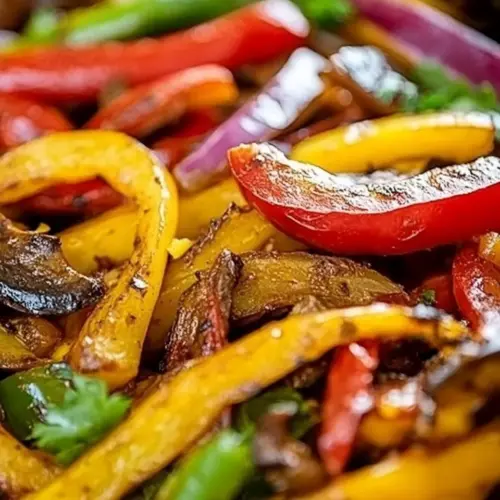
Fajita Veggies
Fajita Veggies are a colorful, quick sauté of bell peppers and onions that deliver sweet char, aromatic garlic, and a hint of oregano. This easy weeknight dinner side is crisp tender, vibrant, and versatile enough for tacos, bowls, or simple mains. Make it when you want bright flavor with minimal fuss, and enjoy leftovers that reheat beautifully.
Equipment
- Large Skillet
- Knife
- Cutting Board
Ingredients
- 3 bell peppers Choose vibrant bell peppers to add sweet crunch and bright color to the fajita mix. Slice them into strips to ensure even cooking and maximum surface area for caramelization. Sauté over high heat so they develop slight char and maintain a tender-crisp texture.
- 2 onions Slice thinly to provide a savory, slightly sweet base that balances the peppers' brightness. Cook until translucent and lightly browned to deepen flavor through Maillard reactions. Combine with peppers to create the classic fajita aroma and mouthfeel.
- 1 garlic clove Minced finely to deliver a pungent, aromatic boost that enhances overall savory depth. Add toward the end of cooking to avoid bitterness and maintain fresh garlic fragrance. Lightly sauté to release oils that meld with the other aromatics.
- 2 tablespoon olive oil Use olive oil to coat vegetables for even heat transfer and to carry flavors. Heat until shimmering before adding peppers and onions to promote quick searing and prevent sticking. Choose extra-virgin for richer flavor or lighter olive oil for higher smoke point depending on cooking temperature.
- 1/2 teaspoon salt Sprinkle salt to amplify natural flavors and help draw moisture from the vegetables for better caramelization. Season gradually while cooking and taste-adjust at the end to avoid over-salting. Use fine salt for even distribution across sliced vegetables.
- 1/4 teaspoon dried oregano Crush dried oregano lightly to release herbal, slightly peppery notes that complement the smoky fajita profile. Sprinkle during cooking to allow rehydration and infusion into the oil-coated vegetables. Pair modestly with salt to avoid overpowering the fresh pepper and onion flavors.
Instructions
- Slice the top off each pepper, then cut each side away from the core. Discard the core and seeds and cut the pepper into thin strips.: The scent of raw bell peppers is faintly grassy and fresh when you first slice them, and you will notice a clean, crisp sound as the knife parts the flesh. This technique removes bitter membranes and seeds, which keeps the final texture pleasant and the flavor pure. A common problem is leaving too much core attached, which results in uneven strips and bitter bites. Take your time to trim carefully so each piece cooks evenly.
- Peel and thinly slice the onion.: As you slice into strips the layers separate cleanly, producing long ribbons that will char along the edges without falling apart. Thin strips allow quick cooking and a pleasant balance between tender interior and slightly crisp exterior. Cutting them too thick will slow cooking and risk underdone centers, while overly thin ribbons might become limp.
- Peel and finely chop the garlic.: When you thinly slice the onion its concentric rings fall apart into delicate, translucent segments that soften beautifully in the pan. The knife will produce a soft, almost whispering sound as it moves through the layers. If slices are uneven you will end up with some pieces burned and some raw, so steady, consistent cuts are important; avoid rushing this step.
- Add the oil to a large non-stick/cast-iron skillet over high heat.: The aroma of freshly chopped garlic is immediate and bright, a warm, savory note that will perfume the kitchen. Finely chopping ensures small bits distribute throughout the dish, giving burst points of flavor without overpowering. If pieces are too large they can char and turn bitter, so aim for uniformly small pieces and hold back adding them until later in the process.
- When the oil is hot, add the peppers and onions to the pan.: When the olive oil hits the hot pan it will thin and start to shimmer, a sign you are ready to add vegetables. The skillet should be large enough so the peppers lay in a single layer to encourage searing. Using too small a pan crowds the vegetables and creates steam rather than a sear, which reduces color and flavor development.
- Cook for 4 minutes without stirring, then stir and cook for a further 2 minutes.: You will hear an immediate sizzle as moisture meets hot oil, and that sound signals the start of browning. Spread them out so each piece contacts the pan surface. Stirring too often at this moment prevents good browning; let them sit briefly so edges can caramelize for deeper flavor.
- Add in the salt, oregano, and chopped garlic.: During the first few minutes the peppers will blister and the onions will begin to soften, turning translucent at the edges. Resist the urge to move them, this allows Maillard flavors to form, creating sweet, savory notes. Overstirring is a common mistake that yields pale, steamed vegetables; let the surface develop color before folding.
- Stir constantly, cooking for 1 minute more. Then remove the veggies from the pan and serve. Or allow to cool in a bowl to store for later.: The kitchen will fill with a warm, herby perfume as the oregano wakes up and the garlic releases its oils. Adding these toward the end preserves their brightness and prevents the garlic from burning. If you add the garlic too early it will darken and taste acrid, so timing here is key.
- Stir constantly cooking for 1 minute more: This brief, energetic stirring distributes the seasonings and finishes cooking the garlic without letting it overcook. You will see glossy, slightly reduced juices coating the pieces and hear a lively sizzle. If you skip this final minute you may end with unevenly seasoned vegetables; constant movement ensures everything tastes balanced.
- Then remove the veggies from the pan and serve Or allow to cool in a bowl to store for later: The sound of the skillet settling is the cue to stop cooking, because residual heat will continue to soften the veg. Removing them prevents overcooking and preserves their texture. If you intend to store them cool quickly to avoid lingering heat which will continue to break down the vegetables and can lead to a mushy result.
Notes
- Choose firm peppers Select bell peppers with glossy skins and no soft spots for the best texture and longer storage life.
- Preheat your pan A properly heated skillet gives you the immediate sizzle that creates caramelized edges and deep flavor.
- Thinly slice the onion Even slices make sure the onion softens at the same rate as the peppers, avoiding raw cores or overcooked bits.
- Add garlic late Introducing the garlic in the final minute preserves its flavor and prevents bitterness from burning.
- Use medium high heat This level encourages searing without forcing the oil to smoke, which helps build those tasty browned edges.
- Cool quickly for storage If storing leftovers spread the veggies in a shallow container so they cool faster and maintain texture.