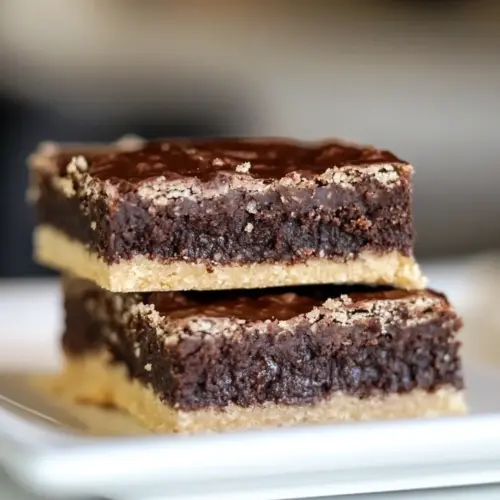
Espresso Shortbread Brownie Bars
Espresso Shortbread Brownie Bars merge a buttery shortbread base with a fudgy, espresso kissed brownie top, creating a crispy yet gooey treat. Rich chocolate and subtle coffee notes make these bars irresistibly indulgent, perfect for a crowd or easy weeknight dessert. They travel well and are worth making for gatherings or a cozy afternoon pick me up.
Equipment
- Food Processor
- 9-by-13-inch metal baking pan
- Fork
- Medium Bowl
- Large saucepan
- Spatula
Ingredients
- 10 tablespoons unsalted butter softened Soften to spreadable consistency and provide a rich, tender base for the shortbread layer, contributing butterfat that enhances flakiness and flavor when creamed with sugar.
- 1 1/2 cups all-purpose flour Stabilize the shortbread structure and create tender crumb by supplying gluten and bulk; measure precisely to ensure correct texture and prevent toughness.
- 1/4 cup granulated sugar Sweeten and tenderize the shortbread; granulated sugar helps create a delicate crisp edge through caramelization during baking.
- 1 tablespoon espresso powder Impart concentrated coffee flavor and deepen the chocolate-espresso profile; dissolve into liquids or butter to evenly distribute aromatic bitterness.
- 1/2 teaspoon kosher salt Season and enhance overall flavor balance while highlighting the chocolate and coffee notes; use measured salt to brighten sweetness without overpowering.
- 1 1/2 cups all-purpose flour Provide additional bulk and structure for the brownie layer, contributing to the batter’s viscosity and helping develop the desired cakey-chewy texture when combined with leavening.
- 2 tablespoons unsweetened cocoa Add intense chocolate flavor and deepen color while contributing slight dryness that must be balanced with fats and liquids for a fudgy brownie texture.
- 1 teaspoon kosher salt Season and boost the chocolate’s richness for the brownie layer; kosher salt enhances sweetness and rounds out flavors when dissolved into the batter.
- 1/2 teaspoon baking powder Leaven lightly to give the brownie layer a bit of lift and prevent it from becoming overly dense; activates during baking to create a tender crumb.
- 14 tablespoons unsalted butter Melt into the brownie batter to provide moisture, richness, and a glossy mouthfeel; butter also helps carry and round chocolate and espresso flavors.
- 4 ounces unsweetened chocolate chopped Melt to contribute deep, pure cocoa solids and intense chocolate flavor; unsweetened chocolate also affects the final texture and ganache-like quality of the brownie.
- 2 cups granulated sugar Sweeten the brownie layer and balance bitter chocolate notes; granulated sugar also contributes to structure and a slightly crisp top when baked.
- 1 tablespoon pure vanilla extract Add aromatic complexity and enhance perceived sweetness and depth; vanilla rounds flavors and helps meld chocolate and espresso into a cohesive profile.
- 3 large eggs Incorporate structure and moisture as well as emulsifying proteins that help bind ingredients; eggs also contribute to rise, tenderness, and a fudgy interior when baked.
Instructions
- Make the shortbread crust: Preheat the oven to 350°F. In a food processor, combine the butter with the flour, sugar, ground espresso and salt; pulse until coarse crumbs form. Press the crumbs into a 9-by-13-inch metal baking pan to form a crust; prick all over with a fork. Freeze for 5 minutes, until firm. Bake in the lower third of the oven for 30 minutes, until the crust is lightly browned and cooked through.: Preheat the oven to 350°F. : You will notice the warm air and slight hum as the oven reaches temperature, which ensures even baking. The crust benefits from an oven that is fully up to heat so the edges begin to set quickly, preventing spread. A common mistake is placing the pan in a not fully preheated oven which can make the crust unevenly baked, producing a soggy center. If your oven runs hot or cool, use an oven thermometer to confirm accuracy.
- Meanwhile, prepare the brownie layer: In a medium bowl, whisk the flour with the cocoa, salt and baking powder. In a large saucepan, melt the butter with the chocolate over low heat.: The sound of pulses will change as the mixture transforms into coarse crumbs, and you should see pea sized bits of butter coated in flour. This texture is important because it melts and binds during the short freeze and bake, giving that sandy, tender feel. Overprocessing creates a paste which yields a tough crust, so pulse in short bursts and scrape the bowl as needed to ensure even distribution.
- Remove the saucepan from the heat and stir in the sugar and vanilla, then stir in the eggs. Add the dry ingredients and stir until the brownie batter is smooth.: Pressing evenly ensures a uniform base, and you should feel the crumbs compact under gentle pressure into a cohesive sheet. Pricking with a fork lets steam escape while baking so the crust does not blister. A typical pitfall is pressing too thin in spots which can lead to fragile edges, so aim for an even thickness across the pan.
- Pour the brownie batter over the shortbread crust, smoothing the surface. Bake for 30 minutes, until the brownie top is dry and lightly cracked around the edges; the center will still be a bit soft.: A brief chill firms the crust so it holds shape during the first bake, and you will feel the pan cool to the touch. This step also helps the shortbread keep its crumbly integrity while the brownie layer is added. Skipping the chill risks the crust collapsing or mixing with the batter when poured over.
- Let cool completely before cutting into bars.: As it bakes you will see the edges take on light color and the surface feel set to the touch, not doughy. Baking on the lower rack promotes even bottom browning. A frequent error is opening the oven repeatedly which drops temperature and can prevent proper setting, so check visually near the end of the bake instead of early and often.
- Meanwhile, prepare the brownie layer: In a medium bowl, whisk the flour with the cocoa, salt and baking powder. : Whisking aerates these dry ingredients slightly and blends them for consistent distribution in the batter, so you will see a uniform, dark powder. This step prevents lumps of cocoa or pockets of baking powder that could cause uneven rise or flavor. Avoid sifting directly over the melted chocolate which might cool it; keep components separate until combined.
- In a large saucepan, melt the butter with the chocolate over low heat.: Melt gently and stir until glossy and smooth, watching for a faint sheen and the scent of warm cocoa and butter . Low heat prevents scorching the chocolate , which would give a bitter taste and grainy texture. Stir continuously and remove at the first sign of complete melting to preserve the emulsion quality.
- Remove the saucepan from the heat and stir in the sugar and vanilla, then stir in the eggs.: Off the heat, the mixture will steam slightly and the sugar will begin to dissolve into the warm chocolate mixture, creating a satiny consistency. Adding the eggs off heat ensures they incorporate smoothly without cooking into ribbons. A common mistake is adding eggs while the pan is too hot, which can scramble them, so allow the temperature to drop for a minute before stirring them in.
- Add the dry ingredients and stir until the brownie batter is smooth.: When you incorporate the flour mixture, you should see the batter become thick and homogeneous, with a glossy surface from the melted chocolate . Mixing until smooth is important for uniform texture, but overmixing can build gluten and lead to a cakier result. Stir just until the last streaks disappear for the ideal fudgy consistency.
- Pour the brownie batter over the shortbread crust, smoothing the surface.: Pour steadily and use a spatula to distribute the batter to the corners so every part gets an even layer. The batter should settle with a shiny top and pour not too thin, not too thick. If the batter is pulled or clumpy, it often indicates uneven mixing; spread gently to avoid creating air pockets that can alter the bake.
- Bake for 30 minutes, until the brownie top is dry and lightly cracked around the edges; the center will still be a bit soft.: As the bars bake you will notice the surface develop delicate fissures and the aroma of chocolate will intensify, signaling proper setting. The center remaining slightly soft is intentional, it will firm as the bars cool. Overbaking will yield a dry, crumbly texture, so remove when the top looks set but not completely stiff.
- Let cool completely before cutting into bars.: Cooling allows the layers to set and the juices to redistribute, leading to clean slices and a balanced texture. You will notice the glossy top dull slightly and the interior become sliceable without squishing. Cutting while warm is tempting but causes the bars to crumble and lose structure, so patience yields the best presentation.
Notes
- Boost the espresso: Increase the espresso powder slightly for a more pronounced coffee note, but do this sparingly to avoid bitterness.
- Adjust fudginess: Bake a few minutes less for an even gooier center, or a bit longer for a firmer, more brownie like texture.
- Chocolate swap: Use a different unsweetened chocolate brand to vary the cocoa butter content and flavor profile, which subtly changes mouthfeel.
- Presentation tip: Chill the pan briefly before slicing to get perfectly neat squares and reduce crumbling when you cut.
- Storage method: Keep the bars in an airtight container at room temperature for up to five days as noted, layering with parchment to prevent sticking between pieces.