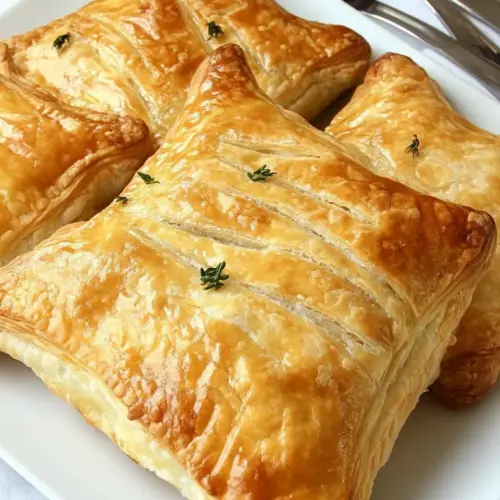
English Sausage Pastries
English Sausage Pastries fuse flaky puff pastry with savory pre cooked English sausages, melty Gouda cheese, and a sweet tang from honey dijon mustard. Crispy edges and a soft, flavorful center make these ideal for easy weeknight dinners or brunch spreads, offering a comforting, crowd pleasing bite you will make again and again.
Equipment
- Skillet
- Baking Sheet
- Parchment paper or Silpat
- Knife
- Fork
Ingredients
- One 17.3 ounce package Puff Pastry Sheets, thawed Provide chilled, laminated layers to create flaky, golden pastries when baked; gently handle to keep butter cold and follow package thawing instructions for best rise.
- 1/2 tablespoon extra-virgin olive oil Add a light fruity richness and aid in sautéing aromatics while contributing subtle healthy fats; warm oil briefly in a skillet before adding onions and apples.
- 1/2 medium sweet onion, chopped finely Deliver a sweet, savory base flavor when finely chopped and cooked down; caramelize gently to bring out natural sugars and balance the sausage and mustard.
- 1 small Granny Smith apple, chopped finely Impart bright acidity and a crisp, tart counterpoint when finely chopped; cook briefly with onions to soften while preserving a bit of texture for contrast.
- 4 tablespoons honey dijon mustard Bring sweet and tangy flavor with a smooth, spreadable consistency to bind fillings and add moisture; spread sparingly to avoid overpowering other flavors.
- 2 whole pre-cooked English sausages (bangers) or any other type of pre-cooked sausage, sliced Provide savory, seasoned meat flavor and pre-cooked convenience; slice to distribute evenly through pastries and warm through during baking for best texture.
- 1 cup shredded Gouda cheese Contribute creamy, smoky richness and meltability to bind filling components; shred finely to ensure even melting and coverage across the pastry.
- 1 large egg, whisked with 1 tablespoon water Offer an egg wash to promote deep color and glossy finish on the pastry surface; whisk with water and brush evenly just before baking for an attractive crust.
Instructions
- Preheat the oven to 400 degrees F. Line a large baking sheet with parchment paper or a silpat mat.: The moment the oven warms the puff pastry will respond with a dramatic lift, so a correctly preheated oven creates immediate steam within the layers for optimal flakiness. As the oven reaches 400 degrees F, you will notice a steady hum and a warm, dry heat that encourages quick browning. Don one oven mitt and place a lined tray on the middle rack to ensure even airflow. A common misstep is placing pastries too low, which can darken the bottoms before the centers finish; keep them centered for even color. Visually, you want the oven to feel evenly heated and not humid, that ensures crisp exterior layers. The why here is simple, high, even heat produces steam in the pastry pockets leading to lift and separation of layers, key to that bakery texture. If your oven runs hot, reduce the temperature slightly to avoid overbrowning, and if it runs cool, allow an extra minute or two at the end while watching closely.
- In a medium skillet, heat the oil over medium high heat. Add the onion and apple and sauté until softened, about 5 minutes. Set aside to cool.: When the olive oil first warms you will hear a gentle sizzle once you add the chopped onion and apple , releasing sweet, fragrant steam. As they cook, the kitchen will fill with a mild caramelized aroma that signals the sugars are concentrating and flavor is deepening. A translucent, slightly golden appearance is your visual cue that they are ready, and the mixture should feel soft when stirred. Cooling is essential, because a hot filling can steam the bottom of the pastry and cause sogginess; let it come to near room temperature before you assemble. One trap people fall into is rushing assembly while the filling is still warm, which can make the pastry weep. Taste for seasoning, and adjust only if necessary, remembering the honey dijon mustard provides much of the final flavor lift.
- Cut each sheet of Puff Pastry into 4 equal squares. Spoon a tablespoon of the honey dijon mustard into the center of each square and spread to cover the pastry, leaving about 1/2 inch along each side. Spoon about 2 tablespoons of the apple/onion mixture onto each square. Top with sausage slices and Gouda cheese. Roll out each of the remaining Puff Pastry squares so they're a little bit larger (or just use your fingers to press and stretch them). Place the second piece over the top of each with filling. Use a fork to seal the edges to form pockets. Brush each square with egg wash and use a knife to poke a few slits in the top for steam to escape while baking.: As you cut the puff pastry , you will feel its cool, pliable texture, and the edges will hold a light flour dusting. Spreading the honey dijon mustard thinly gives a uniform base note without overpowering. When you place the filling, you will notice the contrast of warm filling and cold pastry, a sensory cue to work quickly. Sealing with a fork compresses the layers along the edge, which prevents filling leakage and creates a decorative ridge. The egg wash will add a glossy, golden finish and the slits allow steam to vent, preventing bursting. A common mistake is overfilling each pocket; this causes leakage and uneven baking. Look for neat, compact parcels that sit flat on the tray. The reason for gently stretching the top pieces is to ensure a snug fit over the filling without tearing the pastry, which would release butter and reduce flakiness.
- Bake for 20 minutes, or until golden brown. Serve immediately.: As the pastries bake, the kitchen will fill with rich, toasty notes and a buttery perfume as the puff pastry puffs and separates into layers. You should hear a soft crackle as the exterior browns, and visually aim for a uniform golden brown across the tops and edges. Remove them when they look glossy and crisp, and allow a brief rest of a minute or two so the melted Gouda cheese settles slightly, ensuring each pocket retains its filling when bitten into. Serving immediately preserves the contrast between flaky exterior and warm, gooey interior. Avoid leaving them on the tray too long, or steam will soften the underside. This final bake is what locks in texture and flavor, so resist the urge to underbake; underbaked pastry will feel dense and pale rather than light and airy. The why is straightforward, full bake time creates maximum lift and the characteristic flaky layers we love.
Notes
- Chilling tip Keep the puff pastry in the fridge until the very last moment, and if it warms up, chill for 10 minutes to firm the butter layers again.
- Filling swap If you want a slightly softer texture, shred the Gouda cheese finer so it melts more uniformly into the filling.
- Assembly trick Use a ruler to guide even squares from each pastry sheet for consistent portion size and bake time.
- Make ahead Assemble and freeze on the baking sheet, then transfer to a freezer bag; bake from frozen adding a few extra minutes.
- Egg wash finesse Brush the wash only on the pastry, not the tray, to avoid dark spots and ensure even browning.