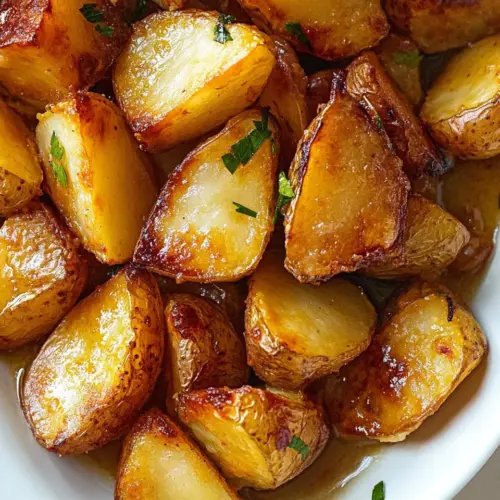
English Roast Potatoes
English Roast Potatoes are crispy on the outside and fluffy inside, an easy crowd pleaser with simple seasoning. This classic side offers crunchy texture and warm, buttery notes, perfect for an easy weeknight dinner or a festive meal. Make them for reliably comforting results that pair with many mains, and you will understand why they become a staple.
Equipment
- Large Pot
- Colander
- Roasting Pan
- Tongs
Ingredients
- 2.5 pounds Russet or Yukon Gold potatoes Boil or roast to fluffy texture and provide the starchy base for crispy English roast potatoes; choose Russet for fluffiness or Yukon Gold for creamier, buttery interior. Cut into even chunks to ensure uniform cooking, then parboil to roughen edges which helps create a golden, crunchy exterior during roasting.
- 1/4 to 1/2 cup high smoke point oil like avocado oil or canola oil Coat and sear to achieve a high-temperature crisp exterior without burning; select an oil with a high smoke point like avocado or canola to withstand roasting temperatures. Pour enough to lightly coat potato pieces so they brown evenly and develop a crisp, caramelized crust while carrying added flavor.
- 1 teaspoon salt Season to enhance and balance the potato's natural flavor and to bring out savory notes during roasting. Sprinkle evenly over potatoes before roasting and adjust to taste; salt also helps draw moisture to the surface, assisting crust formation.
- 1 teaspoon black pepper Add heat and mild pungency to complement the potatoes and deepen savory flavor during roasting; grind fresh for brighter aroma and more pronounced peppery bite. Sprinkle prior to or after roasting depending on desired pungency, and adjust amount to taste for balanced seasoning.
Instructions
- Fill a large pot with water, then add 1/2 teaspoon of salt.: The kitchen will smell faintly of minerals as the water comes to a gentle boil, and this salted water is the first flavoring step for the potatoes . The salt in the water seasons the interior as it cooks, ensuring every bite has depth. A common mistake is under salting the water, resulting in bland centers. If the pot seems crowded the temperature will drop and the boil will take longer, so use a pot large enough to keep a rolling simmer.
- Peel the potatoes and cut them into large, bite-sized chunks.: You will feel the firmness of the potatoes as you work, and uniform pieces help them cook evenly. Large chunks preserve a fluffy center while still allowing edges to crisp. Avoid pieces that are wildly different in size, as small lumps will overcook and fall apart while larger chunks remain underdone.
- Add the potatoes to the cold water, then bring to the boil. Boil for 10 minutes, and meanwhile, preheat the oven to 425°F and place a roasting pan with oil inside to heat.: Starting in cold water helps them heat through evenly, producing a creamy interior. As the water warms you will see tiny bubbles form, then a full boil, which signals that the starches are loosening. Boil for 10 minutes to reach parboil stage without collapsing the structure. Over boiling is a trap that makes the potatoes soggy and unable to crisp well later.
- Drain and rough up the potatoes in a colander to create a textured surface for extra crunch.: When you shake the potatoes in the colander you will hear a tumbling noise and see the edges break open slightly, creating that sought after rough exterior. Those ragged bits are what become golden and crisp in the oven. Be careful not to press too hard, or you will mash the pieces instead of texturing them.
- Carefully add the potatoes to the hot oil in the roasting pan, ensuring they are spaced apart. Roast in the oven, turning every 15 minutes, until golden brown and crispy, about 60 minutes total. Season with the remaining salt and pepper before serving.: A confident sizzle will greet each piece, and that immediate sound is a good sign the oil is properly hot to start browning. Spacing is crucial, crowding will trap steam and prevent crisping. Use long tongs and protective mitts when placing them, and avoid dumping the whole colander in at once which could cool the pan dramatically.
- Roast in the oven turning every 15 minutes until golden brown and crispy about 60 minutes total: Visual cues are your guide here, watch for a deepening golden color and listen for a sustained faint crackle as the crust forms, that means the Maillard reaction is working. Turning regularly promotes even browning on all sides. One common oversight is impatience, checking too often lowers the oven heat and slows caramelization, so turn efficiently but not excessively.
- Season with the remaining salt and pepper before serving: After roasting, the surface will be hot and the aroma of baked starch will rise, and this is the ideal time to season. The finishing salt and black pepper boost the flavor and keep the seasoning bright. Avoid over seasoning early on, because once the crust forms the seasoning will concentrate; taste a small piece first to calibrate.
Notes
- Adjust oil amount If you prefer a lighter finish use the lower end of the oil range, but be mindful that too little can hinder crisping and cause sticking, so compensate with more frequent turning and slightly longer roasting.
- Choose your potato Russet gives the crispiest exterior with a fluffy center, Yukon Gold offers creamier texture and a slightly buttery flavor, choose by the texture you prefer.
- Monitor oven temperature If your oven runs hot reduce by 25 degrees to prevent overly rapid browning that can dry the interior, uneven heat is a common cause of patchy color.
- Use a preheated pan Heating the pan with the oil inside ensures immediate sizzle when the potatoes hit the surface, but handle carefully to avoid oil splatters that can burn you.
- Time your parboil Ten minutes usually yields a tender interior without collapse, but check by piercing a chunk with a knife, it should meet slight resistance at the center.