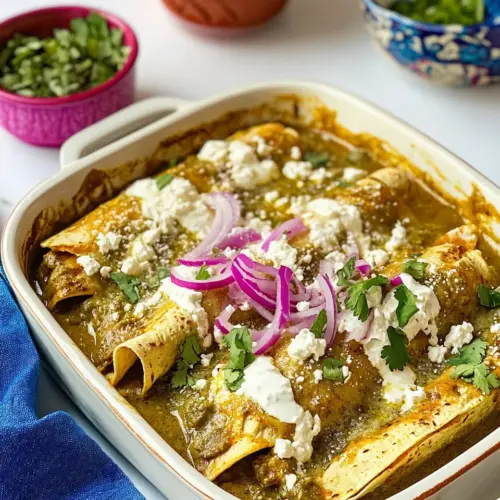
Enchiladas Verdes
Enchiladas Verdes offer bright, herbal green salsa, tender shredded chicken, and a silky finish of cheese and crema. This easy weeknight dinner balances crisp pan sear texture with saucy comfort, delivering creamy and tangy notes in every bite. Make it for a fast family meal that tastes like effort and feeds four with minimal fuss.
Equipment
- Skillet
- Microwave
- Spatula
Ingredients
- 5 oz cooked chicken shredded Shredded and cooked to tender perfection, provides the primary protein and savory base for the enchiladas, absorbing the salsa verde flavors. Adds texture and heartiness that makes the dish satisfying and filling, while pairing well with creamy and tangy components.
- 4 corn tortillas Lightly warmed or briefly fried to increase pliability, serves as the vessel to hold the filling and sauce together in each enchilada. Contributes an authentic corn flavor and slight chewiness that complements the tender chicken and green salsa.
- 1 1/4 cups green salsa/salsa verde Bright and tangy with a verdant, mildly spicy profile, dresses the chicken and tortillas and defines the overall flavor of the dish. Offers acidity and moisture that keeps the enchiladas saucy and helps meld the other ingredients into a cohesive bite.
- 1/4 cup grated semi-hard cheese Finely grated to melt slightly when heated, adds a savory, salty, and slightly sharp element that enhances richness. Provides a pleasant textural contrast and helps create attractive browned or bubbling spots on top of the enchiladas.
- 1 tbsp crema/sour cream Silky and tangy, dolloped over the finished enchiladas to add creaminess and cool the palate against the salsa verde's acidity. Balances heat and brings a smooth mouthfeel that ties together the filling and toppings.
- sliced red onion or pickled red onion Crisp or pickled to contribute a sharp, slightly sweet crunch and bright acidic bite that cuts through the richness. Adds color and a refreshing contrast that lifts the overall flavor profile of the dish.
- fresh coriander cilantro Fresh and aromatic, sprinkled over the assembled enchiladas to introduce herbal brightness and a citrusy, slightly peppery note. Complements the salsa verde and crema while adding a final burst of freshness.
Instructions
- Heat 1 tsp oil in a skillet over medium heat. Add chicken, 1 minced garlic clove, a pinch of salt and pepper. Sauté for 2–3 minutes until golden and fragrant. Remove from heat.: The moment the garlic hits the warm oil the kitchen will bloom with a toasty, savory aroma, a clear cue that flavor is building. As the chicken warms, it should release a faint sizzle and begin to pick up light golden edges, which signal Maillard development and enhanced depth. Stir gently so the chicken heats evenly and the garlic does not burn, since burned garlic can impart bitterness. If you notice the garlic browning too quickly, lower the heat; if the chicken looks dry, add a splash of salsa to keep it moist. Avoid overcooking at this stage because dry chicken will not absorb sauce as well, and aim to remove from heat while the meat is still juicy.
- Warm tortillas until soft and pliable. Microwave for 20 seconds or heat them on a pan.: When warming, watch for the tortillas to steam and relax, becoming supple enough to roll without cracking. On a dry skillet you will hear a quiet puff and see the edges slightly curl, which means they are ready. In the microwave, a damp paper towel helps create gentle steam that prevents tearing. If a tortilla starts cracking, let it rest covered for a minute to soften; forcing a brittle tortilla will lead to splits when rolled, and that can cause leakage during simmering.
- Add a spoonful of chicken to each tortilla and roll them tightly.: As you add the filling, notice the contrast between the soft corn tortillas and the warm, seasoned chicken . Rolling tightly ensures the enchiladas hold together when browned and sauced, and the compact roll concentrates texture. Avoid overfilling which stresses the tortilla and causes ripping; if a tortilla feels overstuffed, use less filling or an extra tortilla. If your rolls are loose, a quick seam-side-down sear will help seal them.
- In a skillet, heat 1 tbsp oil. Place enchiladas seam-side down and brown on both sides. Leave them in the skillet.: The skillet stage creates a toasted exterior that adds a savory crunch and prevents sogginess once sauce is added. You should hear a steady sizzle and see golden flecks form along the surface; that sound is gratifying and reliable. Brown each side until it develops color, then return them to the pan to await sauce. Do not crowd the skillet, because overcrowding leads to steaming rather than browning; brown in batches if needed.
- Pour green salsa over enchiladas. Cover, reduce heat, and let simmer for 7 minutes.: As the green salsa meets the hot pan it will hiss softly and release a fragrant, herbaceous steam. Covering allows the flavors to meld and the sauce to warm through the rolls, while the reduced heat prevents aggressive bubbling that could displace them. The visual cue is gentle bubbling and the sauce slightly thickening, indicating the flavors have married. A common error is too high heat, which can reduce the sauce too quickly and dry out the enchiladas, so keep the simmer gentle.
- Plate the enchiladas, spoon extra salsa on top, and finish with cheese, crema, and your favorite garnishes. Serve hot.: When plating, the dish should look glossy with sauce and scattered with melted cheese and a cool dab of crema . The scent will be herb forward with warm dairy notes, and the first bite should combine crisp edges, a tender center, and the fresh lift of cilantro or red onion . If the enchiladas seem soggy, the skillet step may have been skipped; if they are dry, you may not have used enough green salsa . Serve immediately while the contrasts are vivid.
Notes
- Warm tortillas properly, wrap tortillas in a damp paper towel and microwave for short bursts to make them pliable without drying, which helps prevent tearing while rolling.
- Seal the seam, place each rolled enchilada seam side down in the skillet for a minute so it forms a light crust that helps keep the filling inside during simmering.
- Adjust salsa quantity, if you prefer a saucier plate pour a little extra green salsa before reheating the pan, but avoid drowning the rolls which will dilute texture contrast.
- Revive leftover chicken, if using cold cooked chicken, warm it gently with a splash of salsa in a skillet so it absorbs moisture and seasoning before filling.
- Layer finishes, add the cheese last and give it a moment to melt from residual heat, then dot with crema for a visual and textural counterpoint.
- Pickle your onions quickly, a fast 10 minute pickle with vinegar and sugar brightens the top note and gives pleasing acidity without much effort.