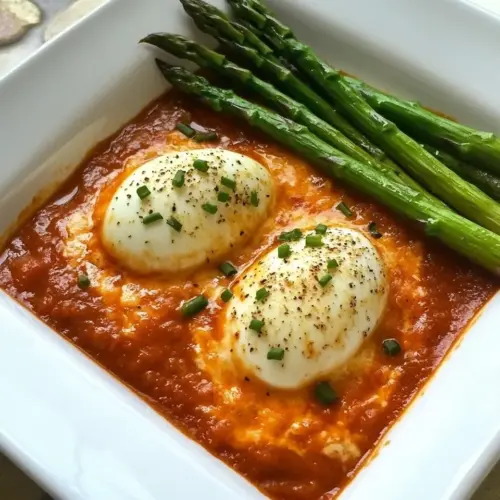
Eggs in Purgatory with Asparagus
Eggs in Purgatory with Asparagus brings together silky, runny eggs, tender green asparagus, and a savory homemade tomato sauce for a bright, easy weeknight dinner or hearty brunch. The dish is creamy in texture with pops of salty Pecorino Romano and an aromatic garlic backbone, making it a quick, satisfying one pan meal worth making any springtime weekend.
Equipment
- Non-Stick Skillet
- Lid
- Grater
Ingredients
- 6 large eggs Provide richness and structure to the dish; crack into the simmering sauce so whites set and yolks remain creamy for a silky finish. Offer protein and a satisfying mouthfeel that balances the acidity of the sauce while browning slightly if broiled briefly for texture contrast.
- 1 bunch, about 30 medium asparagus, ends trimmed, chopped in half Add bright vegetal texture and a pleasant snap; trim woody ends and halve to create even pieces that cook quickly in the simmering liquid. Contribute fresh, slightly grassy flavor that complements tomato and egg, and hold up well when sautéed or steamed briefly before combining with sauce.
- 1 1/2 cups homemade sauce Contribute concentrated tomato flavor and savory body to poach the eggs in, providing acidity, herbs, and spices that define the overall profile. Act as the simmering medium that infuses other ingredients, reduces slightly to intensify taste, and helps bind the components together for a cohesive dish.
- olive oil spray Lightly coat the pan to prevent sticking without adding excess fat; use sparingly to maintain the dish’s relatively light profile. Enable even heat distribution when sautéing garlic or asparagus, and help achieve slight browning where desired without altering the intended flavors.
- 1 clove garlic, finely chopped Impart aromatic depth and a subtle pungent bite when finely chopped and gently cooked; release flavorful oils that marry with the sauce. Enhance savory layers without overpowering the eggs, encouraging a more rounded overall flavor when sweated briefly in oil.
- 2 cups fat free chicken broth Provide a low-fat cooking liquid that adds savory umami and volume without heavy cream; use to adjust sauce consistency or to poach asparagus until tender. Contribute subtle chicken flavor that complements the tomato base and eggs while keeping the calorie count lower than richer alternatives.
- 1/4 cup fresh grated Pecorino Romano Introduce salty, nutty umami and a sharp finish when freshly grated over the finished dish; melt slightly into the warm sauce and eggs for richness. Act as a finishing touch that brightens flavors and adds a savory complexity that ties together the tomatoes, asparagus, and eggs.
Instructions
- In a large, deep non-stick skillet, heat pan on medium; when hot spray oil and saute garlic until light brown (careful not to burn).: You will notice the pan beginning to shimmer slightly as it warms, the moment to use the spray and add the minced garlic . The garlic should sizzle gently, releasing a toasty, sweet aroma, and the tiny pieces will turn pale gold in a matter of seconds. Keep the heat controlled because garlic can move from fragrant to bitter in an instant, and stirring constantly helps avoid hot spots. If you accidentally brown it too much, remove it briefly and wipe the pan before proceeding to prevent an acrid flavor from coloring the whole dish. This step builds the aromatic foundation for the sauce, and doing it with care ensures a cleaner, brighter final taste.
- Add homemade sauce and broth; mix well.: As you pour in the 1 1/2 cups of homemade sauce and the 2 cups of chicken broth , listen for the mild change in sizzle as the liquid hits the pan, and watch the sauce transform into a looser, simmerable base. The smell should deepen into savory tomato and stock notes, and stirring blends the flavors so pockets of concentrated tomato or broth do not remain. This step is important because the correct consistency lets the eggs poach without being overwhelmed by a dry or overly thick base. A common error is adding too much liquid, which makes the sauce bland, so taste and adjust seasoning now before moving on.
- Add asparagus and cover.: When you nestle the chopped asparagus into the simmering sauce, you should hear a soft sigh as the pieces sink into the liquid and release a faint vegetal perfume. Spread them evenly so each stalk has contact with the sauce, then cover the pan to trap steam which will cook the asparagus through while preserving some snap. Keep an eye on the color change, they will shift to a brighter green as they cook. Oversteaming is a typical mistake, resulting in limp stalks, so check them once they look vibrant and slightly tender.
- When the sauce boils gently add the eggs and cheese, reduce to a simmer and cover.: Look for a gentle, rolling bubble in the sauce before you add the eggs ; this ensures the liquid is hot enough to set whites without creating violent movement. Crack each egg into a small bowl first then slide them into separate wells in the sauce to keep them from colliding. Sprinkle the grated Pecorino Romano over the top, and you will notice the cheese begin to melt into creamy streaks. Lowering the heat to a gentle simmer is crucial because a vigorous boil will break the eggs apart. A common mistake here is rushing and boiling too hard, which ruins the tender texture of the yolks.
- Simmer 10 minutes on low.: In this final timed stage, you will hear only a soft, occasional bubble and see the whites firming around the yolks, which remain slightly jiggly at the center. The aroma becomes rounded and more unified, and the sauce reduces just enough to cling to the asparagus and eggs . Use the cover to maintain even heat, and avoid lifting it frequently which lets steam escape and lengthens cooking. If you prefer runnier yolks, check at around eight minutes, because oven temperatures and pan conductance vary; overcooking for too long will yield chalky yolks, which is the most common regret at this stage. When the whites are set and the yolks wobble, the dish is ready to serve.
Notes
- Buy fresh asparagus: Choose stalks that snap cleanly and feel firm, as fresher asparagus will maintain texture and bright color during the brief cook time.
- Temper the eggs: Let eggs sit out for fifteen to twenty minutes before cooking to promote even setting and avoid tight, chalky whites.
- Grate cheese finely: Freshly grated Pecorino Romano melts more smoothly into the sauce and avoids grainy clumps that can appear with pregrated cheeses.
- Control the heat: Aim for a gentle simmer when poaching eggs, reducing heat promptly after adding them to prevent splashing and uneven cooking.
- Taste the broth: Use a chicken broth that is not overly salty so you can season precisely after combining the sauce and broth.
- Cover but check: Keep the pan covered to trap steam, but peek once midway to ensure the asparagus and eggs are progressing toward the texture you prefer.