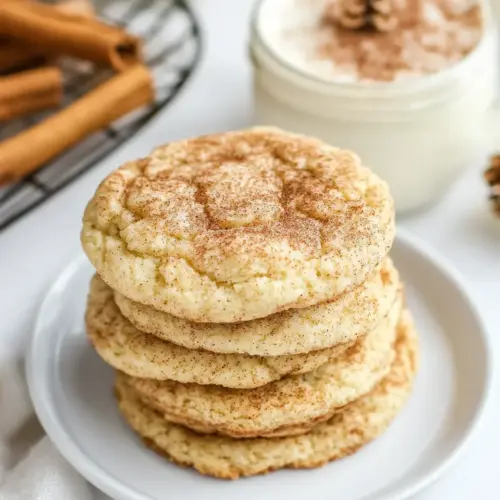
Eggnog Snickerdoodles
Eggnog Snickerdoodles are soft, spice kissed cookies with a creamy eggnog frosting. These cookies combine warm cinnamon and a hint of nutmeg with a tender, slightly crackled cookie surface, making them an easy winter treat or holiday party favorite. They are comforting, crowd friendly, and worth baking for seasonal gatherings.
Equipment
- Stand mixer or hand mixer
- Mixing Bowls
- Cookie Sheets
- Parchment paper or silpat baking mats
- Cooling rack
Ingredients
- 3/4 cup (170 g) unsalted butter softened Soften to room temperature to cream easily with sugar and create tender, rich cookie dough that adds moisture and flavor.
- 1 cup (200 g) granulated sugar Sweeten and help to aerate when creamed with butter, providing structure and a crisp edge to the cookies.
- 1 large egg Bind the dough, add richness and lift, and contribute to the chewy texture and lightness of the snickerdoodles.
- 1 teaspoon vanilla extract Add warm aromatic flavor and enhance overall sweetness while rounding out the eggnog-inspired profile of the cookies.
- 1 teaspoon baking soda Leaven the cookies by releasing carbon dioxide during baking, contributing to a light, slightly puffy texture.
- 2 teaspoons cream of tartar Stabilize the structure and contribute to the characteristic tangy flavor and slight chewiness of classic snickerdoodles.
- 1/2 teaspoon salt Balance sweetness and enhance other flavors while controlling gluten development for proper texture.
- 1/2 teaspoon cinnamon Provide subtle warm spice notes that complement the nutmeg and eggnog, enhancing the cookie’s seasonal flavor profile.
- 1/4 teaspoon ground nutmeg Introduce warm, aromatic nutmeg flavor in small amount to support the eggnog-inspired spices without overpowering.
- 2 cups (248 g) all-purpose flour Provide the bulk of the dough and form the cookie’s structure; develop gluten and determine texture when mixed properly.
- 1/4 cup granulated sugar Add coating sweetness for the exterior of the cookies, helping to create a crackled, sweet crust when baked.
- 2 teaspoons ground cinnamon Create the classic snickerdoodle spice coating with a pronounced cinnamon flavor that complements the interior spices.
- 1/4 teaspoon nutmeg Contribute an additional hint of nutmeg to the coating, echoing the cookie’s eggnog-inspired spice notes for balance.
- 4 tablespoons (57 g) unsalted butter softened Soften and blend into the frosting to provide richness and silky texture, contributing to spreadability and flavor.
- 1 cup (113 g) powdered sugar Sweeten and stabilize the frosting, providing a smooth, creamy consistency and sweet contrast to the spiced cookie.
- 1/4 teaspoon salt Control seasoning and balance sweetness in the frosting, enhancing overall flavor clarity and preventing it from tasting flat.
- 1 tablespoon (15 ml) eggnog (more if needed for consistency) Thin and flavor the frosting while adding authentic eggnog taste; adjust amount to reach the desired spreadable consistency.
- Cinnamon or nutmeg for garnish Garnish the finished cookies with a touch of warm spice to enhance aroma and presentation, reinforcing the eggnog theme.
Instructions
- Preheat oven to 350°F. Line two cookie sheets with parchment paper or silpat baking mats.: When the oven hits 350°F you should feel a gentle warmth and the air will smell faintly of warmed metal, which signals a reliable environment for even baking. Lining the sheets prevents sticking and helps cookies bake evenly; without a liner the bottoms can brown too quickly. A common oversight is skipping the preheat, which leads to cookies that spread unpredictably. If your oven runs hot, rotate the sheets halfway through the bake to keep color consistent.
- Cream butter and 1 cup granulated sugar using a stand or a hand mixer until fluffy. Mix in egg and vanilla, then mix in baking soda, cream of tartar, 1/2 teaspoon cinnamon, nutmeg and salt. Slowly mix in flour until dough is combined.: As you cream butter and sugar , listen for a soft aerodynamic sound and look for a pale, airy texture, which takes about 2 to 4 minutes on medium speed. When adding the egg , the mixture will look glossy for a moment before settling into a smoother paste, which helps with even distribution. Incorporating the leaveners and spices should produce a fragrant, warm aroma. Slowly adding flour prevents overdevelopment of gluten, which keeps the cookies tender. If you dump in the flour too quickly, the dough can become tough and dry; stop mixing as soon as the dough comes together. If the dough seems crumbly, a teaspoon of eggnog can help bring it together, but be conservative.
- Place remaining 1/4 cup granulated sugar and 2 teaspoons cinnamon in a small bowl. Scoop 2 tablespoon sized cookie balls and roll them in the cinnamon sugar mixture and place on cookie sheet.: The rolling sugar should glisten and smell sharply of cinnamon , which gives instant aroma when the cookies bake. Scooping uniformly sized balls ensures even baking so use a tablespoon scoop if possible. Space them with room to spread, about 2 to 3 inches apart, or they will merge. A typical mistake is making balls too large, which extends baking time and can lead to underbaked centers. Press lightly if the balls are uneven so they bake flat enough to show a crackle but retain height.
- Bake 2 tablespoon sized balls of cookie dough for 10-13 minutes or until they are cracked on the tops and just lose their glossy sheen. Err on the side of under baked for best results. Let cookies cool completely before frosting.: As cookies bake, the kitchen will fill with the sweet scent of browned butter and spices, and you should see tiny fissures form on the surface with edges that are set and centers that still look slightly soft. Removing at the point they lose gloss ensures they finish firming without drying out. If you wait until they are deeply browned, they will be hard instead of tender. Transfer to a cooling rack so residual heat does not overcook the bottom, and never try to frost warm cookies because the frosting will melt and slide off.
- To make frosting: beat butter until smooth with a hand mixer in a large bowl. Slowly beat in powdered sugar until mixture is crumbly. Add salt and 1 tablespoon eggnog. Mix, adding more eggnog as desired for spreading consistency (up to 1 additional tablespoon). Frost cookies, sprinkle with cinnamon.: beat butter until smooth with a hand mixer in a large bowl. Slowly beat in powdered sugar until mixture is crumbly. Add salt and 1 tablespoon eggnog. Mix, adding more eggnog as desired for spreading consistency (up to 1 additional tablespoon). Frost cookies, sprinkle with cinnamon. : The frosting should start with a creamy, soft butter texture that becomes lighter as you incorporate powdered sugar . The first addition of eggnog will loosen the frosting and release a mild, spiced aroma; add more incrementally to avoid it becoming too thin. Properly mixed, the frosting spreads smoothly and holds peaks without collapsing. A common issue is over beating which can incorporate too much air and make the frosting grainy; if that happens, chill briefly and then stir gently. Sprinkle a touch of cinnamon or nutmeg for a final aromatic pop.
- Store loosely covered in an airtight container for up to 3 days or freeze for up to one month.: Stored cookies should retain their tender interior while the exterior stays pleasant, especially if layered with parchment to prevent sticking. In an airtight container they will stay soft for a few days and keep flavor; freezing is great for longer storage but thaw at room temperature to avoid condensation making them soggy. Don't stack frosted cookies directly on each other without separators, or the frosting will smudge. If cookies become slightly soft after storage, a quick 5 minute warm up in a low oven will revive a bit of crispness without drying them out.
Notes
- Subtle glazing option: Swap the thicker frosting for a thin eggnog glaze by mixing powdered sugar with a teaspoon of eggnog at a time until pourable; it soaks into the top slightly and gives a shiny, delicate finish.
- Extra spice boost: Increase the nutmeg to enhance the eggnog profile, adding just a pinch more to both dough and rolling sugar for a more pronounced warmth without overpowering.
- Make ahead for convenience: Prepare dough and freeze in portioned balls; bake straight from frozen adding a minute or two of time, which is great for last minute hosting.
- Variation in coating: Mix a touch of powdered sugar into the rolling sugar for a frosted look and softer crust that still delivers the cinnamon aroma.
- Control sweetness: If you prefer a less sweet cookie, reduce the frosting powdered sugar slightly and allow the spice coating to carry more flavor.