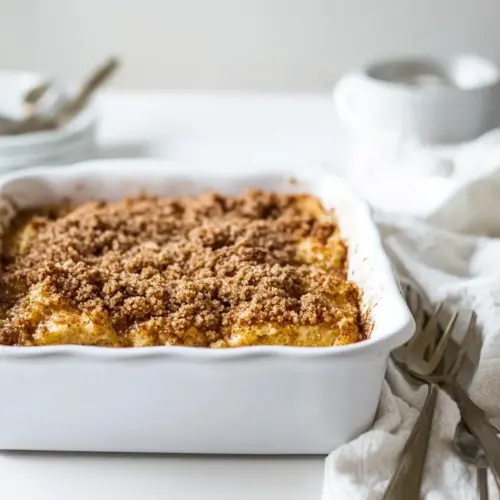
Eggnog Snickerdoodle Baked French Toast Casserole
Eggnog Snickerdoodle Baked French Toast Casserole is a creamy, spiced holiday brunch that blends custardy eggnog with soft bread and crunchy snickerdoodle crumbs. This easy make ahead casserole delivers warm cinnamon and nutmeg flavors, perfect for festive mornings and feeding a crowd. Serve warm for a comforting centerpiece that tastes indulgent yet approachable.
Equipment
- Large Bowl
- Whisk
- 9×13-inch pan
- Oven
Ingredients
- 2 cups coconut milk eggnog divided, or use low-fat dairy eggnog Provide rich creaminess and holiday flavor while acting as the primary soaking liquid to infuse the bread with moisture and custard-like texture.
- 1/2 cup coconut sugar Add deep caramel-like sweetness and a subtle molasses note to balance the spices and sweeten the custard without refined sugar intensity.
- 4 large eggs Bind the custard, contribute structure and richness, and help create a tender, set interior when baked into the French toast casserole.
- 2 teaspoons vanilla extract Enhance aromatic complexity and complement the eggnog with warm vanilla tones while amplifying the overall sweet, bakery-like profile.
- 2 teaspoons cinnamon Impart warm, familiar spice and visual speckling throughout the custard to echo the snickerdoodle cookies and reinforce the cinnamon flavor.
- 1/2 teaspoon ground nutmeg Contribute warm, nutty undertones and traditional eggnog spice that deepen the overall flavor profile and balance the sweetness.
- pinch of salt Elevate the flavors by enhancing sweetness perception and balancing the custard, while controlling overall seasoning for a well-rounded taste.
- 1 loaf gluten-free white sandwich bread cut into 1-inch cubes Provide the vehicle for soaking, supplying bulk and texture; gluten-free white sandwich bread yields a soft, absorbent base for the eggnog custard.
- 6 gluten-free snickerdoodle cookies Introduce additional snickerdoodle flavor, texture contrast, and cinnamon-sugar pockets when crumbled or layered, reinforcing the dessert theme.
- Powdered sugar optional, for serving Add a light, decorative dusting and extra sweetness after baking to enhance presentation and provide a subtle contrast to the casserole's warm spices.
Instructions
- In a large bowl, whisk together 1 1/2 cups of the eggnog, reserving the rest for later, along with the coconut sugar, eggs, vanilla, cinnamon, nutmeg, and salt.: The aroma of coconut milk eggnog , coconut sugar , and cinnamon marrying in the bowl is the first sign you are on the right track, with warm, fragrant steam rising slightly from the liquid if your eggnog is not ice cold. Whisk until the eggs are fully combined and the sugar mostly dissolves, creating a glossy, slightly thickened custard. This step matters because a well emulsified custard ensures even soak and a smooth texture in the finished bake. A common mistake is underwhisking, which can leave streaks of custard and uneven texture; watch for a uniform pale color to know it is ready.
- Add the cubed bread and gently stir until well mixed. Cover and refrigerate for at least 6 hours to overnight.: When you fold the cubed gluten-free white sandwich bread into the custard, listen for the soft slap as cubes glide together, and watch as the liquid starts to coat each cube, changing them from dry and matte to glossy and saturated at the edges. Gentle stirring prevents the bread from breaking apart while ensuring each piece absorbs some custard. This technique matters because aggressive stirring will flatten the bread and create a dense mass instead of distinct, tender pieces. Avoid packing the mixture too tightly here, which can block custard penetration.
- Preheat your oven to 350 degrees Fahrenheit and spray a 9×13-inch pan with cooking spray.: Cooling the assembled mixture allows the custard to slowly wick into the bread, softening the center and deepening flavor as the spices steep. In the refrigerator the custard will firm slightly and the bread will hydrate fully, so when you bake it the interior becomes custardy and the edges crisp. If you rush this step you risk a dry center or uneven texture, so patience pays off. Beware of leaving it out at room temperature for long periods, which increases risk of bacterial growth.
- Pour the remaining 1/2 cup of eggnog into the bread mixture to moisten it, mixing well.: The oven needs to be fully up to temperature so the casserole begins to set immediately, creating a tender middle with browned edges. Spraying the pan helps prevent sticking and makes serving easier, while an even 350 degree heat encourages gentle rise and firming. If the oven is too cool the casserole may bake unevenly, and if it is too hot the top will darken before the center sets. Use an oven thermometer if your oven tends to run hot or cold.
- Pour the bread mixture into the prepared pan and spread out evenly, lightly packing the cubes of bread together.: Adding the reserved eggnog right before baking refreshes the custard and ensures the top pieces absorb moisture so nothing bakes out dry. You should see the liquid bead on the bread and hear a faint slosh as you stir, and the mixture should look evenly glossy. This matters because it corrects any dryness from refrigeration and guarantees a uniformly moist casserole. A common slip is to skip this extra liquid, leaving the surface dry and the interior unevenly soaked.
- Crumble up the cookies, leaving some big crumbs for texture, and sprinkle them evenly on top. Gently press the crumbs down to adhere to the bread.: As you transfer the mixture into the pan, notice the little valleys and peaks of bread; press gently to remove large air pockets without squashing every piece. Light packing helps the casserole hold together while still allowing pockets of custard to remain, creating both set and creaminess. This balance matters for texture, producing distinct tender cubes rather than a single cake like slab. Overpacking can lead to a dense outcome, while underpacking can cause collapse during baking.
- Bake until the bread puffs up and feels set, about 30-35 minutes. If you want the cookie topping to be really crispy, broil on high for 2-3 minutes.: The sound of cookies breaking and the sight of sugary specks hitting the surface signal a lovely textural contrast to come. Spread the crumbles so every slice will have a bit of cookie, and press them lightly so they cling. This topping creates caramelized pockets and crunchy bites that elevate each spoonful. A frequent error is distributing crumbs unevenly, which results in some bites lacking the signature snickerdoodle crunch.
- Sprinkle with powdered sugar and enjoy.: During baking you will notice the edges turning golden and the center rising slightly; an inserted knife should come out mostly clean with a few moist crumbs, and the top should look evenly browned. The aroma of baking eggnog and warm cinnamon will fill the kitchen as sugars caramelize and the custard firms. If you want an extra crisp top, broil on high for 2 to 3 minutes, watching closely so the crumbs do not burn. A common pitfall is underbaking, which leaves the middle too jiggly, so rely on visual cues and a gentle touch test to confirm doneness.
- Sprinkle with powdered sugar and enjoy: The final dusting of powdered sugar brightens the flavors and creates a festive look. The first bite should yield a soft, custardy interior with crunchy cookie highlights and a warm spice finish. Serve while warm for the best contrast of textures. Avoid adding the powdered sugar too early if you will be refrigerating leftovers, as it can dissolve and lose its visual appeal.
Notes
- Adjust soak time to control texture; for a more custardy center, let the casserole refrigerate overnight, and for a firmer set aim for about 6 hours.
- Swap eggnog thoughtfully by choosing full fat or low fat versions depending on how rich you want the custard to be, remembering that higher fat yields a silkier mouthfeel.
- Cookie topping placement matters, press crumbs into the surface so they bond during baking and avoid sliding off when sliced.
- Use room temperature ingredients to promote even blending and prevent an uneven bake, especially with the eggs and eggnog.
- Finish with powdered sugar right before serving to maintain a bright appearance, rather than dusting too early if leftovers are expected.