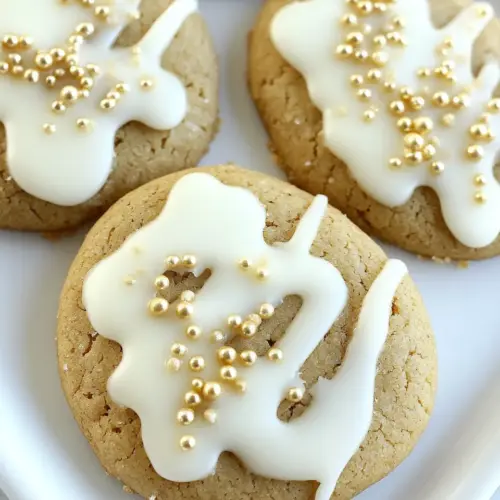
Eggnog Frosted Gingerbread Cookies
Eggnog Frosted Gingerbread Cookies blend chewy spiced cookie texture with a silky eggnog glaze for a festive treat. The warm notes of ginger, cinnamon, and molasses pair with a creamy frosting for a holiday-worthy cookie that is easy to bake for gatherings or gift boxes, and impossible to stop at one.
Equipment
- Mixing Bowls
- Hand mixer or stand mixer
- Baking Sheet
- Parchment Paper
- Wire Rack
- Saucepan
Ingredients
- 6 ounces unsalted butter, at room temperature Creamy and softened to provide richness and structure, helps create tender, flavorful dough and aids creaming with sugars for aeration.
- 3/4 cup granulated sugar Granulated and used to sweeten while creating lightness when creamed with butter, contributing to spread and texture during baking.
- 1/4 cup packed brown sugar Packed brown sugar added for moisture and molasses flavor, lending chewiness and deeper caramel notes to the cookie dough.
- 1 large egg, at room temperature Beaten at room temperature to incorporate air and bind ingredients, improving texture and giving structure and richness to the cookies.
- 1/4 cup molasses (not blackstrap) Dark-flavored sweetener (not blackstrap) included for its robust molasses notes, enhancing gingerbread character and moistness in the dough.
- 1 1/2 teaspoons vanilla extract Fragrant extract added to round out flavors, amplifying warmth and complementing the spices for a balanced, aromatic cookie profile.
- 2 1/4 cups all-purpose flour All-purpose flour provides the primary structure and body, supplying gluten to hold gas and create a tender yet sturdy cookie crumb.
- 2 teaspoons ground ginger Ground ginger contributes warm, spicy heat and signature gingerbread flavor, balancing sweetness and enhancing aromatic complexity in each bite.
- 1 teaspoon ground cinnamon Ground cinnamon imparts warm, sweet spice and depth, harmonizing with ginger and other spices to reinforce classic holiday flavor.
- 1/8 teaspoon freshly grated nutmeg Freshly grated nutmeg adds a bright, aromatic warmth and slightly sweet, nutty complexity that lifts the overall spice blend.
- 1/4 teaspoon ground cloves Ground cloves brings intense, warm, slightly peppery depth in small amounts, boosting the holiday spice character without overpowering.
- 1 teaspoon baking soda Leavening agent that reacts to create lift and spread, ensuring proper texture and a light bite in the gingerbread cookies.
- 1/2 teaspoons salt Salt used sparingly to enhance and balance sweetness and spice, sharpening overall flavor and strengthening dough structure.
- 1/3 cup packed brown sugar Packed brown sugar for the frosting or filling, contributing molasses sweetness and a soft, chewy texture when combined with butter.
- 1/4 cup eggnog Eggnog adds creamy, spiced dairy flavor and liquid content, reinforcing the holiday profile and adding moisture to the frosting.
- 2 tablespoons butter Melted or softened butter contributes richness and smoothness to the frosting, allowing it to set with a silky mouthfeel.
- 1 and 3/4 cups confectioners sugar Fine confectioners sugar provides bulk and smoothness to the frosting, creating a sweet, stable base that whips to a creamy consistency.
- 1/2 teaspoon vanilla extract Vanilla extract enhances and rounds out the frosting flavor, adding sweet floral notes that complement the eggnog and spices.
- 1/4 teaspoons salt Salt in the frosting offsets sweetness and brightens flavors, ensuring the icing tastes balanced rather than cloying.
- 2 tablespoons heavy cream Heavy cream thinned into the frosting to adjust consistency and add richness, allowing for a spreadable, glossy finish.
- Gold sprinkles, optional Decorative gold sprinkles add visual appeal and festive shimmer when used sparingly, providing a crunchy contrast to the soft frosting.
Instructions
- Preheat oven to 325 degrees (F). Line a large baking sheet with parchment paper or a non-stick silicon baking mat; set aside.: The air in the oven should smell neutral and warm when ready, and the parchment will prevent sticking and promote even browning. I always let the oven reach temperature for at least 10 minutes so the first tray bakes predictably. Listen for a quiet hum from the preheating element and watch the temperature dial or digital readout for stability. If you place cookies into a slightly cool oven, they will spread less and bake longer, so patience here avoids flat or underbaked centers.
- In a large bowl, cream butter and sugars until light and fluffy. Add the egg; beat well. Stir in molasses and vanilla; mix well.: You will notice the mixture go from gritty to smooth, with the color deepening as the molasses blends in. The sound changes too, from a faint scraping to a steady, smoother whir if using a mixer. This step traps air in the butter , creating lift and a tender crumb. If you overbeat, the dough can become too airy and collapse during baking, so stop when it looks pale and holds a soft ribbon when lifted with the paddle.
- In a medium sized mixing bowl combine flour, ginger, cinnamon, nutmeg, cloves, baking soda, and salt; mix well to combine. Gradually add dry mixture to wet mixture; stir until just combined.: The dry ingredients should smell fragrant, a compact, spicy bouquet that promises warmth. Whisking helps distribute the baking soda evenly so pockets of leavening do not create odd rises. If you skip thorough mixing, you might bite into unevenly spiced cookies or encounter tiny salty bursts. Sifting is optional but useful if your flour is clumpy.
- Drop cookie dough by tablespoonfuls, leaving 2 inches between each ball.: The dough will change from glossy to a thicker, slightly sticky mass, and you will see stripes disappear as flour incorporates. Work slowly to avoid overworking gluten, which makes cookies tough. Stop mixing as soon as streaks vanish; the dough should be pliable and hold shape. If it feels dry, a tablespoon of eggnog can help, but avoid adding too much or the cookies will spread too thin.
- Bake for 13-15 minutes or until cookies spring back when touched lightly. Allow cookies to cool a few minutes on the baking sheet, then transfer to a wire rack and cool completely.: You will feel slightly tacky dough on your fingers that smooths into rounded mounds when scooped. Leaving space lets the cookies expand and form those delicate crisp edges. If you crowd the sheet, cookies will merge into one another. Use a measuring spoon for consistent size so they bake evenly across batches.
- In a large saucepan bring the brown sugar, eggnog and butter to a boil; cook and stir for 2 minutes, stirring occasionally. Remove from the heat and cool for 5 minutes.: The kitchen will fill with a sweet, spiced perfume and the tops will look set and slightly glossy. Gently press a finger into the center for the spring back test; if it holds a slight indentation, they need a bit longer. Leaving them too long will crisp them entirely, losing chewiness. Letting them rest on the sheet first keeps them from breaking while warm, then the wire rack allows air to circulate and cool them evenly.
- Add confectioners' sugar, vanilla and salt; mix well. Frost cookies, then add sprinkles (if using).: As the mixture simmers, you will smell caramelizing sugar and see tiny bubbles break the surface, a rich, toasty aroma. Boiling briefly thickens the syrup so the glaze is flavorful and not watery. Remove promptly and allow to cool so it does not melt the confectioners sugar on contact. A common error is boiling too vigorously, which can scorch the sugar and impart a bitter note.
- Add confectioners' sugar, vanilla and salt; mix well. Frost cookies, then add sprinkles (if using).: The frosting should glide smooth and glossy, with a velvety sheen from the heavy cream and butter . Spread while the glaze is warm but not hot so it levels neatly, and the sprinkles will adhere. If the frosting is too thin, add a bit more confectioners sugar ; if too thick, thin with a teaspoon of eggnog . Don't frost hot cookies or the glaze will run and create a thin, uneven coating.
Notes
- Softening butter: Aim for a texture that yields with gentle pressure but is not greasy, about 30 to 45 minutes at room temperature in a cool kitchen.
- Controlling spread: If cookies flatten too much, chill the scooped cookie dough for 10 to 15 minutes before baking to firm the fats and reduce excessive spreading.
- Frosting consistency: Adjust with tiny amounts of confectioners sugar to thicken, or a teaspoon of eggnog to thin, testing on one cookie first for the right sheen and set time.
- Batch timing: Bake on the center rack and rotate pans halfway through if your oven runs hot or uneven to ensure uniform color and texture.
- Make ahead: You can bake the cookies a day ahead and store them in an airtight container; frost on the day you plan to serve for the freshest appearance.