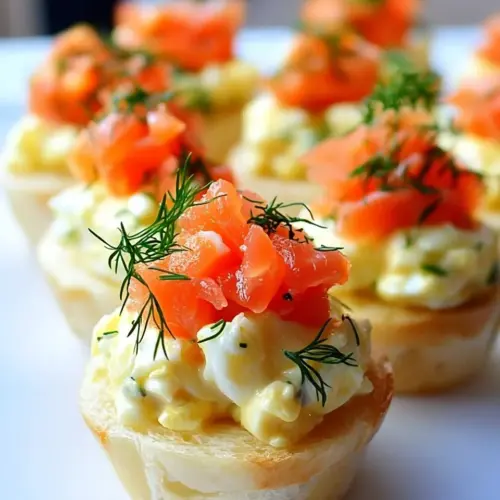
Egg Salad Cups with Smoked Salmon and Dill
Egg Salad Cups with Smoked Salmon and Dill are creamy, flaky, and easy to assemble, offering a crisp puff pastry shell filled with a silky egg mixture and a touch of smoky salmon. Perfect for easy weeknight entertaining or a light brunch appetizer, these handheld bites combine bright green onion and fresh dill for a lively finish. Make them to impress with minimal effort.
Equipment
- Oven
- Baking Sheet
- Wooden Spoon
- Medium Bowl
- Fork
- Saucepan
Ingredients
- One 9.5 ounce box puff pastry cups (24 count) Provide the crisp, flaky base for each bite-sized cup and hold the filling neatly; store-bought puff pastry cups save time and ensure uniform portions for parties or appetizers.
- 4 large hard boiled eggs (see tips below) Offer a creamy, firm texture and protein-rich component when chopped; hard boiled eggs contribute mild flavor and help bind the filling for a classic egg salad mouthfeel.
- 1/3 cup mayonnaise Add smooth richness and slight tang to meld the eggs and aromatics into a cohesive filling; mayonnaise balances flavors and provides moisture for easy spooning into cups.
- 2 stalks green onion, chopped finely Bring a bright, oniony pop and subtle crunch when chopped finely; green onion imparts fresh sharpness that lifts the richness of eggs and mayonnaise.
- salt and pepper, to taste Season the filling to taste, enhancing and balancing flavors without overpowering; salt amplifies savory notes while pepper adds gentle warmth and complexity.
- 3 ounces smoked salmon, cut into 24 small pieces Contribute smoky, savory bites and delicate texture when cut into small pieces; smoked salmon provides a luxurious contrast to the creamy egg mixture and pairs well with dill.
- 24 small sprigs fresh dill Garnish each cup with a tiny fresh herb accent that adds aromatic, anise-like freshness; small sprigs of dill complete presentation and complement both egg and salmon flavors.
Instructions
- Preheat the oven to 400 degrees F.: The moment the oven warms you will smell a faint warmth that hints at caramelization, and that even heat is crucial for quick puff pastry rise. I set the racks in the center so the cups brown evenly, and I always double check the dial because ovens vary. A common mistake is assuming a different oven temperature, which can leave pastry underbaked or overly dark, so use an oven thermometer if you suspect your oven runs hot or cool.
- Bake the puff pastry cups according to package instructions (about 18 minutes). As soon as they come out of the oven, use the end of a wooden spoon to poke down the middle of each pastry.: As the cups bake you will notice the pastry puffing and turning a warm golden color, releasing a buttery aroma. This visual cue signals that structure is forming, giving the cups their flaky layers. Letting them cool briefly on a rack prevents steam from making the bottoms soggy. Avoid opening the oven too often while baking, which can collapse the delicate layers and yield denser shells.
- In a medium bowl, chop up the eggs and then use a fork to mash. Add mayonnaise, onions, salt and pepper. Stir to combine.: The tactile act of pressing creates a perfect cavity for filling, and you will hear a subtle crisp give as the pastry yields. Doing this while still warm makes the pastry more pliable and reduces cracking. Be careful not to press through to the baking tray, which would break the cup; press just enough to form a shallow bowl.
- To assemble, place a piece of salmon inside of each cup (let it peek over the side of the cup, as shown in the photo). Use a small spoon to fill the cup with egg salad. Pile it up on top. Garnish with dill.: When you chop and mash the eggs , you should aim for small curds that still hold shape, with steam dissipating so the mixture does not get watery. The texture sets the tone for the filling, so medium size pieces create a pleasing contrast with the pastry. Overmashing will yield a gluey texture, so stop when the mixture looks cohesive but not pureed.
- Keep these refrigerated until ready to serve. If it's going to be more than a couple of hours, place them in a covered container. They should be served the same day that they are assembled.: As you fold in the mayonnaise and finely chopped green onion , you should smell a creamy, bright combination that tastes balanced when sampled. The mayonnaise smooths the egg bits, while the onion adds a crisp, vegetal note. Taste and adjust seasoning sparingly, because once you add the smoked salmon it may contribute extra salt; oversalting at this stage is a frequent misstep.
- Stir to combine.: The sound is subtle, a soft rustle as the fork brings everything together into a glossy mixture. The goal is even coating and uniform texture, ensuring each bite has both creamy and onion notes. If the filling seems loose, chill briefly to firm it up; conversely, if it is too stiff, a teaspoon of mayonnaise loosens it. A common error is mixing too aggressively, which can break down the egg curds.
- To assemble, place a piece of salmon inside of each cup (let it peek over the side of the cup, as shown in the photo).: The visual of the smoked salmon peeking out invites the eye and offers a fragrant hint of what is inside. Lay the salmon gently so it keeps its silky striations; rough handling can shred it and change the mouthfeel. Avoid piling too much salmon in each cup, because it can overwhelm the delicate balance between smoke and creamy filling.
- Use a small spoon to fill the cup with egg salad.: As you mound the filling, notice the cool, creamy texture contrasting with the warm pastry if you assemble right after baking. Building the filling up presents a pleasing height and makes each bite substantial. A common pitfall is underfilling, which leaves too much empty pastry, or overfilling, which makes the cups unstable and messy to pick up.
- Pile it up on top.: The piled presentation creates layers of texture and showcases the fluffy egg mixture against the crisp rim. Press lightly with the back of the spoon so the filling sits securely without compacting it. If you pack too tightly the filling will lose its airy quality, so aim for a balanced mound.
- Garnish with dill.: Adding a fresh sprig of dill brings an aromatic lift and a pop of color that signals freshness. Place it so it stands upright or drapes attractively over the edge; the herb will perfume each bite and complement the smoked salmon . Overusing strong herbs can mask delicate flavors, so I prefer a single, delicate sprig per cup.
- Keep these refrigerated until ready to serve.: Cooling helps the filling stay firm and keeps the pastry from absorbing too much moisture. I store the assembled cups in a shallow container with a loose cover to protect the delicate tops. A mistake to avoid is leaving them at room temperature for extended periods, especially on warm days, which can compromise safety and texture.
- If it's going to be more than a couple of hours, place them in a covered container.: When I transport these I nestle them in a single layer inside a container to prevent squashing, and chilling them briefly tightens the filling so they travel intact. Use a shallow airtight container to keep odors out and maintain freshness. Avoid stacking layers, which will crush the cups and ruin the presentation.
- They should be served the same day that they are assembled.: The best texture is same day, when the pastry still holds its contrast with the cool filling, and the herb is at peak brightness. Serve chilled or slightly cool, but not soggy, to preserve the intended experience. A common oversight is assembling too far in advance, which leads to loss of crispness and a muted herb aroma.
Notes
- Hard boiling method: Place eggs in a large saucepan with cold water, bring to a boil, cover, remove from heat and let sit for 15 minutes. Cool and peel. This yields reliably cooked yolks without green rims and makes peeling easier.
- Egg texture preference: Chop the eggs to medium curds rather than fine paste so the filling retains a pleasant bite and does not become gummy when mixed with mayonnaise.
- Mayonnaise selection: Use a quality mayonnaise you enjoy, as it is the primary fat in the filling and will influence the overall flavor. If you prefer a tang, choose a slightly tangier brand.
- Green onion placement: Chop green onion very fine to distribute the fresh bite evenly; larger pieces can create uneven bursts of pungency.
- Assembly timing: Bake the pastry cups and cool them slightly before filling so they remain crisp. If you must assemble early, keep the filled cups refrigerated and consume the same day.