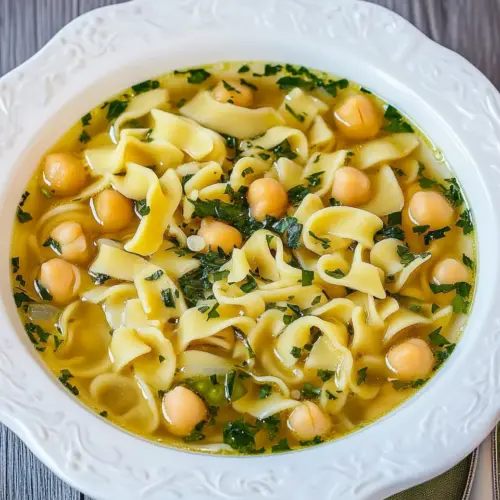
Egg Noodles and Chickpea Soup
Egg Noodles and Chickpea Soup is a creamy, comforting bowl with tender chickpeas and springy egg noodles. This easy weeknight dinner balances silky blended beans with whole chickpeas and a fragrant garlic rosemary oil, making it both filling and light. It s perfect for cold evenings when you want something wholesome and restorative.
Equipment
- Large saucepan
- Colander
- Blender
- Small Saucepan
- Another saucepan for pasta
Ingredients
- 1 cup dried chickpeas Soak and soften chickpeas before cooking to reduce simmer time and improve texture; provides the hearty legume base and protein for the soup while absorbing flavors from the broth.
- 1/2 tablespoon bicarbonate optional Neutralize acidity and tenderize chickpeas when added to soaking or cooking water; helps accelerate hydration and can yield creamier skins for a smoother mouthfeel.
- 8 cups water plus more if needed Simmer and cook chickpeas and aromatics, serving as the primary liquid medium to extract flavors; adjust quantity as needed to maintain desired soup consistency during cooking.
- 2 tablespoons parsley fresh, finely chopped Garnish and finish with fresh parsley to add bright herbal notes and color; finely chopped leaves distribute aroma and a fresh contrast to the savory broth.
- 1 tablespoon extra virgin olive oil Sauté or finish with olive oil to add richness and carry fat-soluble flavors; extra virgin olive oil contributes a fruity, silky mouthfeel and helps blend ingredients.
- 1 rosemary twig Infuse the broth with woody, pine-like aroma by simmering a rosemary twig and remove before serving; imparts subtle savory depth without overpowering other herbs.
- 3 garlic cloves halved Crush and gently cook halved garlic cloves to release pungent, savory flavor and aroma into the broth; halving helps mellow intensity while still contributing backbone to the soup.
- 7 ounces egg noodles a little over half of a 12 ounce bag Cook egg noodles to tender doneness and add body and comforting starch to the soup; a slightly larger quantity creates a hearty, noodle-forward bowl with satisfying texture.
- 1/2 teaspoons salt plus more for pasta water Season the cooking water and soup with salt to enhance overall flavor and help bring out the natural tastes of chickpeas and aromatics; reserve additional salt for pasta water to ensure noodles are properly seasoned.
- 1/4 teaspoon ground pepper Add ground pepper to introduce mild heat and aromatic spice; a small amount enhances savory notes and balances the richness of the broth and olive oil.
Instructions
- The night before, soak the chickpeas in water with 1/2 tablespoon bicarbonate, if using. Leave overnight.: The kitchen will fill with a faint bean aroma as the dried chickpeas hydrate, a scent that feels quietly promising. Soaking softens the skins so the beans cook evenly and release starch during simmering, which will help thicken the broth later. A common mistake is using water that is too hot for soaking, which can start cooking the beans unevenly; use cool tap water. Check that the beans are fully submerged and stir once after a few hours to ensure even hydration. If you opted for bicarbonate, you may notice the soaking liquid becoming slightly foamy and the beans swelling more quickly. Rinse thoroughly the following day to remove any soapy residue from the bicarbonate, which can affect flavor.
- The following day, drain the chickpeas in a colander then rinse under a running faucet.: You will hear the water run over the beans, a crisp, cleansing sound that signals you are removing soak water and impurities. Rinsing removes excess bicarbonate and any loosened skins, preventing off flavors. One slip up is not rinsing long enough, which can leave a faint alkaline note; rinse until the water runs clear. After rinsing, let them drain well so you are not adding cloudy soaking liquid to the pot, which helps you control the soup s clarity and final seasoning.
- Transfer them to a large saucepan with about 8 cups of water and 1 tablespoon parsley then let it boil. When it boils, put down the heat, cover and simmer for 1-1/2 hours.: As the pot heats, steam will rise and carry the herb s fresh green scent. Bringing to a boil extracts flavor from the beans and the parsley, and it helps the simmering to start consistently. When it reaches a rolling boil you will hear vigorous bubbling, then reduce heat so the pot settles into a gentle simmer. Simmering steadily for the full time melts starches and softens the beans; rushing this step by keeping the pot at a rolling boil can break the beans apart and cloud the broth. Keep the pot partially covered to maintain heat while allowing some evaporation for concentrated flavor.
- About 15 minutes before the end of the cooking time, take a ladleful of chickpeas and put them in a blender then blend until smooth. Put the creamed chickpeas back in the saucepan.: The surface will show soft, slow wisps of steam and occasional tiny bubbles, and the kitchen scent will deepen into a warm, nutty aroma. This low simmer tenderizes the chickpeas without disintegrating them entirely. Use a gentle simmer rather than a hard boil to avoid splitting most of the beans, which keeps textural contrast. If you notice the liquid reducing too quickly, add a splash of hot water to maintain consistency. A common error is opening the lid constantly, which drops the temperature and lengthens cooking time.
- In a small saucepan with extra virgin olive oil and rosemary, sauté the garlic cloves until they are golden brown. Discard the garlic. Pour the oil and rosemary in the soup. Add 1/2 teaspoon salt.: The sound of the blender will be bright and steady as the warm legumes shear into a creamy paste, and the smell becomes more concentrated and comforting. Returning this purée to the pot gives the soup body and silkiness without relying on cream. A mistake people make is blending cold beans which can lead to a grainy texture; warm beans blend into a silkier paste. If the purée seems too thick, add a small amount of the hot cooking liquid to loosen it before folding back into the saucepan.
- Meanwhile, in another saucepan, boil some water for the noodles. When it boils, add some salt. Add the pasta then cook following the number of minutes indicated in the package or until al dente and drain.: As the purée folds into the simmering broth, you will see the liquid thicken and gain a satiny sheen, and the aroma rounds out into something deeply savory. This step balances whole bean texture with creaminess so each spoonful has interest. Stir gently to prevent sticking, and simmer briefly to marry flavors. Avoid over stirring aggressively, which can break the remaining whole chickpeas into fragments and change the intended texture.
- Add the cooked noodles to the soup.: Heating the extra virgin olive oil with the rosemary will perfume the oil, and the sizzling of the garlic as it browns is a satisfying crackle that heralds deep flavor. The garlic should turn a warm golden hue, not dark brown, which would make it bitter. Once golden, discard the cloves so the oil retains the mellowed garlic essence without crunchy bits. If the oil gets too hot and smokes, reduce the temperature immediately to avoid burnt flavors.
- If you want it more watery, just add more water.: Removing the browned cloves leaves behind an infused oil that is soft and aromatic, perfect for finishing the soup. You will notice the oil takes on a warm, nutty aroma rather than raw pungency. Leaving the burnt bits in the oil can lend astringency, so skim them out carefully. The infused oil acts as a subtle, layered seasoning that ties the bowl together.
- Sprinkle the remaining parsley, salt and pepper then drizzle with extra virgin olive oil, if desired.: When you add the fragrant oil to the pot, steam will carry an irresistible herb and fried garlic perfume, and you will see the broth gleam where the oil disperses. This transfer distributes aromatic fat so the flavor is present across each spoonful. Stir once gently to incorporate. A common oversight is adding cold oil which can congeal; warm the oil slightly if needed so it blends smoothly.
- Add 1/2 teaspoon salt: At this point the soup will take on more presence, as salt lifts and clarifies flavors. Taste before and after adding to avoid over seasoning, because some of the seasoning also goes into the pasta water later. Too much salt at the end is hard to fix, so add gradually and taste. If you think you over salted, dilute with a bit of hot water and adjust other seasonings such as pepper and parsley.
- Meanwhile, in another saucepan, boil some water for the noodles: The water will roar into a lively boil and throw up steam, the sound signaling readiness for the egg noodles . A vigorous boil prevents the noodles from sticking and cooks them evenly. Skip adding oil to the water, which can make noodles slippery and prevent the soup from clinging to them. Salt the water well so the noodles are seasoned through.
- When it boils, add some salt: Adding salt at the boiling stage lets it dissolve rapidly and flavor the egg noodles from within. The salted water will reduce blandness in the pasta once combined with the soup. A common error is under salting pasta water; adjust based on your salt sensitivity and the salt already in the soup.
- Add the pasta then cook following the number of minutes indicated in the package or until al dente and drain: The egg noodles should be tender with a faint bite when you taste them, and their surface should look plump and glossy. Drain immediately to stop cooking and prevent sogginess. Rinsing is unnecessary and washes away surface starch that helps the soup cling to the noodles. If you overcook, the noodles will become soft and break apart when mixed into the soup.
- Add the cooked noodles to the soup: When the hot noodles meet the broth, steam will rise and the bowl will start to look comforting and full. The egg noodles will soak up some broth and help the soup feel like a whole meal. Stir gently to combine without breaking the pasta. Add them just before serving for the best texture; adding too early will let them soak up too much liquid and flatten the bowl.
- If you want it more watery, just add more water: Adjusting consistency is easy, and adding hot water preserves temperature while loosening the soup. Taste after adding to ensure seasonings remain balanced. A pitfall is adding cold water which will lower serving temperature; always use hot water and reheat briefly if needed.
- Sprinkle the remaining parsley, salt and pepper then drizzle with extra virgin olive oil, if desired: Freshly chopped parsley adds a pop of color and clean herbal brightness, while final salt and freshly ground pepper sharpen flavors. The finishing drizzle of extra virgin olive oil gives a silky mouthfeel and glossy appearance. Serve immediately so the garnishes remain vibrant. Waiting too long will dull the herbs and soften the noodles.
Notes
- Soaking matters: Soak the dried chickpeas overnight to ensure even cooking and a creamier broth, and rinse thoroughly to remove any bicarbonate residue.
- Simmer, do not boil: Maintain a gentle simmer while cooking the beans to prevent them from splitting and to keep the broth clear and balanced.
- Blend for body: Puree a ladleful of warm chickpeas to add silkiness without losing the satisfying bite of whole beans.
- Infuse the oil: Fry garlic with a twig of rosemary in extra virgin olive oil to create a fragrant finishing oil that unifies flavors across the bowl.
- Timing the noodles: Cook the egg noodles until just al dente and add them to the soup right before serving to avoid sogginess.
- Adjust consistency last: Use hot water to thin the soup if needed, adding small amounts until you reach the desired brothiness without cooling the dish.