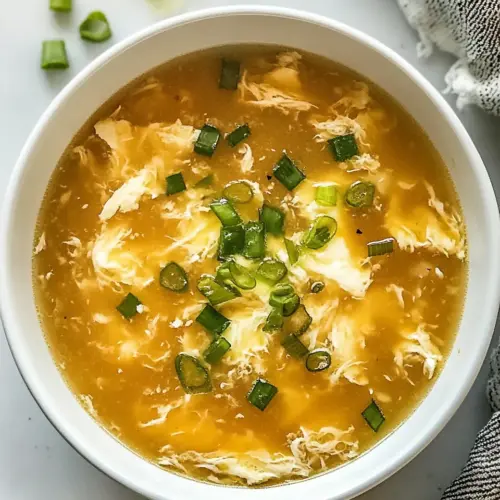
Egg Drop Soup
Egg Drop Soup is a silky, comforting broth with delicate egg ribbons, bright green onions, and fragrant notes of sesame and ginger. This easy, speedy soup makes a perfect easy weeknight dinner or soothing bowl when you need something light and nourishing. Try it any time you want comfort without fuss, and you will love how quickly it comes together.
Equipment
- Dutch Oven
Ingredients
- 1 teaspoon sesame oil Adds a nutty, aromatic finish to the soup and helps carry flavors; swirl in at the end for best fragrance and a subtle richness that complements the broth.
- 6 green onions cut in thirds Provides a mild oniony sharpness and fresh green aroma; add to the simmering broth for delicate allium flavor and a pleasant textural contrast when served.
- 3 slices fresh ginger Imparts warm, peppery notes and a bright, slightly spicy backbone; bruise or slice and simmer briefly to infuse the broth without overpowering the other aromatics.
- 2 cloves garlic peeled and sliced Contributes a pungent, savory depth and slight sweetness when sliced; sauté briefly in sesame oil or simmer with the broth to layer umami and aromatic complexity.
- 6 cups low sodium chicken broth or vegetable broth, divided Forms the flavorful liquid base that carries all ingredients and balances seasoning; use divided to simmer aromatics first and adjust for dilution or concentrated flavor as needed.
- 1/4 cup low-sodium soy sauce (see note) Adds salty, savory umami and a touch of sweetness to deepen the broth; stir in gradually, tasting to avoid over-salting and to achieve balanced Asian-style seasoning.
- 1 teaspoon cornstarch Helps thicken the broth slightly to give body and a silkier mouthfeel; dissolve in a small amount of cold liquid before whisking into the hot soup to prevent lumps.
- 4 large eggs whisked Provides tender, silky ribbons and protein that create the classic egg-drop texture; whisk thoroughly and stream slowly into simmering broth while stirring gently to form fine strands.
- 1/2 teaspoon kosher salt optional Offers optional controlled salinity and enhances overall seasoning if needed; add sparingly after tasting to fine-tune the soup’s final flavor profile.
Instructions
- Heat the sesame oil in a medium pot set over medium heat. Add the onions, ginger, and garlic, and stir and cook until the garlic becomes fragrant, about 30 seconds.: As the oil warms, you will notice a faint nutty scent rising, which signals the pan is ready. The gentle shimmer in the oil shows it is hot enough to bloom flavors without burning. I pay attention to the temperature because overheating will make garlic bitter instead of aromatic. A common mistake here is cranking the heat, so keep it steady to let the aromatics release slowly.
- Pour 5 3/4 cup of the chicken broth and all of the soy sauce into the pot. Turn the heat up to high and bring to a boil.: You should hear a soft sizzle as the green onions , ginger , and garlic hit the oil, and the kitchen fills with warm, savory notes. The goal is gentle softening, not browning, so stir frequently to ensure even release of flavor. If you smell burning, reduce the heat immediately because that will impart unpleasant bitterness to the soup.
- In a small bowl, whisk the remaining 1/4 cup of chicken broth and cornstarch together. Pour it into the pot and stir to combine.: When the broth and soy sauce hit the aromatics, the mixture will steam and the liquid will take on a deeper hue. Turn the heat up to high to bring the mixture toward a boil, but watch carefully because an aggressive boil can cloud the broth. A typical error is leaving it unattended, which can cause vigorous bubbling that disperses delicate aromas.
- Let the soup continue to boil for 5 minutes, then use a ladle to gradually pour in the eggs, whisking constantly. (They will cook instantly when they hit the broth and form ribbons.): The transition from simmer to boil creates tiny rolling bubbles and releases a savory steam that fills the kitchen. Bring it to a genuine boil so the soup has enough heat energy to cook the eggs instantly when poured. Avoid letting it tumble too hard, as an overly violent boil can make the texture of the soup uneven and prevent the egg ribbons from forming cleanly.
- Taste the broth and add the salt if needed. Serve with additional green onions for garnish.: The slurry should be smooth and free of lumps, and it will introduce body when added. I always whisk until the cornstarch fully dissolves, because clumps will produce starchy pockets in the soup. Mixing it cold into a bit of reserved broth prevents lumps and gives predictable thickening when combined with the hot liquid.
- Pour it into the pot and stir to combine: After adding the slurry, stir the soup so the cornstarch disperses evenly, and you will notice the broth begin to slightly thicken and coat the back of a spoon. This textural shift makes the soup feel silkier without becoming heavy. One common oversight is not stirring enough, which allows the starch to settle and form an uneven texture.
- Let the soup continue to boil for 5 minutes: This simmering time activates the cornstarch and melds the flavors. You will see the broth clarity change subtly as it becomes more cohesive, and the aroma will deepen. Keep the boil gentle to avoid agitation that could prevent smooth egg ribbons. If you rush this step, the flavors may not blend fully and the mouthfeel will be less integrated.
- Use a ladle to gradually pour in the eggs whisking constantly: As you ladle a thin stream of hot broth over the whisked eggs or pour the eggs into the pot while stirring, you will see delicate ribbons form instantly, creating the soup signature. The sound softens as the eggs cook, and visually the strands are pale and silky against the darker broth. A frequent mistake is adding the eggs too quickly, which leads to chunky curds instead of ribbons, so maintain a steady, thin stream and a constant stirring motion.
- Taste the broth and add the salt if needed: With the eggs incorporated, sample the soup to assess seasoning, because the sodium level can vary between broths and brands of soy sauce . Add the optional kosher salt sparingly, tasting after each pinch, since you cannot remove excess once added. Over seasoning is common here, so proceed cautiously and remember that a little acid or garnish can sometimes balance flavors without more salt.
- Serve with additional green onions for garnish: Finishing with a sprinkle of reserved green onions provides a bright contrast in color and texture. The onion adds a fresh, slightly peppery note that lifts the warm broth. If you skip the garnish, the bowl will be satisfying but miss that fresh pop, so I always keep a few extra slices for the top.
Notes
- Control the salt Use low sodium chicken broth or vegetable broth and low sodium soy sauce, then adjust seasoning at the end. This prevents the soup from becoming too salty, because broths and soy sauce vary widely in sodium content. Taste before adding any optional kosher salt and add small amounts until it suits your palate.
- Make a smooth slurry Combine the cornstarch with the reserved 1/4 cup of cold broth and whisk until no lumps remain. A smooth slurry ensures even thickening and prevents starchy pockets in the finished soup. If you see any lumps, push the mixture through a fine mesh strainer before adding to the pot.
- Whisk the eggs well Beat the 4 large eggs until uniform in color and texture so they turn into fine ribbons. Well whisked eggs disperse more evenly when introduced to the hot liquid, producing delicate strands rather than clumps. If the eggs seem too thick, add a teaspoon of cold broth to thin them slightly for a smoother pour.
- Control the pour Ladle the hot broth over the whisked eggs or stream the eggs into the pot while stirring constantly to form ribbons. A steady thin stream and continuous motion are the keys to silky texture. Pouring too quickly or stopping the stirring leads to chunky curds, so maintain rhythm until all the egg is integrated.
- Mind the aromatics Keep the oil temperature moderate when sautéeing green onions, ginger, and garlic so they soften and release fragrance without browning. Burnt aromatics taste bitter and will compromise the broth, so reduce heat at the first sign of browning and remove any pieces that have darkened too much.
- Adjust thickness to preference If you prefer a thinner soup, omit the cornstarch slurry altogether. For a slightly richer mouthfeel, keep the small cornstarch addition as described. Always allow the soup to simmer for a few minutes after adding the slurry so it reaches its final consistency.
- Garnish for brightness Reserve some sliced green onions to sprinkle on top at serving time for added color and a crisp bite. The fresh onion lifts the savory broth and creates contrast with the soft egg ribbons, making each spoonful more interesting.