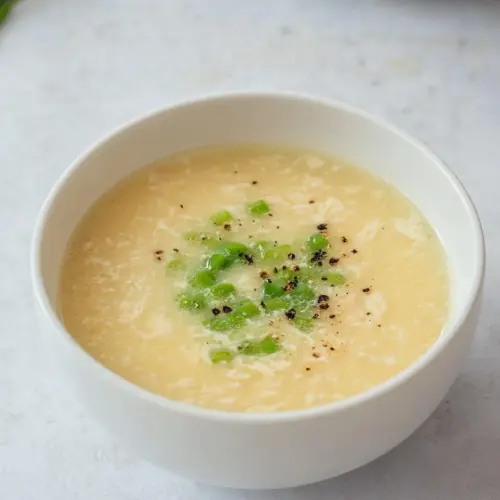
Egg Drop Soup
Egg Drop Soup is a silky, comforting bowl with tender egg ribbons floating in a seasoned chicken broth. This easy, creamy soup is perfect for a quick weeknight meal or a light starter. With minimal ingredients and fast cook time, it is ideal when you want something restorative and effortless to make.
Equipment
- Large saucepan
- Small Bowl
- Whisk or fork
- Ladle
Ingredients
- 4 cups chicken broth Provide a savory liquid base that carries flavor throughout the soup; chicken broth also adds natural umami and body, making the broth rich without extra cooking. Use a low-sodium version if you need more control over final saltiness and to allow other seasonings to shine.
- 1/2 teaspoon ground ginger Add a warm, slightly sweet heat that brightens the broth and complements the eggs; ground ginger also helps cut through richness. Use sparingly to avoid overpowering the delicate soup balance and dissolve it evenly for consistent flavor.
- 1/4 teaspoon garlic powder Contribute a mild, aromatic garlic note that deepens flavor without fresh garlic’s pungency; garlic powder disperses quickly into the hot liquid. Measure carefully since its concentrated taste can become noticeable in a light broth.
- 2 pinches white pepper plus more to taste Lend a subtle sharpness and gentle heat to enhance the overall seasoning; white pepper blends unobtrusively into pale soups without dark flecks. Adjust the pinches and taste the soup before adding more to achieve a balanced pepperiness.
- 1 1/2 tablespoons cornstarch Thicken the broth slightly to give the soup body and help the egg ribbons suspend more pleasingly; cornstarch creates a silky, glossy texture when mixed with cold liquid first. Combine with a small amount of cool broth to make a slurry before adding to hot soup to prevent lumps.
- 2 large eggs slightly beaten Provide soft, delicate ribbons and a tender texture when drizzled into simmering broth; slightly beaten eggs cook quickly into thin strands that create the signature egg-drop appearance. Beat just enough to blend yolks and whites uniformly for consistent ribbons.
- 1 teaspoon sesame oil Deliver a toasted, nutty aroma that rounds out flavors and adds a finishing depth; sesame oil is potent so a little goes a long way. Add near the end of cooking or as a finishing touch to preserve its fragrance.
- Salt to taste Adjust overall salinity to suit personal preference and balance other seasonings; salt enhances savory notes and can be added incrementally. Taste the soup after combining other ingredients before final salting to avoid over-seasoning.
- 2 green onions thinly sliced Provide a fresh, mild oniony crunch and a bright green color as a garnish; thinly sliced green onions add contrast to the silky soup. Sprinkle on just before serving so they remain vibrant and slightly crisp.
Instructions
- In a large saucepan, combine 4 cups of chicken broth, ground ginger, garlic powder, and white pepper.: The aroma will be subtle at first, a warm savory note rising from the pot as the spices bloom into the liquid. Swirl the pot gently to distribute the ground ginger and garlic powder , and watch for tiny movement in the surface that shows the flavors are beginning to marry with the chicken broth . If your broth smells flat, give it a quick taste and add a pinch of salt so the base has presence. A common mistake is tossing spices into a cold pan and walking away; instead, stir them into the broth so they hydrate evenly and avoid clumping.
- Place the saucepan over medium-high heat and bring the broth to a gentle boil.: As the heat rises you will hear a soft bubbling that signals the edge of boiling. The surface will show small rolling bubbles rather than an aggressive roar, and the scent of warmed broth will deepen into something more savory. Bringing it too rapidly to a hard boil can make the surface too turbulent for later steps, so aim for a controlled, gentle boil where the liquid moves but does not splatter. A frequent error is overheating, which can evaporate too much liquid, so reduce the flame if the pot starts to chatter loudly.
- In a small bowl, combine cornstarch with a bit of water to form a slurry. Gradually add the cornstarch mixture to the boiling broth, stirring until the soup starts to thicken.: The slurry should be smooth and free of lumps, and when added you will see the broth adopt a slightly glossy sheen as it thickens. Stir continuously with a spoon so the cornstarch disperses evenly, and pay attention to visual cues; the broth should coat the back of a spoon lightly. If you add the slurry too quickly you risk creating pockets of concentrated starch, so pour slowly and stir. One common misstep is not dissolving the starch fully, which causes grainy texture, so mix until the slurry is silky before it meets the hot liquid.
- Reduce heat to medium. Stir the soup gently in one direction while slowly pouring in the beaten eggs to form thin ribbons.: The motion is everything here; a steady, single direction stir creates a gentle current that helps the eggs form long, elegant ribbons. As you pour in the beaten eggs in a thin stream, watch the way they coagulate into pale threads that float and settle. The sound is soft, almost whispering, and the visual cue is pale strands that hold but remain tender. If you stir too vigorously the eggs will break into small curds, so focus on calm, deliberate movement. A frequent error is pouring the eggs too quickly, which makes dense clumps rather than silk ribbons, so take your time.
- Stir in 1 teaspoon of sesame oil and some salt to taste. Ladle the soup into bowls and garnish with thinly sliced green onions.: The finishing sesame oil will release a warm nutty perfume that lifts the whole bowl, and the final seasoning with salt sharpens the flavors. As you ladle the soup, observe the way the ribbons settle into each bowl and how the surface gleams slightly from the oil. Scatter the sliced green onions so they rest on top, offering a crisp contrast and bright color. Be mindful of over seasoning at this stage; add salt gradually and taste as you go. A typical mistake is adding the oil too early, which can mute its aroma, so reserve it for the end to preserve its impact.
Notes
- Warm your broth first, it helps the seasonings bloom and reduces the time you need to cook, which preserves the delicate texture of the eggs.
- Make a smooth cornstarch slurry, whisking until there are no lumps will ensure the soup thickens evenly and has a glossy finish.
- Pour the eggs slowly, a thin steady stream creates ribbon like strands and avoids clumping into dense curds.
- Stir in one direction, maintaining a single circular motion encourages the formation of long egg ribbons instead of small fragments.
- Add sesame oil at the end, this preserves its aroma and gives a toasted note that brightens the bowl without overpowering it.
- Taste before salting, because broths vary, adjust salt gradually to avoid oversalting the finished soup.