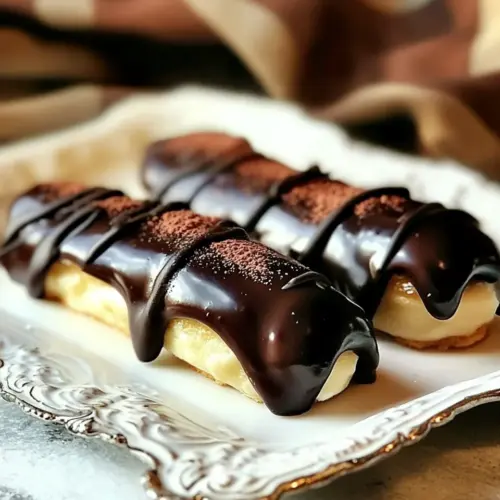
Eclairs
Eclairs are airy, crisp pastry shells filled with rich, creamy pastry cream and finished with a glossy chocolate glaze. These elegant treats offer a contrast of textures and deep chocolate notes, perfect for an easy weekend baking project or an impressive dessert for guests. Learn to make bakery quality eclairs at home for a memorable reason to bake.
Equipment
- Medium Saucepan
- Wooden Spoon
- Stand mixer
- Mixing Bowls
- Baking Sheets
- Parchment Paper
- Pastry bag or Ziploc bag
- Wire Rack
- Microwave safe dish
Ingredients
- 1 stick of unsalted butter, cubed Melted and cubed to provide rich fat for the choux pastry; contributes to steam generation that helps puffs rise and adds tender flakiness when incorporated into the dough.
- 1 teaspoon granulated sugar Sprinkled in the dough to balance savory notes and offer a hint of sweetness; helps feed yeast-free chemical reactions and enhances overall flavor depth in the pastry.
- 1/2 teaspoons salt Measured precisely to control seasoning and strengthen gluten slightly; ensures the pastry and fillings are properly seasoned without overpowering sweetness.
- 1 c water Brought to a simmer with butter and salt to dissolve fats and create a gelatinized batter base; provides the liquid needed for steam leavening during baking of the choux.
- 1.25 c all-purpose flour Added all at once to the boiling liquid to form the choux paste; develops structure as starches absorb moisture and are cooked, enabling the dough to hold eggs and puff properly.
- 4 eggs Beaten into the warm paste to incorporate moisture and provide leavening through steam; contributes to structure, richness, and a tender interior when baked into éclairs.
- 1 c milk Heated gently as the dairy base for pastry cream; adds creaminess, body, and tempering ability for starch and egg yolk thickening.
- 1/4 c granulated sugar Whisked with milk and egg yolks to sweeten and stabilize the pastry cream; balances richness and helps achieve a smooth, palatable filling.
- 1 teaspoon vanilla extract Added to the pastry cream for aromatic warmth and depth; enhances the overall flavor profile and complements the dairy and chocolate components.
- pinch of salt Used sparingly in the pastry cream to fine-tune seasoning; helps round out sweetness and accentuate flavors without making the cream salty.
- 2 egg yolks Beaten with sugar and starch to form the custard base; egg yolks provide richness, emulsification, and thickening when tempered with hot milk.
- 2 tablespoon cornstarch Combined with egg yolks to strengthen the custard and ensure a glossy, stable pastry cream; corn starch provides reliable thickening and prevents curdling.
- 1 tablespoon unsalted butter Folded into the hot pastry cream at the end to add silkiness and sheen; contributes a bit of extra richness and flavor depth for a velvety finish.
- 1 c chocolate chips or chunks Melted and tempered into the glaze to create a smooth chocolate coating; adds intense cocoa flavor and sets into a shiny finish over the filled éclairs.
- 2 teaspoon coconut oil (optional) Optional ingredient stirred into melted chocolate to improve gloss and meltability; helps the glaze remain smooth and creates a more professional-looking finish.
- 1 large egg Beaten and brushed or used as an egg wash to promote even browning and a glossy exterior; also used for sealing or binding if needed during assembly.
- dash of salt Added in small measure to the egg wash or glaze to balance flavor; a dash of salt enhances sweetness and brings depth to the finished pastry.
- 1 teaspoon milk Used to thin or adjust the consistency of glazes or washes for proper spreading; helps achieve the ideal sheen and coverage without watering down flavor.
Instructions
- In a medium saucepan, mix milk, half the sugar and salt. Cook until it comes to simmer.: You will notice a gentle steam and small bubbles forming at the edges as the milk warms, and the kitchen fills with a warm dairy aroma. Heating slowly prevents scalding, and that faint milk scent signals you are close to the right temperature. Stir occasionally to keep the surface smooth. If it suddenly boils vigorously, lower the heat to prevent scorching, because scorched milk will ruin the pastry cream's flavor.
- In a medium mixing bowl, whisk together egg yolks, cornstarch and remaining sugar. Whisking constantly, slowly pour the milk mixture into egg yolk mixture. Cook over medium heat, until thickens. Whisk constantly.: There is a moment when the mixture transforms from glossy to noticeably thicker, and you will see it coat the back of a spoon. The whisking keeps the egg yolks from scrambling and ensures the cornstarch activates evenly. Listen for a gentle thickening sound and watch for steam; those are good signals. A common pitfall is pouring the hot milk too fast, which cooks the yolks into bits, so take your time and keep a steady stream.
- Transfer to a mixing bowl of a stand mixer, add the butter and mix until butter is melted and the cream cools, about 5 minutes. Transfer to a smaller bowl and cover with seran wrap. Refrigerate for up to two days. Whisk before using. Mixture should be chilled before filling eclairs.: As you beat in the butter , the cream will become glossy and thicker, and the aroma deepens into a rich, custardy scent. Covering the surface with plastic prevents a skin from forming, and chilling firms the texture so it fills neatly. If the cream seems slightly lumpy after chilling, a brisk whisk or passing through a fine sieve smooths it out. Avoid overchilling to the point it becomes rock hard, because that makes piping difficult.
- Place butter, sugar, salt and water in a medium saucepan. Bring to boil. Remove from the heat.: When the mixture reaches a rolling boil, you will hear a lively bubbling and see the surface churn. The melted butter and water should be fully combined, creating a glossy pool before you add the flour . This boiling step is essential so the steam builds for the loft of the choux. Do not skip the boil, otherwise the dough will be too loose and will not puff properly.
- Sift the flour over the mixture and stir with a wooden spoon until it pulls away from the sides and a thin film forms on the bottom of the saucepan.: At first it seems sticky, then the mixture will suddenly come together and form a smooth ball that leaves a faint film on the pan. That sound of the spoon scraping and the visual cue of the film are your confirmation that enough water has evaporated. Stir vigorously to ensure even cooking of the flour, because undercooked flour gives a pasty raw taste in the finished shell.
- Transfer the mixture into a large mixing bowl of a stand mixer and mix on low speed until the mixture cools to room temperature, about 1 minute.: As the dough cools slightly the steam dissipates and it becomes less glossy, more satiny, and easier to incorporate eggs . Mixing briefly prevents the eggs from cooking when added. A lukewarm dough feels tacky but not hot when touched. If it is still steaming hot, let it rest a touch longer so the eggs do not scramble when added.
- In the meantime, preheat the oven to 450 degrees F. Line two baking sheets with parchment paper or silicone baking mats. Set aside.: The oven should be at full temperature so the initial burst of steam creates lift. You will feel the dry heat when you open the door, and the air should move quickly around the pans. Using parchment or silicone prevents sticking and helps the eclairs brown evenly. A common error is placing them too close together, which reduces circulation and leads to uneven rise.
- Raise the speed of your mixer to medium and add eggs one at a time. Mix until soft peaks form. Transfer the dough into a pastry bag fitted with a large round tip or a Ziploc bag with a snipped corner (1" deep). Pipe 4 inch long and 1 inch wide pieces onto prepared baking sheets, leaving at least 2 inches of space between them (they will double or even triple in size).: The dough transforms into a shiny, pipeable paste and will stretch slightly when lifted, indicating proper consistency. As you pipe, the shapes should hold and show smooth surfaces. They will swell and become golden in the oven. If the dough is too loose, the shapes will flatten, so hold back a bit on the last egg if needed. Keep consistent pressure on the bag for uniform size.
- Brush with egg wash. Bake eclairs for 18 to 20 minutes, until golden brown and cracks formed along the pastry. Cool on baking sheets for 3 minutes and transfer onto a wire rack to cool completely before filling and glazing.: The egg wash helps achieve a glossy, deeply colored crust, and the sound of light crackling as they cool is a good sign. The shells should feel dry and hollow when tapped. Transferring too early can cause them to collapse, so let them set briefly on the sheet. If they seem soggy inside, return to the oven for a few minutes to dry the interiors.
- For the glaze: microwave chocolate and coconut oil in a microwave-safe dish until melted. Stir till smooth.: microwave chocolate and coconut oil in a microwave-safe dish until melted. Stir till smooth. : The aroma of melting chocolate is instantly comforting, and stirring yields a silky shine. The optional coconut oil helps the glaze set with a glossy finish. Take care not to overheat the chocolate, which can seize and become grainy. If it thickens, a touch of the reserved milk can loosen it gently.
- Assembly: slice each eclair horizontally, fill with pastry cream and glaze.: slice each eclair horizontally, fill with pastry cream and glaze. : When you slice the shells, you will see the hollow interior ready to receive the chilled pastry cream, which should be smooth and thick. Fill evenly so each bite has the right cream to shell ratio, and dip or spread the glaze for a uniform coating. Work on a wire rack to catch drips and let excess glaze fall away. Avoid overfilling, or the eclair will become soggy and hard to handle.
Notes
- Egg temperature. Using room temperature eggs helps the dough come together smoothly and gives the choux better rise, because cold eggs can cool the dough too quickly and affect steam production.
- Piping consistency. Practice piping onto spare parchment to get even pressure before you pipe the final sheets, which ensures uniform baking and professional looking results.
- Chill pastry cream. Fully chill the pastry cream before filling; warm cream will leak and make the shells soggy, so refrigerate until firmly set.
- Drying the shells. If the shells feel moist inside after baking, return them to a low oven for a few minutes to dry the interior and preserve crispness.
- Glaze sheen. Add a teaspoon of milk or a touch of coconut oil to the melted chocolate for a shinier, more pliable glaze that sets beautifully.