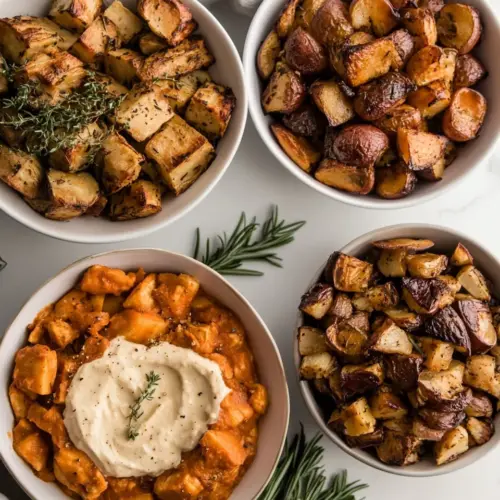
Easy Vegetarian Thanksgiving Side Dishes
Easy Vegetarian Thanksgiving Side Dishes deliver creamy, comforting sweet potatoes with nutty browned butter and aromatic sage. This easy to follow side is perfect for holiday gatherings or an easy weeknight dinner, offering silky texture and warm, savory notes that pair beautifully with mains. Make it for guests and you will have a reliably crowd pleasing dish to serve.
Equipment
- Large Pot
- Small skillet
- Colander
- Masher
Ingredients
- 3 large sweet potatoes or yams peeled Provide natural sweetness and a creamy texture when baked or mashed; peeled to ensure a smooth mouthfeel and even cooking. Layer with other flavors for a classic holiday side that balances savory notes.
- 3 tablespoons butter Adds richness and helps create a silky mouthfeel when melted into hot vegetables; use sparingly to avoid overwhelming delicate flavors. Brown briefly for a nutty aroma that enhances depth.
- 2 tablespoons fresh sage chopped finely Contributes an earthy, aromatic note and fresh herbal brightness when finely chopped; disperses evenly to perfume the dish without overpowering. Works well when lightly sautéed to release essential oils.
- 1/3 cup whipping/heavy cream Imparts creaminess and a luxurious texture when combined with warm potatoes or purees; a small amount is enough to bind and smooth. Warms quickly and melds flavors while preventing dryness.
- 3 cloves garlic minced Builds savory depth and subtle pungency when minced and cooked; soften in fat to tame sharpness and integrate into the overall flavor profile. Adds complexity without requiring large quantities.
- Salt & pepper to taste Balances and elevates all other components by enhancing sweetness and reducing bitterness; season gradually to achieve the desired harmony. Provides finishing contrast that highlights aromatics and creaminess.
Instructions
- Cut sweet potatoes into smaller pieces so they cook faster. Add to a large pot and boil until they're soft - about 15-20 minutes. Once a knife easily pierces through, they're done.: The water should sound lively as it comes to a simmer, and when the pieces are small they cook evenly, resulting in a uniformly soft texture that is easy to mash. You will notice a gentle bubbling as the pot nears a boil, and the sweet scent of the potatoes will begin to rise. If you leave pieces too large, the centers will stay firm while the outsides overcook, which makes for an inconsistent mash. A common mistake is overcrowding the pot, which drops the water temperature and lengthens cooking time; use a pot big enough so the potatoes move freely.
- About 10 minutes into boiling the sweet potatoes, add the butter into a small skillet or saucepan. Cook over medium heat until the butter is golden brown and smells nutty. There's a fine line between browned butter and burned butter, so watch it closely. You don't want it to go too dark. Add the chopped sage when you think the butter is about done. Add the garlic in after you've cooked the sage for about a minute. Let the garlic cook for about 15 seconds, then remove the brown butter from the heat.: As the pot simmers, steam will escape and the aroma will become comforting and earthy. You'll know the potatoes are done when a knife slides through a piece with almost no resistance; that tactile cue beats watching the clock. Boiling for the right amount of time yields a tender texture that mashes smoothly without becoming gluey. Overcooking can make them waterlogged, diluting flavor, so test a few pieces before draining.
- Drain the sweet potatoes and mash them with the brown butter, cream, garlic, and salt and pepper. Serve immediately.: The butter will sizzle softly as it hits the warm pan and tiny foam will form, turning from pale yellow to golden. That audible shift is a helpful indicator that the browning process has begun. Browning concentrates flavor, adding toasty, nutty notes that lift the mash. Keep the heat moderate because high heat can burn the milk solids quickly, leaving you with a scorched flavor that is hard to mask.
- Cook over medium heat until the butter is golden brown and smells nutty: The smell is the most reliable signal here, a warm, toasty perfume that fills the kitchen. Visual cues include small brown specks forming in the foam of the butter . This adds complexity to the final dish, giving it depth beyond simple richness. If the butter turns very dark, discard and start over to avoid bitterness. Stir gently to ensure even browning and avoid hot spots that can burn.
- There's a fine line between browned butter and burned butter, so watch it closely: Listen for the subtle crescendo of bubbling and watch as the foam subsides; that combination signals that the milk solids are browning. The mixture should be moved off heat as soon as the color is right because residual heat continues to darken it. A common slip is walking away during this step, which often results in overcooked, acrid butter that will negatively impact the whole dish.
- Add the chopped sage when you think the butter is about done: The sage will sizzle and release fragrant oils, infusing the browned butter with herbaceous notes. This melding of flavors happens quickly, and you will see the herb wilt slightly and darken in the fat. Adding the sage at this moment ensures the herb's flavor becomes part of the sauce rather than a separate, raw note. Avoid leaving the herb too long in the pan, or it can become brittle and bitter.
- Add the garlic in after you've cooked the sage for about a minute: The minced garlic should sing briefly in the hot fat, releasing a bright, savory aroma. You will see tiny bubbles around the garlic as it cooks quickly; only about 15 seconds is needed to bloom its flavor without allowing it to brown. Overcooked garlic becomes bitter and harsh, so remove the pan from heat promptly to preserve a sweet, aromatic note that complements the browned butter .
- Let the garlic cook for about 15 seconds, then remove the brown butter from the heat: Those few seconds let the garlic and sage infuse the fat without developing bitter tones. The resulting mixture should smell warmly herbal and nutty, and you will notice a glossy sheen on the surface where the aromatics have released their oils. Cooling the pan slightly prevents further browning and helps retain the intended flavors. A frequent error is leaving the pan on high, which continues cooking even after you think it is done.
- Drain the sweet potatoes: As you drain, steam will billow and you will feel the warmth of the cooked tubers. Proper draining prevents excess water from thinning the mash, which preserves a creamy, thick texture. Give the pot a gentle shake to release trapped water, but avoid dropping the pieces into a colander roughly, which can make them break apart unevenly. If too much water remains, the mash will be runny and lack body.
- Mash them with the brown butter, cream, garlic, and salt and pepper: The act of mashing should feel satisfying, with the tubers collapsing into a fluffy, creamy mass as you fold in the warm cream and aromatic browned butter . The aroma will be rich and inviting, and visually you will see a glossy, homogenous texture. Season gradually, tasting as you go to avoid over salting. Overworking the potatoes can make them gluey, so aim for a gentle fold that preserves some lightness.
- Serve immediately: Serve while warm so the texture stays soft and the flavors are at their peak. Steam rising from the dish is part of the appeal, and guests often note the warm, herbed scent. If you need to hold the mash briefly, keep it in a warm oven set to a low temperature, but avoid long holds which will dry the surface. A common mistake is preparing everything too far ahead without proper reheating, which can flatten both texture and aroma.
Notes
- Use plant based butter alternative if you need a dairy free option, but note the flavor will be less nutty when browning; increase the sage slightly to compensate.
- Swap whipping cream for a lighter cream if you prefer, though the mash may be less luxurious; warm the lighter cream before folding it in to maintain a smooth texture.
- If you cannot find fresh sage, use half the amount of dried sage and add it earlier in the butter to rehydrate and release flavor.
- To speed up cooking, cut the sweet potatoes into smaller cubes so they reach tenderness faster, keeping an eye on the pot to avoid overcooking.
- Make ahead strategy involves preparing the mash, chilling it, and gently reheating in a low oven with a splash of warm cream to refresh texture and temperature.