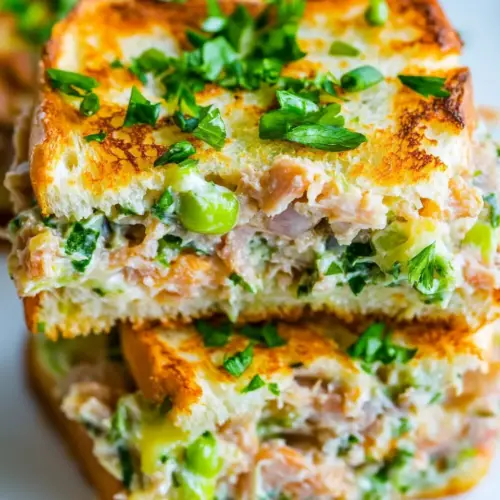
Easy Tuna Melt Sandwich
Easy Tuna Melt Sandwich is a creamy, crispy, and easy weeknight sandwich that combines flaky canned tuna, briny capers, nutty Parmesan cheese, and bubbling sharp Cheddar cheese for a speedy, satisfying meal. Perfect for quick lunches or casual dinners, it delivers textural contrast and bright flavor in every bite, making it a must-make when you need something comforting and fast.
Equipment
- Skillet
- Mixing Bowl
- Baking Sheet
- Oven Broiler
Ingredients
- 4 slices your favorite bread Toast or grill to achieve a crisp, golden exterior for sandwich structure and texture; helps contain the filling and provides contrast to creamy tuna.
- 2 tbsp butter Spread or melt to add rich, savory flavor and help brown the bread while preventing sticking; creates a pleasant mouthfeel and enhances toasting.
- 1 cup canned white meat tuna packed in water, drained (Two 6-ounce cans) Flake thoroughly after draining to provide the primary protein and tuna flavor; contributes moist, flaky texture and umami that anchors the sandwich filling.
- 1/4 cup diced celery Dice finely to add a fresh, crunchy bite and subtle vegetal flavor; balances richness and adds visual contrast within the tuna mixture.
- 2 tbsp capers, drained Rinse and drain then chop or leave whole to introduce salty, briny pops of flavor that brighten the mixture; cuts through the richness and adds complexity.
- 1/3 cup shredded Parmesan cheese Grate finely and mix into the filling or sprinkle on top to contribute nutty, savory notes and help bind ingredients when melted; adds depth of umami.
- 1/4 cup good quality mayo Stir in to create creamy, tangy binder for the tuna salad; provides moisture, helps the mixture adhere to the bread, and rounds flavors.
- 2 tbsp chopped parsley Chop and fold into the mixture to add a fresh herbal lift and a hint of green color; enhances aroma and lightens the overall flavor profile.
- 1/2 cup shredded sharp Cheddar cheese Layer or sprinkle to supply melty, sharp cheesiness that creates a gooey, cohesive topping when heated; complements tuna with pronounced savory character.
Instructions
- Butter the bread on both sides and fry each side in a skillet until golden brown. Set aside.: The moment the butter begins to foam and the bread meets the skillet you will hear a soft sizzle and soon see edges turn golden, releasing a warm, toasty aroma. This toasting step gives you a crunchy exterior that holds up to the creamy topping, and it also imparts a nutty flavor from the browned milk solids in the butter . A key sensory cue is even golden color across the slice, not just spots; if you see dark brown patches, reduce the heat to avoid burning. One common mistake is to overcrowd the pan which leads to uneven browning, so toast in batches if needed. The why behind this technique is structure and contrast, the crisp bread balances the soft tuna mix and keeps the sandwich from becoming soggy. Troubleshooting note, if your butter smokes, lower the heat and wipe the pan clean to prevent a bitter flavor transfer. When the bread is done, set it on a rack to stay crisp while you finish the filling.
- In a medium bowl, combine the tuna meat, celery, capers, Parmesan, mayo, and parsley. Mix everything together thoroughly.: As you mix the bowl you will notice the mayo turning the flaked tuna into a creamy yet textured mixture, with crunchy specs of celery and the briny flecks of capers distributed throughout. The aroma will be savory and fresh, with herb notes from the parsley and nutty hints from the Parmesan cheese . This even distribution ensures every bite has balance, and it prevents pockets of dry tuna or overpowering capers . One trap to avoid is adding too much mayo , which can make the filling loose and cause slipping; aim for a texture that holds together but is still spreadable. If your mix tastes flat, a pinch more capers or a tiny extra sprinkle of Parmesan cheese can boost brightness. The reason this mixing method matters is that it layers flavors uniformly, so each mouthful is consistent and satisfying.
- Place the bread on a baking sheet. Arrange the tuna salad on top of the bread and sprinkle with the shredded cheddar cheese.: When you mound the tuna mixture onto the toasted slices, the contrast between the warm, crisp bread and the cool, creamy filling is already delightful; adding the shredded Cheddar cheese sets the stage for a gooey finish. The visual cue to watch for is that the cheese covers the salad in an even layer without excessive overhang, which helps melt and brown uniformly under the broiler. A common error is piling the topping too high which can insulate the cheese and prevent even browning, so distribute the salad in a slightly flattened dome. Smell will tell you when the cheese begins to warm and release a savory aroma, signaling readiness for the broiler. This step is critical because it brings together texture and melt, and correct assembly ensures a cohesive sandwich after broiling.
- Place the baking sheet under the broiler for 5-6 minutes, until the cheese has melted and started to bubble. Garnish with chopped parsley and serve immediately.: Under the broiler the heat transforms the shredded Cheddar cheese into a bubbling, golden blanket, emitting a toasty, savory scent that raises anticipation. Watch carefully, the cheese can move from perfectly browned to overly dark in moments; you want bubbling with light golden spots. The sound shifts from quiet warmth to a gentle bubbling as moisture escapes and the fats render, creating that glossy finish. One frequent misstep is leaving the oven door open while broiling, which can change the heat dynamics; instead, use short checks to monitor progress. After you remove the baking sheet, the garnish of chopped parsley adds a fresh, green fragrance and a pop of color. Serve right away while the textures are at their peak, the toast is still crisp and the cheese molten. If the sandwich sits too long, the crispness will fade, so timing matters for the best experience.
Notes
- Use a different cheese Swap the shredded Cheddar cheese for a milder or creamier melting cheese if you prefer a softer finish, just note how the flavor profile will change.
- Make it herb-forward Increase the chopped parsley and add another fresh herb if you want a brighter, more aromatic filling without changing the balance.
- Adjust the caper level If you are cautious about salt, reduce the capers to one tablespoon then taste, their punchy flavor means a little goes a long way.
- Choose sturdier bread Opt for a dense loaf if you plan to eat the sandwich on the go, it will resist sogginess better than softer breads.
- Make it heartier For a more substantial meal, double the portion of tuna per sandwich and slightly reduce the mayo so the texture remains spreadable.