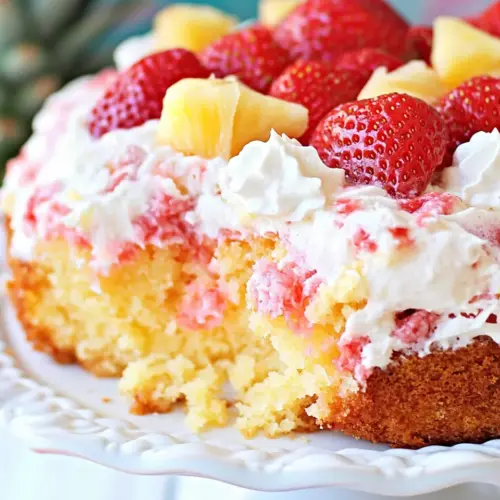
Easy Strawberry Pineapple Cake
Easy Strawberry Pineapple Cake is a light, fruity dessert with a tender, strawberry flavored crumb and a cool pineapple pudding topping. This easy make ahead cake combines creamy and juicy textures for a crowd pleasing treat, perfect for potlucks and simple celebrations. It is an effortless, bright dessert that delivers summer flavor with minimal fuss.
Equipment
- 9 X 13 baking dish
- Large Bowl
- Whisk
- Wire Rack
- Rubber spatula
Ingredients
- 15.25 ounces strawberry cake mix Provides a concentrated strawberry-flavored cake base and dry structure; contains leavening agents and sugar to help the cake rise and brown evenly. Enhances overall flavor profile and simplifies recipe preparation by combining multiple dry components.
- 3/4 cup milk Adds necessary liquid to hydrate the cake mix and activate leavening agents for proper crumb formation. Contributes mild moisture and helps achieve batter of the correct consistency for even baking.
- 3 eggs room temperature Contributes richness, binding, and structure while helping to emulsify fats and liquids for a tender crumb. Brings warmth to the batter and assists with rise when mixed at room temperature.
- 8.25 ounces crushed pineapple do not drain Imparts bright pineapple flavor and additional moisture without discarding the juice, enhancing both taste and texture of the cake. Provides natural fruit sweetness and acidity that complements the strawberry base.
- 3.5 ounces package instant vanilla pudding mix Delivers extra vanilla flavor and thickening power to the batter, helping create a slightly denser, more pudding-like interior. Stabilizes moisture and enriches mouthfeel for a creamier slice.
- 20 ounces can crushed pineapple do not drain Adds a larger quantity of pineapple with its juices to infuse the cake with sweet-tart fruitiness and substantial moisture. Helps maintain a moist crumb and contributes juicy pockets of fruit throughout the cake.
- 12 ounces Cool Whip or 1 cup heavy whipped cream whipped Offers a light, airy finish when using Cool Whip or a rich, creamy topping when using freshly whipped heavy cream; both add creaminess and contrast to the cake. Provides sweetness and a smooth texture that complements the fruity flavors.
Instructions
- Preheat oven to 350 F.: The air warms and expands the batter, which creates lift while baking; you can smell a faint warm scent as the oven hits temperature. Listen for the oven cycling as it stabilizes, and avoid opening the door early or the cake may sink. A common mistake is an oven set too low, which leads to a heavy, under risen crumb.
- Grease and flour a 9 x 13 baking dish.: Greasing and flouring creates a thin barrier so the cake releases cleanly and the sides brown evenly, giving a pleasant slight crust. When you run a knife around the edges after cooling, the cake should come away smoothly. Skipping this step risks the cake sticking and tearing when you remove slices.
- Combine all cake ingredients in a large bowl. Mix just until combined.: As you mix, notice how the batter transforms from dry crumbs to a smooth, slightly thick pourable texture; over mixing will develop gluten and make the cake tougher. Use a rubber spatula for the last fold to avoid over aerating. A common error is vigorous beating, which can create a dense result rather than tender crumb.
- Pour into prepared baking dish and bake 30-35 minutes or until an inserted toothpick comes out clean.: While baking, the kitchen fills with a warm, fruity aroma and the top turns a light golden hue. Check the cake toward the earlier end of the time window to prevent over baking. If the center is still wet, tent with foil and continue baking. Avoid relying solely on color, use the toothpick test to confirm doneness.
- Place baking dish on a wire rack and let cake cool completely.: Cooling on a wire rack prevents steam trapping under the pan, which can make the bottom soggy; you will notice the cake firming as it cools. Allowing full cooling is essential so the topping does not melt into the crumb. A common mistake is applying the topping while the cake is warm, resulting in a runny finish.
- Whisk pineapple and pudding mix together until combined.: As you whisk, the mixture thickens slightly and the vanilla aroma develops; this step tames excess sweetness and helps the topping set. Vigorously whisking removes lumps and incorporates the liquid for a smooth texture. Avoid under mixing, which leaves pockets of dry pudding powder.
- Gently fold in the Cool Whip or whipped cream until incorporated.: Folding preserves the light, airy texture of the whipped element, so the topping remains fluffy and not deflated; you will see soft peaks soften into a cloud like mixture as they blend. Use a gentle turning motion to avoid losing volume. A mistake to avoid is stirring vigorously, which can make the topping dense and watery.
- Spread on cooled cake.: When you spread the topping, it should glide smoothly and hold gentle peaks; the contrast between the matte cake surface and the glossy topping is satisfying. Work quickly but gently, covering the entire surface to seal in moisture. Spreading while the cake is still warm will cause the topping to slide off and become runny.
- Refrigerate for at least 30 minutes before serving.: Chilling helps the topping set and flavors meld, creating a firmer texture that slices cleanly; you may detect the aroma of pineapple coming through more distinctly after chilling. Leaving it longer improves slicing and presentation. A common oversight is serving too soon, resulting in a soft, sloppy slice.
Notes
- Use room temperature eggs: Warming the eggs slightly at room temperature helps them emulsify into the batter more evenly, giving a smoother texture and more reliable rise, which is especially helpful when using boxed cake mixes.
- Keep the pineapple juice: The recipe calls for un drained crushed pineapple because the extra liquid prevents a dry crumb and infuses the cake with fruit flavor; if you drain it you risk a denser, less flavorful result.
- Stabilize the topping: Mixing the instant vanilla pudding with the pineapple before folding in the whipped component gives structure to the topping so it does not weep or separate after chilling.
- Check early for doneness: Start testing the cake at the lower end of the bake time to avoid over baking; a toothpick should come out clean with a few moist crumbs for the best texture.
- Chill before cutting: Refrigerating for at least 30 minutes firms the topping and makes slicing neater, which helps presentation when serving guests.