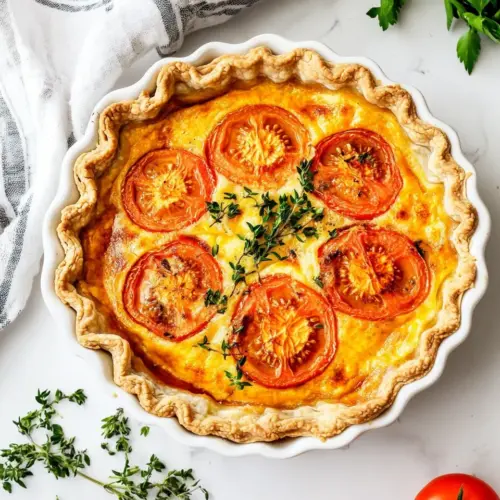
Easy Southern Tomato Pie
Easy Southern Tomato Pie is a creamy, savory summer favorite that layers ripe tomatoes, fresh basil, and a trio of cheeses into a flaky crust. This easy weeknight dinner or picnic star delivers melty, crispy textures and bright, herby flavor, perfect when tomatoes are at their peak. Make it for guests or a relaxed family meal and enjoy a slice of sunshine on your plate.
Equipment
- Pie Pan
- Mixing Bowl
- Knife
- Paper towels
- Oven
Ingredients
- 1 Pie Crust prepared Prepared to line the pie dish and hold the filling, providing a flaky, buttery base that contrasts the juicy tomatoes. Helps contain the custard-like mixture and cheeses while baking, ensuring an even crust and golden edges.
- 2 1/2 lbs tomatoes sliced about 1/4 inch Sliced about a quarter inch to release juices and create layered texture, contributing fresh, acidic sweetness to balance the rich fillings. Salted and then drained slightly, they prevent a soggy crust and concentrate tomato flavor throughout the pie.
- 1 tsp salt for tomatoes Used to draw out excess moisture from the sliced tomatoes and enhance their natural flavor, creating a firmer texture for baking. Sprinkled and allowed to sit, it seasons evenly and helps maintain the pie’s structural integrity.
- 2 shallots thinly sliced Thinly sliced to add a mild, sweet onion note and delicate crunch that complements the tomatoes and herbs. Dispersed throughout the layers, they mellow while baking and deepen savory complexity without overpowering the pie.
- 1/2 cup basil chiffonade Chiffonaded to release bright, aromatic basil flavor and provide fresh herbal contrast to the creamy, cheesy filling. Scattered between tomato layers, it adds color and lifts the overall flavor profile with peppery-sweet notes.
- 3/4 cup mayonnaise Used as the creamy binder that enriches the filling, contributing tanginess and smooth texture to hold cheeses and egg together. Combined with seasonings, it forms a rich custard that sets during baking for a luscious mouthfeel.
- 1 egg beaten Beaten to help bind the mayonnaise and cheeses into a cohesive custard that sets while baking, adding richness and structure. Mixed in with other wet ingredients, it aids in thickening and gives the filling a tender, sliceable consistency.
- 1/2 cup parmesan cheese grated Grated to contribute nutty, salty depth and a slightly granular texture that melts into the custard. Sprinkled into the filling, it enhances savory umami notes and helps create a browned, flavorful top when baked.
- 1 cup mozzarella cheese shredded Shredded to provide creamy, melting stretch and mild milky flavor that complements sharper cheeses and mayonnaise. Layered or mixed into the filling, it improves meltability and adds smooth, cohesive texture to each bite.
- 1 cup sharp cheddar cheese shredded Shredded to impart bold, sharp flavor and rich color, balancing creaminess with tangy cheesiness. Combined with other cheeses, it provides pronounced savory character and helps create a flavorful, browned topping.
- 1 tsp salt Added to further season the pie, enhancing overall savory balance and bringing out the tomatoes' natural sweetness. Used sparingly with the earlier tomato salt to ensure the filling is properly seasoned without becoming overly salty.
- black pepper freshly ground, to taste Freshly ground to finish the dish with bright heat and aromatic complexity, tailored to taste for each diner. Sprinkled at the end or mixed into the filling, it enlivens flavors and provides subtle piquancy throughout the pie.
Instructions
- Prepare pie crust into pie or fluted tart pan and refrigerate for at least 30 minutes before filling/baking.: You will notice the dough relax and the butter feeling cool under your fingers as you press it into the pan, which helps the crust bake up flaky and hold its shape. Chilling tightens the gluten just enough so the crust does not slump when you add the filling. A common mistake is skipping the chill, which often leads to a sagging rim and uneven bake, so give it the full rest. If the edges brown too quickly during baking, shield them with foil for the last part of the cook time.
- Preheat oven to 425° F.: The oven should smell clean and dry as it reaches temperature, and a quick oven thermometer check ensures accuracy because home ovens can vary. High initial heat helps set the crust quickly and encourages a slight roast on top of the tomatoes , adding depth. Avoid opening the door frequently while the oven lifts to temp, since the fluctuation can affect how the crust sets.
- Slice tomatoes into 1/4 inch thick slices removing seeds as you go, and place in a single layer on a paper towel lined surface.: As you slice, note the glossy flesh and the sweet tomato scent; the 1/4 inch thickness keeps slices substantial but not overpowering. Removing seeds reduces excess moisture, and the paper towels will begin to wick away juices, a necessary texture control. If you skip seed removal, you'll likely end up with a runnier filling, which can lengthen bake time to set.
- Sprinkle 1 tsp of salt to tomatoes to draw out moisture. Let sit for 30 minutes.: Within minutes you will see beads of tomato juice form on the surface, an encouraging sign that the salt is doing its job. This draw out concentrates flavor and prevents a watery pie, so patience here pays off. A typical misstep is shortening this wait, which often yields a soggy bottom and uneven texture.
- Slice shallots very thinly and set aside.: The paper thin shallot slices should look translucent and smell slightly sweet and onion like, which will mellow further in the oven. Thin slicing ensures they integrate into the layers rather than punching through the flavor. If sliced too thick, they remain assertive and can dominate delicate tomato notes.
- Combine mayonnaise, egg, all 3 cheeses, salt and pepper. Set aside.: When mixed, the mayo will look glossy and the shredded cheeses will begin to cling, forming a thick, slightly grainy binder that tastes rich and savory. This mixture creates a custard like matrix that holds the slices together as it bakes. Over mixing can break down texture, while under seasoning can leave the pie bland, so taste and adjust gently.
- Pat tomatoes dry with a paper towel.: As you press, you'll hear a faint soft sound and see the paper towel darken, proof that excess water is leaving the tomatoes . Drying is essential to keep the filling from loosening, and it helps the top brown rather than steam. Be gentle to avoid mashing the slices, and replace towels if they become saturated too quickly.
- Pull out your pie crust and quickly begin layering your ingredients beginning with a third of the cheese mixture at the bottom. Layer a third of your tomatoes in an overlapping pattern, followed by a third of the shallots and basil. Continue to layer in this order so the final layer is overlapping tomatoes, shallot and basil (for a beautiful presentation).: The assembled layers should look intentional and colorful, with ribbons of basil peeking between glossy tomato slices and creamy pockets of cheese mixture beneath. Overlapping creates stability and a pretty top, while alternating flavors ensures each bite is balanced. A common error is overcrowding the crust which prevents even baking, so keep layers thoughtful and avoid pressing them flat.
- Bake at 425° for 30-45 minutes.: During baking you will see the top bubble gently and the edges of the crust turn golden brown, while the cheeses melt into a cohesive filling. The aroma will shift from raw tomato to roasted sweetness and toasty cheese notes. If the top is browning too quickly, lower the oven a bit or tent with foil; if the filling still seems loose after the time, allow extra minutes, checking every five to avoid over browning.
- Cool completely before cutting into 8 equal slices.: Cooling is when the custard sets fully and the slices hold their shape, so resist the urge to cut hot pie. You should feel the pie firm up and the scent settle into an inviting, concentrated tomato and cheesy aroma. Cutting too early often leads to a sloppy slice and lost layers, so plan ahead and allow proper rest time.
- Can be served warm or at room temperature.: The pie offers different pleasures at each temperature, warm for melty comfort and room temperature for a firmer, more pronounced layering of flavors. I often serve a slice slightly cooled so the aromatics are more evident and the texture is ideal. Reheating is fine, but avoid microwave warmth which can make the crust soft; a low oven or toaster oven is preferable.
Notes
- Make it lighter: Use a lower fat mayonnaise or reduce the amount slightly, then increase the egg to help the filling set without losing creaminess.
- For a deeper roasted flavor: Roast the sliced tomatoes briefly on a sheet pan to concentrate sweetness before layering in the crust.
- Herb swap: If basil is limited, add very small amounts of fresh oregano or parsley for a different aromatic profile, but keep total herbs moderate so they do not overwhelm the tomatoes.
- Cheese adjustments: Keep the balance of melt and sharpness by substituting part of the cheddar with Fontina or Gruyere if you want nuttier notes.
- Crust options: Use a whole wheat or gluten free crust if dietary needs require it, but blind bake slightly longer to ensure structure with denser doughs.