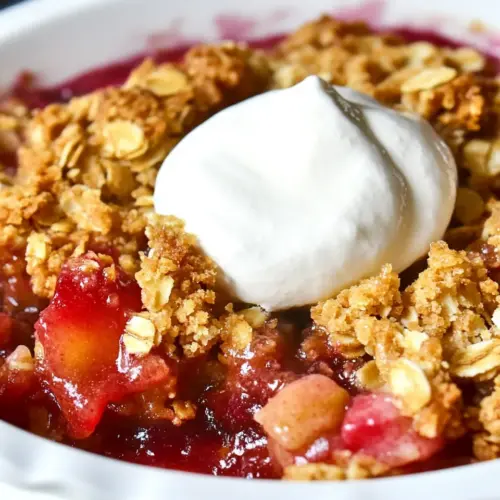
Easy Skillet Rhubarb Crisp
Easy Skillet Rhubarb Crisp blends tart rhubarb with a crunchy oat and butter topping for a warm, rustic dessert that sizzles and bubbles as it bakes. This easy spring dessert is quick to assemble, perfect for casual gatherings and weeknight treats, and delivers bright, balanced flavors that invite seconds. Make it to celebrate seasonal produce and simple, comforting baking.
Equipment
- 10 inch ovenproof skillet
- Mixing Bowl
- Pastry blender or fingertips
- Measuring Cups
Ingredients
- 6 cups fresh rhubarb cut into 1/4" pieces Provide tart, juicy body and vibrant flavor when cut into uniform pieces; adds natural moisture and bright acidity that balances the sweet topping. Helps create a saucy filling as it cooks down, releasing juices that thicken with the starch.
- 3/4 cup granulated sugar Sweeten and balance the rhubarb's tang while promoting caramelization on the surface; dissolves into the fruit juices to create a pleasant syrup. Also aids in browning the topping slightly during baking for depth of flavor.
- 2 tablespoons cornstarch Thicken the rhubarb juices into a glossy, stable filling; prevents the crisp from becoming watery by absorbing released liquid and setting as it heats. Also helps achieve a smooth mouthfeel and proper sliceable texture once cooled.
- 1 -1/2 cup old fashioned oats/rolled oats Provide hearty texture and nutty flavor to the crisp topping; oats create pleasant chew and structure that contrasts the soft fruit. Help absorb some of the butter and sugars to form crunchy clusters when baked in the skillet.
- 1/2 cup brown sugar Add deep, caramel-like sweetness and moisture to the topping; brown sugar contributes richer flavor due to its molasses content. Helps the topping brown and bind with butter and oats to form crisp clumps.
- 1/2 cup all purpose flour Offer structure and slight tenderness to the streusel mixture; flour binds with oats and sugar to create crumbs that hold together. Helps absorb some of the butter and forms a delicate crumb that crisps in the skillet.
- 1/2 cup butter softened and cut into cubes Provide fat for richness and help bind the topping into cohesive clusters; softened butter coats the dry ingredients to promote browning and crispness. Melts during baking to create a golden, crunchy texture and enhance flavor.
Instructions
- Preheat the oven to 375°F. Lightly grease a 10-inch ovenproof skillet and set aside.: The oven warming up should feel steady and predictable, with the air inside growing warm and faintly dry. A 375°F setting gives the topping time to brown while the filling bubbles, which is the balance we want. Greasing the skillet helps prevent sticking and encourages the edges of the filling to sing with caramelization. If your oven runs hot, rotate the skillet halfway through baking to avoid overly dark edges. A common mistake is skipping the greasing, which can make serving messy and stick the crisp to the pan.
- In a mixing bowl, combine rhubarb, granulated sugar, and cornstarch. Toss until the rhubarb is well coated, then spread evenly in the prepared skillet.: You will notice the granulated sugar dampening the rhubarb , drawing out a pale pink shine on the pieces as the juices begin to mingle. The cornstarch should be evenly distributed so the juices thicken uniformly during baking, producing a glossy filling that clings to the fruit. Spread the pieces in a single layer so heat penetrates evenly, and press lightly for even contact with the pan. Avoid overmixing which can break down the rhubarb too much, leading to a mushy filling.
- In the same bowl, mix oats, brown sugar, and flour. Cut in the butter using a pastry blender or your fingertips until the mixture is crumbly and resembles coarse crumbs.: As you work the butter into the oat mixture, you should feel a shift from dry to slightly tacky, with little clusters forming that smell warm and buttery. The texture should be varied, with some pea sized bits and finer crumbs, because that creates an appealing contrast when baked. If the mixture feels greasy, you may have over softened the butter . A common mistake is working the butter until fully blended; instead leave small chunks so they melt in the oven and create pockets of crispness.
- Sprinkle the oat crumble topping evenly over the rhubarb filling.: When you distribute the topping, look for even coverage so every spoonful gets both fruit and crumble. The contrast between the pink filling and the pale golden topping should be visually appealing. Lightly press some of the topping into the filling edges to encourage a seal that will brown nicely at the sides. Be careful not to pack the topping too tightly, which would prevent it from crisping correctly.
- Bake for 35–40 minutes, or until the topping is golden brown and the edges are bubbling.: During baking you will hear a faint bubbling and smell a toasty, caramel aroma as the sugars and butter brown. The topping should reach a golden brown color and feel crisp to the touch, while the filling should bubble at the edges, signaling that the cornstarch has activated and thickened the juices. If the top browns too quickly before the filling bubbles, tent the skillet loosely with foil and continue baking until bubbling starts. A common pitfall is removing the crisp too early; ensure bubbling at the rim to avoid a runny center.
- Cool slightly before serving. Enjoy warm with vanilla ice cream or whipped cream.: Cooling allows the filling to set a bit, moving from liquid to a spoonable jam like texture, which makes serving cleaner. The aroma will mellow into a comforting, warm scent, and the topping will hold its crispness for a time. Serve warm for contrast with cold accompaniments, and scoop from the center outward so each portion has crisped edges and tender fruit. Avoid cutting the cooling time too short, which can cause the filling to spill out and be overly loose on the plate.
Notes
- Swap pan size carefully: Moving from a 10 inch skillet to a 9 by 9 baking dish changes the depth, which can affect baking time. A deeper pan may need a few extra minutes to bubble through, while a shallower pan will brown faster. Keep an eye on both color and bubbling at the edges to judge doneness.
- Adjust sweetness to taste: If your rhubarb is exceptionally tart, increase the granulated sugar in the filling by a tablespoon at a time until it suits your preference. Taste is personal, so start modestly and remember that the topping contributes sweetness, too.
- Make the topping chunkier: For extra texture, leave slightly larger chunks of butter in the oat mixture when cutting it in. Those pockets will melt and form crisp, buttery clusters that offer a delightful contrast to the soft filling.
- Use cold butter for best crumb: Using butter that is cool rather than room temperature prevents the topping from becoming greasy and helps it bake into a light, crisp streusel. If your butter is too soft, chill the mixed topping for five to ten minutes before sprinkling.
- Control topping browning: If the topping is browning too fast, tent the dish with foil partway through baking. This lets the filling continue to bubble without over darkening the crumble, ensuring even color and texture.