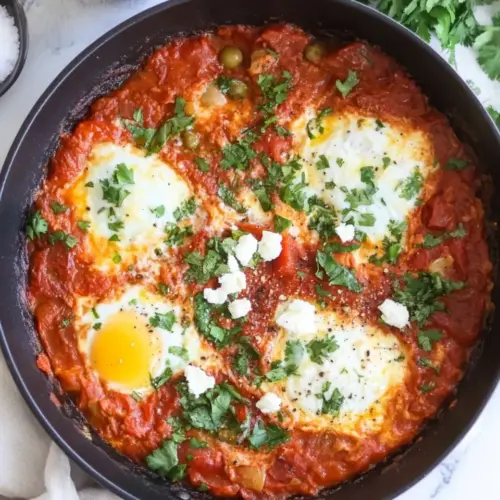
Easy Shakshuka
Easy Shakshuka brings together vibrant tomatoes, warm spices, and runny eggs for a creamy, comforting meal. This easy weeknight dinner delivers smoky paprika, tender onion, and bright herbs in one skillet, perfect for feeding a small crowd or a cozy solo supper. Make it for brunch or a speedy dinner when you want bold flavor with minimal fuss.
Equipment
- Large Pan
- Spoon
- Knife
- Cutting Board
Ingredients
- 1 tablespoon olive oil Use to gently sauté aromatics and prevent sticking; adds a fruity, slightly peppery richness to the base of the dish. Helps carry and meld the spices, creating a glossy surface for the tomato sauce to build upon.
- 1 onion, finely diced Finely diced to provide sweetness and body; softens into a caramelized base that balances tomatoes and spices. Releases natural sugars while sweating with the pepper and garlic to create depth of flavor.
- 1 red bell pepper, finely diced Finely diced to contribute a bright, sweet crunch that softens when cooked; offers a vegetal sweetness that complements the tomato acidity. Provides color and texture variation while absorbing spices and oil.
- 3 cloves garlic Crush or mince to release pungent, aromatic oils; infuses the sauce with savory depth and a sharp garlicky bite. Adds umami and helps bridge the flavors of onion, pepper, and tomato.
- 2 teaspoons paprika Sprinkle to lend warm, smoky sweetness and vibrant color; enhances the tomato's natural flavors and pairs well with cumin. Balances acidity and gives the dish its characteristic subtle smokiness.
- 1 teaspoon cumin Add to provide earthy, slightly bitter warmth that complements the paprika; deepens the savory profile of the sauce. Works with other spices to create a layered, North African-inspired seasoning.
- 1/2 teaspoons salt Season to enhance overall flavor and suppress bitterness; brings out the sweetness of vegetables and tomatoes. Adjust amount to taste and ensure the dish tastes balanced before serving.
- 28 ounces crushed tomatoes Pour in as the saucy backbone of the dish; supplies acidity, sweetness, and body to simmer into a thick, flavorful stew. Acts as the cooking medium for eggs and spices, creating a rich tomato base.
- 6 eggs Crack gently into wells in the simmering sauce to poach; offers rich, creamy yolks that meld with the tomato base when cooked. Provides the main protein and a silky texture that contrasts with the chunky sauce.
- Freshly chopped cilantro Garnish freshly chopped to add a bright, citrusy-herb finish; contributes a lively, slightly citrus flavor that lifts the tomato and spice flavors. Sprinkle over just before serving for aromatic freshness and color contrast.
- Freshly chopped parsley Garnish freshly chopped to introduce a clean, slightly peppery herb note and vibrant green color; complements cilantro and softens the richness of eggs. Scatter over the finished dish to enhance aroma and visual appeal.
Instructions
- Heat the olive oil in a large pan over medium heat. Once hot add the onion, bell pepper. Saute around 3-5 minutes or until the onion is clear.: The moment the olive oil becomes shimmering, it releases a faint fruity aroma and forms a slick surface that helps the onion and red bell pepper sizzle gently. You should hear a soft, steady hiss as the diced vegetables hit the pan. This initial sound is reassuring, signaling that the pan is at the right temperature for even cooking. Visually, the pan should glisten, not smoke. If the oil smokes, lower the heat immediately to avoid a burnt flavor. The correct oil temperature allows the edges of the vegetables to soften and develop a slight golden edge without charring, which builds depth in the final sauce.
- Stir in the garlic, paprika, cumin, and salt. Then add the crushed tomatoes and mix to combine. Reduce heat to low.: As you add the diced onion and red bell pepper , stir to coat them in the warm oil so they start releasing moisture and aroma. You will notice a gentle steam rising as their sugars begin to awaken, and the sound will shift to a softer sizzle as they soften. Cook them until the onion turns translucent and the red bell pepper becomes tender, roughly three to five minutes. This stage is crucial because properly softened vegetables meld into the sauce rather than remaining as raw bits. Avoid crowding the pan, because overcrowding traps steam and prevents caramelization which adds flavor complexity.
- Use the back of a spoon to create a hole, then crack an egg to fill the hole. Repeat with each egg. Then cover the pan and cook until the eggs reach your desired level of doneness. Cooking time can vary, but I find a minimum 3-5 minutes gives me an over easy egg, 6-8 is over medium, and 9-12 will make an over hard egg.: During these minutes you should smell the sweetening of the onion , and the edges may take on a faint golden tint that promises depth. Stir occasionally to ensure even cooking and to prevent any pieces from sticking and burning. If the pan looks dry, add a splash of additional olive oil to keep the vegetables glossy. A common mistake is rushing this step, leaving the onion tasting raw, which makes the sauce feel thin instead of full bodied.
- Cooking time can vary, but I find a minimum 3-5 minutes gives me an over easy egg, 6-8 is over medium, and 9-12 will make an over hard egg.: When you add the garlic and spices, they bloom in the residual heat and oil, releasing fragrant steam that signals flavor activation. You may notice the aroma of paprika and cumin deepen almost immediately, creating a warm, inviting scent. Keep the pan moving to prevent the garlic from sticking and turning bitter. Blooming spices this way ensures their oils are released, which layers the sauce with nuanced warmth rather than a flat seasoning.
- Garnish the top with a generous amount of chopped cilantro and parsley and serve warm with pita or just dig in with a fork.: Pour in the crushed tomatoes and stir so the sauce becomes a cohesive, bubbling mixture. The texture should shift to a velvety, gentle boil, and the color will deepen to a vibrant red. Simmering at a low heat lets water evaporate slowly and concentrates the tomato flavor, while the aromatics meld into the sauce. If the sauce seems too thin, allow it to reduce uncovered a little longer, stirring occasionally to prevent sticking. Over reducing will make it too thick and pasty, so aim for a spoon coating consistency that still moves fluidly in the pan.
- Reduce heat to low: Lowering to low maintains a gentle simmer that lets flavors marry without aggressive bubbling. At low heat, you will see small, steady bubbles and steam rising softly, a visual cue the sauce is melding rather than breaking apart. This gentle environment helps the spices steep into the tomatoes, producing a harmonious base for the eggs . If you keep the heat too high, the sauce can separate and taste cooked rather than balanced, so monitor the bubbles and adjust as needed.
- Use the back of a spoon to create a hole: Press the back of a spoon into the sauce to form little wells, feeling the resistance of the thickened tomato as you go. These hollows should be just deep enough to cradle the egg white without letting it touch the hot pan, which helps keep the whites tender and avoids overbrowning. The tactile feedback of spooning the sauce helps you make uniform wells. A common error is making wells too shallow, which causes the egg whites to spread thin and cook unevenly.
- Then crack an egg to fill the hole: Crack each egg separately into a small bowl first if you want to check for shell pieces, then gently slide it into the prepared well. You will hear a delicate plop as the egg lands, and the glossy yolk will sit snugly above the red sauce. The contrast between the golden yolk and the bright tomato is visually striking and signals the cooking approach. Be gentle to keep yolks intact if you prefer them runny, and if a yolk breaks, fish out any shell and continue; broken yolks still make a delicious result but change the final texture.
- Repeat with each egg: Space the eggs evenly so they have room to set without merging, which helps for even doneness. As you add the final eggs the surface of the sauce should look studded with glossy pockets that will cook into creamy centers. Maintaining even spacing also makes serving tidy, preventing accidental breaking of yolks when plating. If the pan is crowded, consider using two pans to keep the eggs from overlapping.
- Then cover the pan and cook until the eggs reach your desired level of doneness: Covering traps gentle steam that finishes cooking the egg whites while leaving yolks at your preferred consistency. You will hear a soft hush as steam accumulates, and when you lift the lid you should see the whites set and the yolks still glossy for runny centers. Timing depends on your taste, so peek early and often. Avoid leaving the lid on too long because residual heat will continue cooking the eggs even after you remove the pan.
- Cooking time can vary, but I find a minimum 3 to 5 minutes gives me an over easy egg, 6 to 8 is over medium, and 9 to 12 will make an over hard egg: These ranges are based on the ambient heat and the thickness of your sauce, and you will notice a visual progression from slightly wobbly yolks to firm centers. For over easy, the yolk should still jiggle when you nudge the pan; for over hard it should be fully set with no wobbly motion. A frequent mistake is relying only on time without checking visually, since stove heat varies; trust your eyes and a small poke with the spoon to confirm doneness.
- Garnish the top with a generous amount of chopped cilantro and parsley and serve warm with pita or just dig in with a fork: The final sprinkle of fresh cilantro and parsley adds bright, herbal contrast and a pop of color that makes each bite feel lighter. You should smell the fresh herbs immediately, offering a cooling counterpoint to the warm spices. Serve straight from the pan or spoon onto plates with bread to soak up the tomato and yolk. A common serving mistake is adding herbs too early; do it at the end so they maintain freshness and visual appeal.
Notes
- Use room temperature eggs to ensure they poach more evenly in the sauce and reduce the shock of cold whites hitting hot liquid.
- Toast spices briefly before adding the crushed tomatoes to amplify their aroma, but watch closely because garlic can burn quickly.
- Simmer to thicken the sauce if it seems watery, a longer gentle simmer concentrates flavors and helps the sauce cling to bread.
- Check canned tomato salt before seasoning, and adjust the added salt to avoid an overly salty final dish.
- Serve with warm pita or crusty bread to soak up the saucy bits and enjoy the full contrast of textures and temperatures.