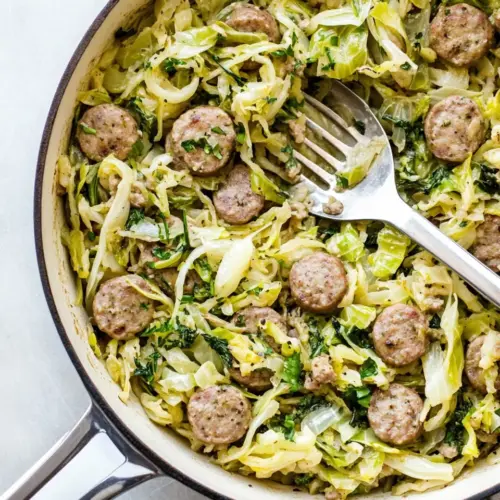
Easy Sausage and Cabbage Skillet
Easy Sausage and Cabbage Skillet is a quick, savory one pan dinner that balances spicy Italian sausage with tender wilted cabbage and kale, delivering crispy edges and warm garlicky aroma. Perfect for an easy weeknight dinner or meal prep, this recipe is flavorful, comforting, and fast, making it a go to when you want hearty satisfaction with minimal fuss.
Equipment
- High sided sauté pan
- Spatula or tongs
Ingredients
- 1 pound hot Italian sausage for paleo/whole30 be sure to read ingredients to determine if they are compliant Brown and crumble to render fat and develop deep savory flavor; choose compliant hot Italian sausage for paleo/Whole30 and verify ingredients to keep the recipe authentic and safe.
- 1 tablespoon olive oil or oil of choice Heat to coat the pan and prevent sticking while adding a mild fruity note; use olive oil or another high-heat oil of choice to sauté onions and sear sausage evenly.
- 1 large onion sliced Slice and soften until translucent to build a sweet, aromatic base; large slices hold texture in the skillet and meld with the sausage and cabbage slaw.
- 1 bag of slaw with kale cabbage, brussels sprouts and broccoli slaw (such as Cruciferous Crunch from Trader Joe's or Sweet Kale Salad from Costco/Kroger OR slice your own mix) about 10 ounces or 6 cups Toss in as the primary vegetable component to bulk the dish with varied textures and nutrients; the pre-shredded slaw mix speeds preparation while providing cruciferous flavors like kale, cabbage, Brussels sprouts, and broccoli.
- 4 garlic cloves minced Mince and stir in near the end of sautéing to release pungent, garlicky aroma; garlic brightens the savory profile and complements both sausage and vegetables.
- 1/2 teaspoon paprika Sprinkle to add warm, slightly smoky undertones that enhance the sausage and roasted notes; paprika also contributes color and depth to the skillet.
- 1/2 teaspoon dried oregano Crumble or sprinkle to introduce a warm, herbal Mediterranean touch; dried oregano pairs well with tomato-free sausage preparations and supports overall flavor balance.
- salt to taste Season to personal taste to lift and balance all components; salt enhances natural flavors from the sausage, vegetables, and aromatics throughout cooking.
- pepper to taste Grind or sprinkle to add bright, sharp heat and contrast; black pepper sharpens flavors and complements the richness of the sausage and sweetness of the onions.
Instructions
- In a high sided saute pan over medium high heat, brown the sausage until cooked through. Remove from pan.: You will hear an immediate sizzle when the sausage hits the hot pan and smell savory, meaty aromas as the edges brown. Browning creates fond, the caramelized bits that stick to the pan and hold concentrated flavor, so let the sausage develop color without crowding the pan. If you move it too often you will steam it instead of browning, which reduces depth. A common mistake is using low heat, which keeps the sausage pale and rubbery, so maintain medium high heat and let it sear until well browned, then transfer it to a plate so the next steps get a clean pan.
- Reduce heat to medium and add 1 tablespoon of oil to the pan. Once hot, add the onions and season with a little salt. Cook for 5-10 minutes, until softened and golden.: The pan should hiss gently when the olive oil meets the surface, and the sliced onion will gradually turn translucent then golden at the edges, releasing a sweet fragrance. This slow softening draws out sugars and builds a sweeter backdrop for the dish, which complements the savory sausage . Avoid turning the heat too high, which can burn the onion quickly; instead let it color evenly. A frequent error is neglecting to season the onion , which makes the layer taste flat, so add salt early to help the onion sweat and flavor the pan.
- Add the garlic and spices, cook for about 30 seconds, until fragrant.: The moment you add the minced garlic and the measured paprika and oregano you will notice an aromatic lift, aroma notes that tell you flavors are marrying in the pan. These aromatics toast quickly and can turn bitter if left too long, so aim for a brief 30 second bloom in the hot oil while stirring to avoid scorching. A common slip is to let the garlic brown, which creates a bitter edge, so as soon as it becomes fragrant reduce movement and proceed to the next step.
- Add the cabbage/kale slaw to the pan. The pan will be very full at first, carefully mix the slaw in and it will start to wilt and reduce in volume. You may need to add it in a few batches. Continue to stir, until everything is combined and slaw is wilted, about 5 minutes.: At first the slaw will pile high and the pan may seem overcrowded, but as it hits the heat you will hear a soft sizzling and see it quickly collapse, releasing steam and a faint vegetal scent. Use tongs or a sturdy spoon to fold the mix into the flavored oil so each strand touches the hot surface and wilts evenly. If you dump it all in and do not stir it, the bottom may overcook while the top remains raw, so add in batches if needed. Watch for excess moisture; if the pan steams rather than sizzles you may be at too low a temperature.
- Add the sausage back to the pan, stir to combine. Cook for another minute or two, until sausage is warmed. Taste and add more salt and pepper if needed. Serve.: Once the sausage rejoins the vegetables you will see the whole skillet glisten as fats redistribute and flavors mingle. The final minute lets everything marry and heat through, releasing a final savory perfume. Taste carefully at the end to adjust salt and pepper , because the rendered juices concentrate flavor while the vegetables mellow. Common mistakes include skipping the final taste check, which can leave the dish underseasoned, or overcooking the slaw until it loses all texture, so aim for tender but still slightly toothsome pieces when serving.
Notes
- Choose your sausage wisely, selecting a quality Italian sausage will deliver the best depth, and if you want less heat choose the mild variety, but always read labels if you are following a specific diet.
- Don’t crowd the pan, browning happens when pieces have space, so brown the sausage in batches if necessary to build proper color and fond.
- Add aromatics at the right moment, introduce minced garlic only once the onion has softened so the garlic brightens without burning.
- Control moisture, if the slaw seems watery, raise the heat to encourage evaporation and maintain a sauté texture rather than a steamed one.
- Adjust seasoning at the finish, because the rendered juices concentrate saltiness, always taste and then add a little more salt or pepper if needed before serving.
- Use a sturdy spatula or tongs, they make it easier to fold the slaw into the pan and to retrieve browned bits from the bottom without tearing the vegetables.